Southsore University unveils innovative-led African sovereignty initiative
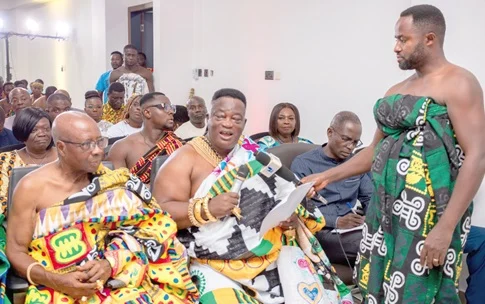
Professor Felix Nikoi Hammond, who is the Chairman of the Governing Council of Southshore University College, has made it clear that the transformation of the institution from Dominion University College to Southshore University College is significant turning point which aims at restructuring the relevance of African higher education, innovation and sovereignty.
Professor Felix Nikoi Hammond stated that the rebranding from Dominion to Southshore University College is more than just a change in name or logo, which represents a major change in the way of African education from passively taking in global knowledge to active creation of self-directed innovation.
He drew to attention that Africa must no longer be a marginal participant in a world centred on the theme which is rapidly changing from traditional resource-based economies to digital, information-led and artificial intelligence-led systems.
Professor Felix Nikoi Hammond highlighted that “The global economy has pivoted from soil to silicon, from resource extraction to computational intelligence. Africa can no longer afford to be a passenger. By the grace of God, we move beyond being a transmitter of generic information to becoming a global lighthouse of sovereign innovation.”

Prof. Felix Nikoi Hammond noted at the grand launch, which signaled a shift from traditional education to African sovereignty through innovation at the campus of the university located at East Legon Accra last Saturday. The event, which was centered on the theme: “From Africa, a New Light,” marked the official change of the university’s name from Dominion to Southshore University College.
The event was attended by dignitaries including the Prof. Isaac Boadi, Otumfuo Manwerehene, Sir Baafuor, Rev. Prof. Peter Ohene Kyei, Dr Ossei Hyeamann Brantuo VI; the President and Founder of Ashesi University, Dr Patrick Awuah; a representative from the University of Professional Studies, Accra, and the Vice Chair of Bible Society of Ghana, Dr Brantuo VI, who was the chairman for the ceremony, said Ghana was seriously in need of a new orientation in education, one that responded directly to the unemployment crisis of the country among the youth.
WANT TO PASS 2027 BECE? REGISTER FOR BECE HOME MOCK
Register your ward for Ghana's premier Home Mock service, active since 2022.

![BECE English Language Marking Scheme English Language Mock Questions and Answers [2022 BECE Candidates] bece english language past objectives](https://ghanaeducation.org/wp-content/uploads/2021/04/bece-english-language-past-objectives.webp)