
2025 WASSCE English Guide: Difference between Where vs. Were


Get ready for the 2025 WASSCE English Guide as we take a look at Where vs Were and the the difference between the two as well as how to use them correctly.
Getting ready for the 2025 WASSCE can be tiring. Scheme through this English WASSCE guide on the difference between where and were as part of your preperation.
Even native English speakers can get the words where and were mixed up. They appear to be the same, but they are spelled and pronounced differently, and they mean very different things.
So, when should each word be used?
In a nutshell, were is a past tense form of being, whereas where means “in a specific location.”
Continue reading to learn more about where vs. were and how to correctly use these words in your writing.
What Is the Distinction Between Where and Were?
The primary distinction between where and were is that where refers to a location, whereas were is a conjugation of the infinitive verb to be.
Let’s take a closer look at each word’s definition and meaning.
Were Meaning and Definition
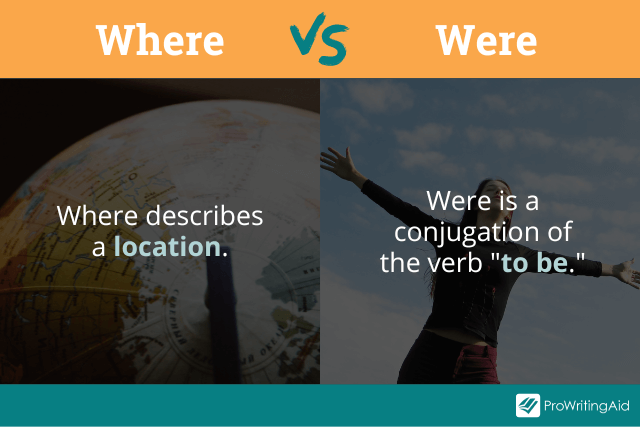
Were is a past tense form of the verb to be.
When writing in the second-person singular, we use were as the simple past tense form: “You were snoring so loudly last night!”

When writing in the third or first-person plural, we also use were as the past form of to be: “They were delighted to see you at the party yesterday,” or “We were overjoyed to receive your letter last week.”
Finally, we use were to indicate the past subjunctive tense, which we use to express something hypothetical or imagined, in addition to the simple past tense.
You could write, “If I were an animal, I’d be a giraffe,” or “She greeted them as if they were old friends.”
Where Definition and Meaning Come Together
Where is a word that refers to an unknown location.
It’s a question word that’s used as an adverb or pronoun in a question about a place or location. “Where is my pen?” you might inquire.
Where, as a conjunction, denotes a specific location or time. For instance, you could say, “The pen is exactly where you left it.”
We can also use where to refer to a metaphorical location rather than a literal one.
READ ALSO: Advise And Advice Are Often Used Interchangeably; Here Is The Difference
For example, you could say, “He irritated me so much that I left the room.” In this case, where does not refer to a physical location, but rather to a point in a process.

| LATEST EDUCATION STORIES |
| [display-posts posts_per_page="10" include_date="true"] |
| View All Breaking News → |

 How to Download and Install Katon Meet for January 23 CPD Day
  New GoG Salary Validation Portal: How to Fix “Invalid Username” Login Errors
  How to Answer Order of Adjectives Questions in BECE & WASSCE English
  Formal and Informal Letters: The Ultimate Guide to Format and Tone
 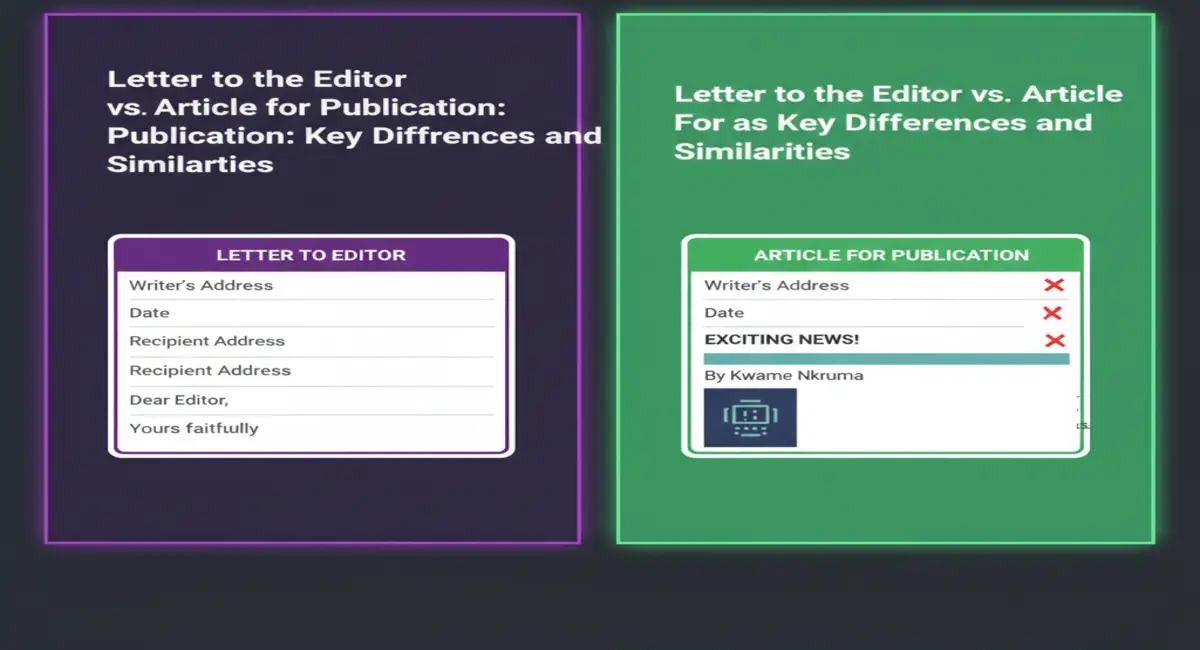 Letter to the Editor vs. Article for Publication: Key Differences and Similarities
  How to Study For Exams
  Take Free 2026 BECE Online Mocks: Over 10,000+ Questions Uploaded
  Grab BSc, MSc, and PhD Full Scholarships From the 100 Top World Scholarships
  GES Issues Stern Warning to Teachers: New Disciplinary Measures for ‘Besieging’ National Office and Side-Stepping Regional Structures
  Parliament Passes Act 1023: Private Universities Given 6-Year Ultimatum to Secure Charter or Face Sanctions