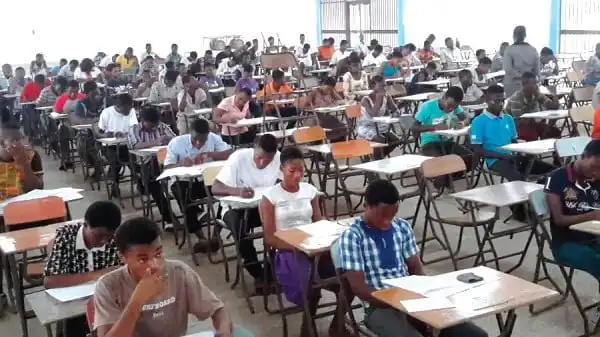
World Bank Approves US$300 Million STARR-J Project For Double-Track Schools Transition
The Ministry of Education has confirmed that the World Bank has approved the US$300 million STARR-J Project to Support Ghana’s transition from Double-Track Secondary Education. The government of Ghana is taking bold steps in the second cycle schools aimed at bringing to an end the double-track system introduced by the Nana Akufo-Addo-led government in the 2017-2018 academic year.
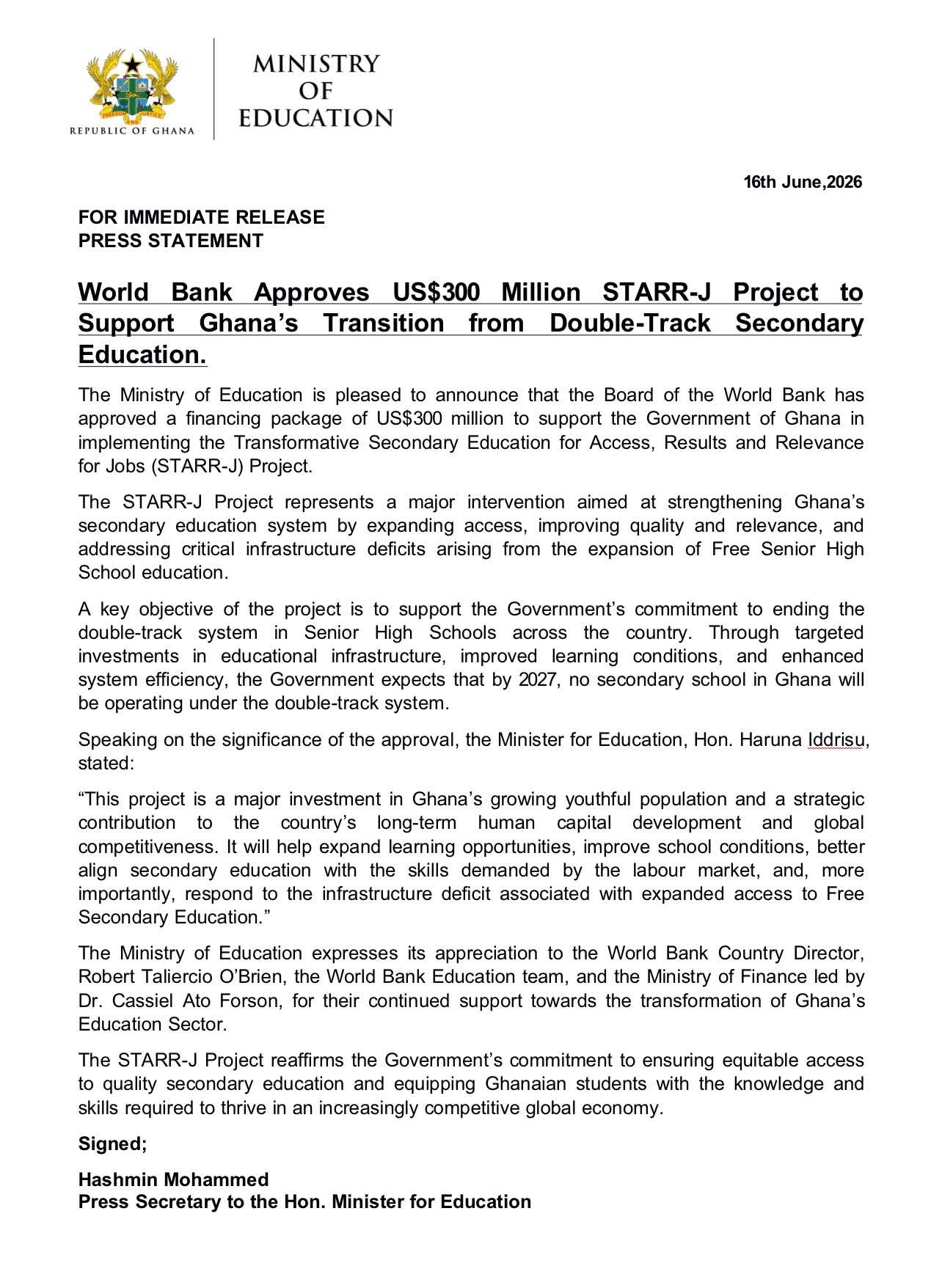
I am a press release the Ministry of Education announced that the Board of the World Bank approved a US$300 million financing package to support the Government of Ghana in implementing the Transformative Secondary Education for Access, Results and Relevance for Jobs (STARR-J) Project.
According to the Ministry fo Education, the STARR-J Project is a major intervention designed to strengthen Ghana’s secondary education system by improving quality and relevance, expanding access, and addressing infrastructure deficits from the expansion of Free Senior High School education.
A key objective is to support the Government’s commitment to end the double-track system in Senior High Schools; the Government expects that no secondary school in Ghana will operate under this system by 2027. Hon. Haruna Iddrisu, the Minister for Education, stated that this project is a significant investment in Ghana’s youthful population and its long-term human capital development and global competitiveness.

He added that it will help expand learning opportunities, improve school conditions, better align secondary education with labor market demands, and address infrastructure deficits associated with expanded access to Free Secondary Education.
The Ministry expressed appreciation to World Bank Country Director Robert Taliercio O’Brien, the World Bank Education team, and the Ministry of Finance led by Dr. Cassiel Ato Forson for their continued support of the transformation of Ghana’s education sector.

The project reaffirms the government’s commitment to ensuring equitable access to quality secondary education and equipping students with the skills required to thrive in a competitive global economy.
📊 Stakeholder Guidance & Contextual Analysis
As developments continue to unfold regarding World Bank Approves US$300 Million STARR-J Project For Double-Track Schools Transition, educational administrators, teachers, and candidates across Ghana are advised to follow established guidelines. Aligning school operations with official Ghana Education Service (GES) circulars and Ministry directives remains essential for institutional coherence and academic planning.

Key Directives for Schools and Educators:
- Administrative Alignment: School management and district directorates should cross-check official announcements before adjusting operational schedules.
- Stakeholder Transparency: Maintain active communication channels across Parent-Teacher Associations (PTAs), teaching staff, and student bodies.
- Continuous Oversight: Stay updated on supplementary directives issued by authorized public education authorities.
Frequently Asked Questions (FAQ)
Q: How does this update impact academic calendars and school operations?
A: School administrators are advised to incorporate official directives into current term plans while awaiting further formal clarifications. Refer to official channels for exact timelines.
Q: Where can educators verify authentic announcements?
A: Notices can be verified through official Ministry of Education releases, GES headquarters circulars, or accredited national education portals like GhanaEducation.org.