BECE 2-Year Ban: Why the Education Minister Got It Completely Wrong

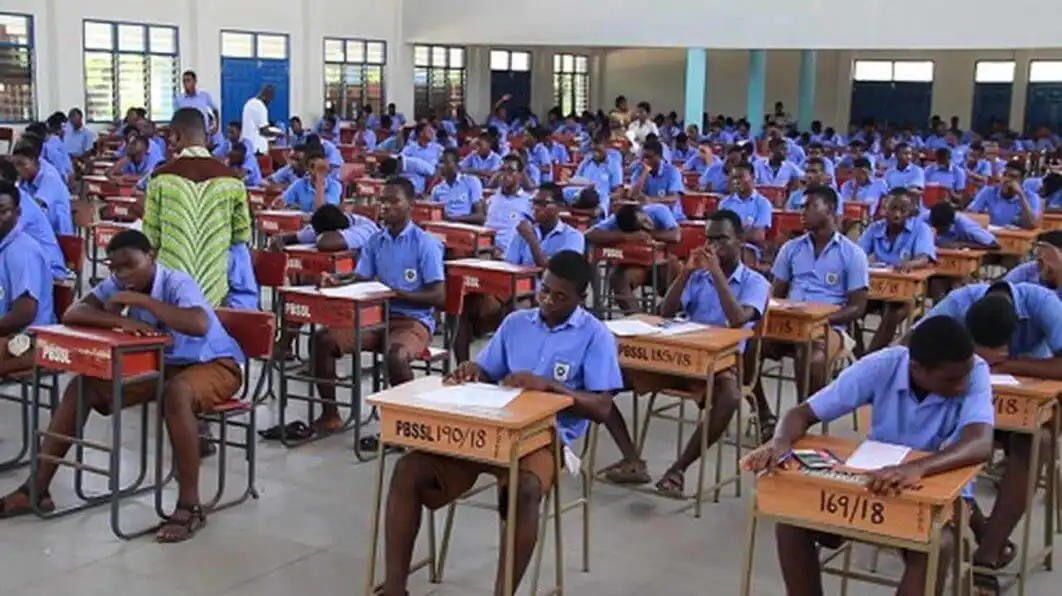
The recent directive by the Minister of Education, Hon. Haruna Iddrisu, instructing the Ghana Education Service (GES) to impose a sweeping two-year examination ban on Junior High School (JHS 1 and JHS 2) pupils who attempt to sit the Basic Education Certificate Examination (BECE) early, has been framed as a bold reform to instil discipline and aid national planning. Yet, beneath the surface of administrative convenience lies a deeply flawed policy suggestion from the minister that punishes innocent minors, violates constitutional and statutory protections for children, ignores systemic enforcement failures, and exposes a glaring double standard at the West African Examinations Council (WAEC).
1. A Misdirected Sanction: Violating the Rights of the Child
A JHS 1 or JHS 2 learner does not walk into a WAEC registration portal, pay examination fees, or forge Continuous Assessment records on their own. Registration is a legal and administrative act executed entirely by adults—specifically parents and school authorities in public and private schools. To slap a 12- or 13-year-old child with a two-year ban for a decision made by their parents or headteacher is the educational equivalent of vicarious punishment.
Will this punitive call, if implemented, affect parents who enrol their wards as private BECE candidates as well if a parent decided to use that avenue to enrol his or her ward for the BECE?
More critically, the directive collides head-on with Ghana’s domestic and international legal obligations regarding the rights of the child:
The 1992 Constitution of Ghana (Article 25(1)(a)): Guarantees that “All persons shall have the right to equal educational opportunities and facilities and with a view to achieving the full realisation of that right — (a) basic education shall be free, compulsory and available to all.” Furthermore, Article 28(1)(d) mandates Parliament to enact laws ensuring that “children and young persons receive special protection against exposure to physical and moral hazards,” while Article 28(4) expressly forbids depriving a child of education by reason only of any belief or administrative status.
The Children’s Act, 1998 (Act 560): Section 2(1) establishes the overarching legal standard in Ghana: “The best interest of the child shall be paramount in any matter concerning a child.” Additionally, Section 8(1) states clearly that “No person shall deprive a child of access to education… or any other thing required for his development.” Forcing a child who is academically ready to advance—or who has already been placed in a final-year class—to sit idle for two full years directly sabotages their intellectual development and breaches the statutory “best interest” principle.
The UN Convention on the Rights of the Child (UNCRC): Ghana was the first country in the world to ratify the UNCRC. Article 3(1) mandates that in all actions concerning children taken by “administrative authorities or legislative bodies, the best interests of the child shall be a primary consideration.” Article 28 further obligates the state to make primary and secondary education accessible to every child.
If the Ministry seeks accountability, sanctions must target the adults who sign the registration forms—parents and school heads—not the learners whose futures hang in the balance.
2. Selective Enforcement and the Private-Public School Dilemma
The Minister’s directive ignores the real-world market distortion that drove private schools to promote bright JHS 2 learners in the first place. For years, private basic schools have watched helplessly as parents withdrew high-performing Grade 7 and Grade 8 pupils and enrolled them directly into Grade 9 at public basic schools to sit the BECE early. Such students shoot the performance of weak public schools in the face of the public. Now, the Ministry of Education wants to make it difficult, as though the public schools are not still caught in the act, just like their colleagues in private schools.
Despite strict rules on paper, public school heads routinely absorbed these transfers without consequence, and neither the GES nor the Ministry of Education ever sanctioned the public schools involved. Facing existential attrition of their best students to public schools that faced zero oversight, private schools adapted by formally accelerating capable Grade 8 learners into Grade 9 at the start of the academic year. This way, they protect their hard work and training given to their best students so that parents do not enrol such learners in other schools for the purposes of the BECE. To now criminalise the learners caught in this regulatory vacuum—after years of looking away while public schools facilitated the exact same practice—is neither fair nor equitable.
3. WAEC’s Glaring Double Standard: The WASSCE Private Contradiction
Equally troubling is the institutional hypocrisy surrounding examination eligibility. While WAEC’s General Regulations and Scheme of Examination for the BECE (Section 1(a) and 1(m)) strictly limit school-based BECE entries to final-year JHS 3 candidates on the grounds that three years of School-Based Assessment (SBA) are required, WAEC operates under a completely different philosophy at the Senior High School level.
Every year, WAEC openly permits SHS 1 and SHS 2 students across both public and private second-cycle institutions to register for and sit the WASSCE for Private Candidates (First and Second Series / Nov-Dec) while still enrolled in lower grades. No SBA scores are required for private WASSCE candidates, no two-year bans are threatened, and no outcry is raised about “disrupting national planning.” If an SHS 1 student can legally test their academic mettle in a national examination without threatening the integrity of Ghana’s education system, the argument that a capable JHS 2 pupil writing the BECE constitutes an existential threat to equity collapses under its own weight.
4. Modernizing Education Instead of Policing Curiosity
The Minister argued that early BECE registration undermines “equity” and complicates data projections for Free SHS placement. Yet, true equity in education is not achieved by forcing fast learners to march at the speed of the slowest bureaucracy. Globally, modern education systems—including competency-based frameworks that Ghana itself claims to champion—recognise academic acceleration as a legitimate pedagogical tool for gifted learners.
Administrative planning challenges cannot be solved by truncating a child’s academic trajectory for 24 months. With digitized birth registries, the Ghana Card, and the GES’s own Education Management Information System (EMIS), tracking pupil cohorts from Primary 1 to JHS 3 is a data-management task, not a reason to impose punitive bans on children.
We must draw a clear, unyielding line between examination malpractice and exceptional academic ability. While discipline and examination integrity are essential, not every learner who sits the BECE ahead of schedule is attempting to cheat the system—many are simply gifted minds capable of mastering concepts far faster than their peers. History, both within Ghana and across the globe, proves what happens when exceptional learners are permitted to advance at their natural pace rather than being held back by rigid age brackets. In Ghana alone, prodigies like Ruth Ama Gyan-Darkwa (who passed the BECE at age 9 and graduated from KNUST with a Mathematics degree at 17), Melchizedek Adio Baafawiise (who skipped Class 5, JHS 2, and JHS 3 to enter KNUST at age 13 to study Physics), and Diamond Lucas (who entered Mfantsipim School at age 9 and the University of Cape Coast at 12) stand as celebrated national pride. Globally, figures like Hong Kong’s Sean Kong Ko-lun and America’s Carson Huey-You and Michael Kearney earned university degrees in their early teens precisely because their education systems nurtured their speed rather than penalising it.
Had Ghana enforced a blanket two-year suspension on early candidates a decade ago, Ruth, Melchizedek, and Diamond would have been treated as academic offenders rather than national assets. Children do not learn at a uniform speed; forcing a fast learner to mark time in a lower grade does not create equity—it breeds boredom, stifles curiosity, and wastes human capital. If a learner is caught engaging in examination malpractice, the full weight of WAEC’s disciplinary rules must apply. However, when a pupil has genuinely studied the syllabus, demonstrated mastery, and is intellectually ready to sit an examination, slapping them with a two-year ban is nothing short of criminalising brilliance.
In an era driven by technology, innovation, and problem-solving, Ghana cannot afford to build a better future by placing artificial roadblocks in front of its brightest young minds. Rather than imposing sweeping bans that delay academic progression, the Ministry of Education and GES should institutionalise dedicated diagnostic and aptitude assessments that allow genuinely gifted learners to prove their readiness and accelerate legitimately. Honourable Minister, protecting the integrity of our examinations is a noble goal, but we must never achieve it at the expense of our children’s potential—let us punish cheating, never brilliance.
READ: GES Teacher Recruitment 2026 Opens: Complete Application Guide
The Path Forward
Rather than enforcing a blunt, punitive directive that risks constitutional challenge and inflicts psychological harm on young learners, the Ministry of Education, GES, and WAEC must step back from knee-jerk sanctions and engage in deeper structural thinking:
Withdraw the two-year pupil ban immediately and redirect disciplinary oversight toward school heads and district directors who falsify EMIS transfer records.
Establish a transparent, standardized Merit Acceleration Pathway administered objectively by GES and WAEC—allowing genuinely gifted JHS 2 learners across both public and private schools to qualify for early BECE sitting through a standardized aptitude assessment rather than backdoor transfers.
Harmonize WAEC’s regulatory logic across basic and secondary levels so that academic readiness, rather than arbitrary administrative rigidities, defines opportunity in Ghana’s schools.
By Wisdom Kojo Eli Hammond
Education Consultant, EdTech & AI Solutions Strategist, BECE Home Mock Provider on skulmanager.com and Founder of Education-News Consult
email: admin@ghanaeducation.org