Registration Opens: Join the 2026 BECE Home Mock to Secure Grade 1s JOIN NOW ×

Secret Tips To Understanding And Solving Circle Theorem Questions
Tips To Understanding And Solving Circle Theorem Questions

Get to know all the secret tips in understanding and solving circle theorem questions in the upcoming 2024 WASSCE.

Circle theorems are an important part of geometry, and they are frequently included in mathematics curricula worldwide.

They provide a framework for understanding circle properties, including angles and segments. Here are some effective strategies for understanding and solving circle theorem questions.

Familiarize Yourself with Key Theorems

The first step is to become familiar with the key circle theorems. This includes:

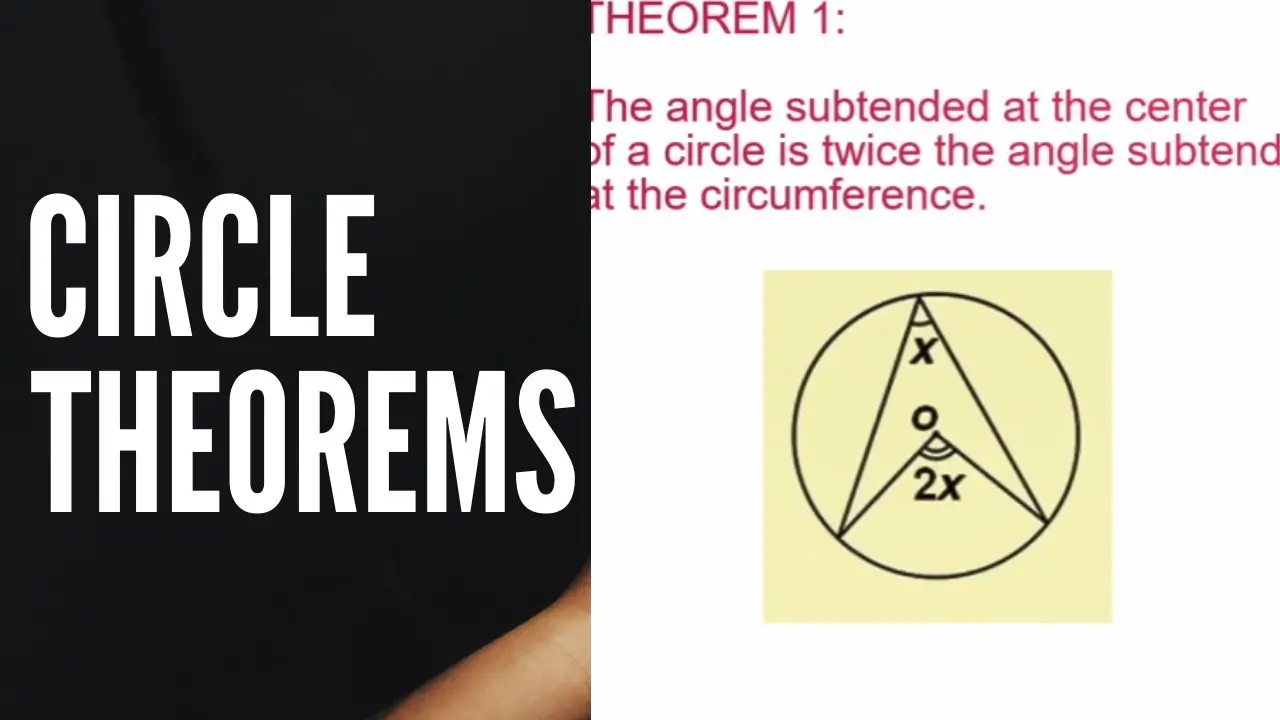
  • The Central Angle Theorem: The measure of an angle formed by two radii is twice the measure of the inscribed angle subtending the same arc.
  • The Inscribed Angle Theorem: Angles inscribed in the same arc (or subtending the same chord) are equal.
  • The Alternate Segment Theorem: The angle between a tangent and a chord is equal to the angle in the alternate segment.
  • The Chord Properties: Equal chords are equidistant from the center, and vice versa.
  • The Tangent Properties: The radius is perpendicular to the tangent at the point of contact, and tangents from an external point are equal in length.

Practice with diagrams.

Visualizing the problem is critical in geometry. Always draw a diagram if one is not provided. Label all known lengths and angles, and determine which theorems may apply.

Break down the problem.

Complex problems are frequently just a collection of simpler problems. Divide the problem into smaller parts and solve each one step by step.

Use algebraic expressions.

If the problem involves unknown angles or lengths, use algebraic expressions (e.g., x, y) to represent them. This simplifies the problem and makes it easier to solve.

Check your answers

Make sure your answers are correct. Make sure your calculated angles do not exceed 360° in a full turn, and that the lengths and angles are appropriate for the problem.

Practice regularly

Regular practice is essential for mastering circle theorems. To solve a variety of problems, consult textbooks, online resources, and past exam papers.

Understanding and solving circle theorem questions necessitates a firm grasp of the key theorems, strong visualization skills, and consistent practice. With these strategies, you’ll be prepared to answer any circle theorem question that comes your way.

READ ALSO; 2011 BECE English Language past objective test questions with answers

Universities Supported By MPower Financing
Universities Supported By MPower Financing

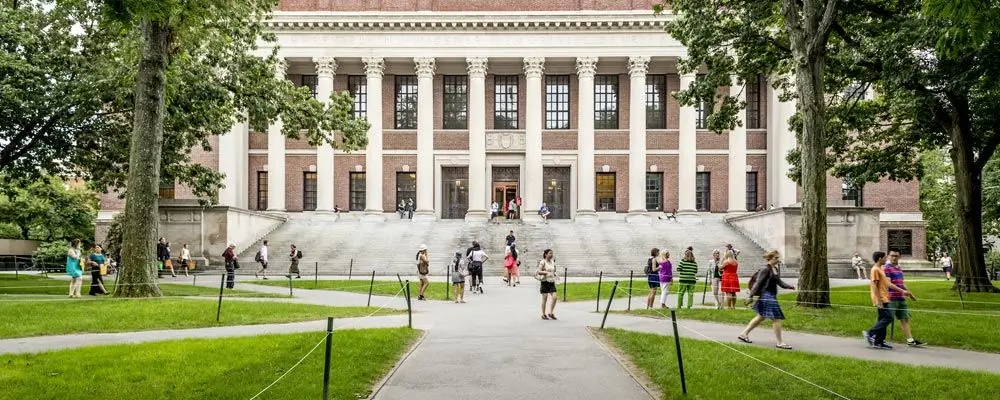
Get to know the universities in the world, supported by MPower Financing as at 2024.

As the world grows more interconnected, students around the world are increasingly interested in pursuing higher education overseas.

However, financing this goal might be a considerable difficulty, particularly for overseas students. MPower Financing is a trailblazing organisation that bridges the financial gap and enables students to attain their academic objectives.

MPower Financing is a mission-driven fintech startup that offers loans designed exclusively for overseas students. Their unique strategy takes into account criteria other than traditional credit ratings, making education more accessible to a wide spectrum of students. Let’s look at the universities they fund and how they’re changing the landscape of global education.

MPower collaborates with nearly 400 colleges and universities in North America, including the United States and Canada. These institutions serve students with a wide range of academic interests. Whether you want a master’s degree, an MBA, a Ph.D., or another certification, MPower has you covered.

Notable Universities Supported by MPower Financing

1. A. T.  University of Health Sciences (Missouri, United States)
2. Adelphi University (New York, United States)
3. Albany College of Pharmacy and Health Sciences (New York, United States)
4. Albany Medical College (North Carolina, United States)
5. Allen College (Iowa, United States)
6. American University (Washington, D.C., United States)
7. American University of Antigua (AUA) College of Medicine (New York, United States)
8. Amherst College (Massachusetts, United States)
9. Appalachian State University (North Carolina, United States)
10. Arcadia University (Pennsylvania, United States)
11. The Cooper Union for the Advancement of Science and Art (New York, United States)
12. CUNY, City College (New York, United States)
13. Florida International University (Florida, United States)
14. Kansas State University (Kansas, United States)
15. La Salle University (Pennsylvania, United States)
16. St. John’s University (New York, United States)
17. Texas Tech University (Texas, United States)
18. Towson University (Maryland, United States)
19. University of Alabama at Birmingham (Alabama, United States)
20. University of Arkansas (Arkansas, United States)

These universities represent a wide variety of academic fields and provide chances for overseas students to pursue their educational goals. If you’re thinking about attending any of these universities, look into MPower Financing’s loan options and start your academic journey!

READ ALSO; Top 5 Universities In Canada For International Students

Mental Health in Schools: Should Mental Wellness Be Part of the Curriculum?

Mental Health in Schools: Should Mental Wellness Be Part of the Curriculum?

Do you think mental wellness should be part of the curriculum? Should mental health be considered in schools? Proceed to find out more about this worldwide topic making buzz on the internet.

There is an invisible struggle taking on in our schools’ crowded hallways, as bags slump beneath the weight of textbooks and hopes. It is not about quadratic equations or historical dates, but about mental health.

Whispers of anxiousness, quiet battles with sadness, and unsaid concerns stalk our students. As educators, parents, and guardians, we must consider if mental wellness should be integrated into the curriculum.

Picture this: A teen sits in a packed classroom, shoulders slumped and eye wandering around. The teacher lectures on about algebraic expressions, but the student’s thoughts are elsewhere. Anxiety consumes at their insides like a tenacious mouse. They’re wondering if anyone else feels this way. They worry if they are alone.

Not only that, but they are not alone. Mental health issues are a silent epidemic in our classrooms. The World Health Organisation reports that depression is the greatest cause of disability among teenagers globally. Nonetheless, our educational systems frequently treat mental health as a footnote in a dusty textbook.

Imagine a school where wellness is not an afterthought, but rather a cornerstone. A location where children can learn about both the periodic table and emotional resiliency. Here’s why wellness should be incorporated into our curriculum:

Breaking Stigmas: Wellness education removes the stigma associated with mental health. It is time to replace whispered murmurs with open discussions. Let us normalise seeking help and recognising that it is okay to not be okay at times.

Empowerment: When kids understand their emotions, they take control of their mental health. They learn to cope tactics, stress management techniques, and how to be kind towards themselves.

Academic Performance: A healthy mind promotes academic performance. When children feel emotionally supported, they can concentrate better, retain information, and prosper.

When wellness is integrated into the curriculum, the impact extends beyond the classroom. Families benefit. Communities thrive. Our future leaders will be not just academically adept, but also emotionally resilient.

So let’s change the story. Let us educate not just theorems, but also empathy. Let’s nourish both our wits and hearts. Because prioritising wellbeing not only educates, but also transforms people’s lives.

READ ALSO; Student Loan Crisis: Is Higher Education Worth The Debt?

The True Story of How a False Theory Led to the Discovery of Boron
The True Story of How a False Theory Led to the Discovery of Boron

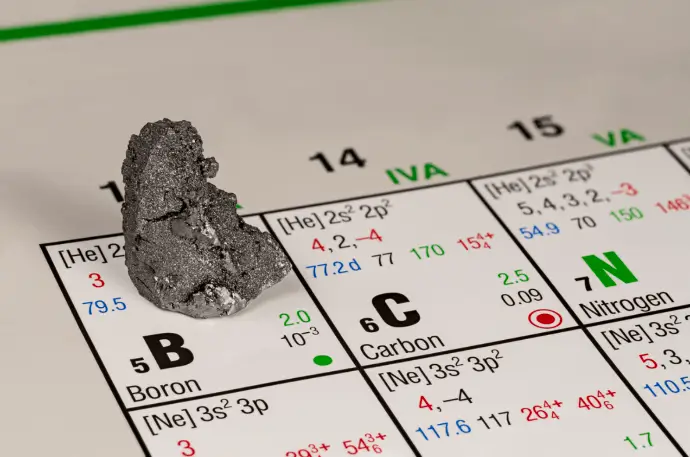
Take time to read this true story of how a false theory led to the discovery of Boron, which is the element with atomic number 5.

Scientific theories can be applied to make predictions. Some of these predictions are successful, meaning they come true. Sometimes a theory accurately predicts the existence of a previously unknown phenomenon.

How does this happen? One seemingly plausible explanation is that the theory under consideration must be true. After all, how could a false theory make such an accurate prediction? However, there are examples of false theories that accurately predicted previously unknown phenomena.

One such example is the discovery of the chemical element boron. It was discovered by three chemists: Sir Humphry Davy (1778-1829), Joseph Louis Gay-Lussac (1778-1850), and Louis Jacques Thénard (1777-1857), who collaborated but worked independently of Davy.In 1808, these chemists were the first to decompose what chemists at the time referred to as boracic acid.They succeeded in isolating boron samples by extracting the oxygen from boracic acid with potassium..

Of course, before they succeeded in decomposing boracic acid, the chemists had no idea whether it contained oxygen. So, why did they believe that boracic acid contained oxygen?

The answer to this question is Antoine-Laurent de Lavoisier (1743-1794), a French chemist. Today, Lavoisier is best known as the chemist who discovered the role that oxygen plays in combustion. Most people today are unaware that Lavoisier assigned another role to oxygen: that of the acidifying principle, or the substance that gives acids their acidic properties. Lavoisier may have felt that this role of oxygen was more important than its role in combustion.

After all, Lavoisier’s proposed term for this particular substance, ‘oxygen’ (or, more precisely, the French term ‘oxygène’), is derived from the Greek words for ‘acid generator.’ Lavoisier’s oxygen theory of acidity states that all acids contain oxygen (the acidifying principle) and something else, which he refers to as the acid’s base or radical.

One of the primary ways acids differ from one another is in their radicals. For example, sulfuric acid and phosphoric acid are distinct acids because they contain different radicals, namely sulfur and phosphorus. However, the fact that these substances are acids rather than something else is due in part to the presence of oxygen.

So, why did chemists at the time believe that boracic acid, which no chemist had yet decomposed, contained oxygen? Gay-Lussac and Thénard responded by stating that they believed in Lavoisier’s theory of acidity. Boracic acid is an acid, so Lavoisier’s theory predicted that it would contain oxygen.

Lavoisier’s theory gave Gay-Lussac and Thénard a reason to try to decompose boracic acid using a substance with a high affinity for oxygen, such as potassium. This method worked, and the prediction that boracic acid contains oxygen was confirmed. In this sense, Lavoisier’s theory influenced Gay-Lussac and Thénard’s discovery of boron.

However, in that case, a false theory resulted in the discovery of boron. The idea that oxygen is the acidifying principle, or the substance that gives acids their acidic properties, has long been rejected. And today, we know of numerous acids that lack oxygen. Chemists at the time were aware of one such example. In 1787, French chemist Claude Louis Berthollet (1748-1822) demonstrated that prussic acid (hydrocyanic acid, HCN) contains no oxygen. Just a few years after discovering boron, Davy provided compelling evidence to conclude that muriatic acid (hydrochloric acid, HCl) also lacks oxygen.

Even though Lavoisier’s theory was incorrect, it did successfully predict that boracic acid contains oxygen. How can a theory that is clearly false lead to a prediction that turns out to be correct? Philosophers of science who have addressed this issue generally fall into one of two camps. Some people believe that if we just dig a little deeper, we’ll find some kernel of truth in that false theory that explains how it could make a correct prediction. Some argue that we should abandon the attempt to explain why a false theory makes true predictions by assuming that the theory must contain at least a kernel of truth.

READ ALSO; 2024 BECE Grading System And Pass Mark

Meet the First Black Woman to Discover an Element on the Periodic Table

Meet the First Black Woman to Discover an Element on the Periodic Table

Want to know the first black woman to discover an element on the periodic table? Then continue reading this article to find out.

Meet Clarice Phelps, an HBCU graduate from Tennessee State University who made history in the world as the first African American woman to contribute to the discovery of a periodic table element.

The element, now known as Tennessine (Ts), is a halogen with the atomic number 117.

Taking a seat at the periodic table didn’t happen overnight, it was actually a 20-year journey,” Phelps told News Channel 5.

Phelps, who is from Nashville, developed an interest in chemistry at a young age. Her mother gave her a microscope, and she frequently experimented with mixtures in their kitchen as a child. In high school, she honed her interest in science through chemistry classes.

Phelps graduated from Tennessee State University in 2003 with a bachelor’s degree in chemistry. Phelps went on to earn a master’s degree in Nuclear and Radiation Engineering from UT Austin. She served in the Navy for four years, where she used her chemistry skills to work with radioactive materials.

Her journey continued at Oak Ridge National Laboratory, where she worked to purify chemicals. These purified substances were shipped to Germany and Russia to serve as target materials in the production of atomic number 117 (Ts).

In 2016, Phelps received official confirmation that Tennessine had been added to the periodic table. However, it wasn’t until 2019, when the International Union of Pure and Applied Chemistry (IUPAC) recognized her, that she realized she was the first Black woman to accomplish such a historical feat.

“I had to Google it, and I was still in shock. However, I remembered myself as a little girl looking for someone like me in science who could inspire me, and it changed my perspective,” she said.

Phelps, who is currently pursuing her doctorate in Nuclear Engineering, hopes that her discovery will benefit African Americans and other marginalized communities in the scientific field.

READ ALSO; 2024 BECE Candidates To Perform Exceptionally: Here Is Why

The 5 Most Boring Jobs in the World (According to Science)

The 5 Most Boring Jobs in the World (According to Science)

Get to know the 5 most boring jobs in the world. Find out their average salary and their boring rating as well.

Some jobs, such as being a doctor, a firefighter, or a flight attendant, have no two days that are alike. You put on your work clothes, get to where you need to be, and wait for the day to take you wherever it will — exciting, yes, but not always pleasant.

Other professions have little difference between one workday and the next. While some may find this tedious, others may find the predictability of the situation reassuring.

Those are the jobs we’ll discuss: the ones that bore thrill-seekers to tears while soothing those who find comfort in a consistent routine. Now, let’s discuss the most boring jobs in the world!

Whether we’re talking about movies, books, or jobs, different things can bore different people; while one person finds data analysis to be a mind-numbing way to make a living, another enjoys analyzing and interpreting data.

Because the concept of dullness varies between people, we’ve decided to cite the dictionary (boring!) to explain how we chose the professions listed below: We’re using “boring” to mean “monotonous,” “repetitive,” and “uneventful,” which are three more objective terms!

An article published in Sage Journals’ Personality and Social Psychology Bulletin discusses “stereotypically boring individuals” and the career paths they most commonly choose. Let’s look at 5 of them:

5 Most Boring Jobs in the World

1. Data entry worker

A data entry worker is someone who gets paid to enter, verify, and edit electronic data. For example, a company with hand-filled client information forms may require a data entry clerk to manually transfer that information to a digital database. As a result, data entry workers have little to no variety in their jobs, as they are required to complete the same task every day.

Boring rating: 5.13

Average annual salary: $38,710

2. Accountant

The 5 Most Boring Jobs in the World (According to Science)

Accounting has a bad reputation for being a boring profession. Though an accountant’s duties may be more diverse than those of a data entry worker, many of them still involve data entry and paperwork. Accountants are typically well compensated for their work, which can compensate for the lack of excitement in their daily lives.

Boring rating: 5.03

Average annual salary: $78,000

3. Tax consultant

The 5 Most Boring Jobs in the World (According to Science)

A tax consultant is a personal financial advisor who meets with clients and advises them on their taxable income. More specifically, they identify any deductions that their client may be eligible for, prepare their tax returns, and provide guidance on the tax implications of major life events such as inheritance and divorce. Though tax consultants can earn a salary that is twice the national average, many people consider this to be the most exciting aspect of their job.

Boring rating: 5.02

Average annual salary: $95,390

4. Cleaner

The 5 Most Boring Jobs in the World (According to Science)

Cleaners and janitors perform an important function: they keep our surroundings sanitary, neat, and orderly. They typically work indoors, but some of their responsibilities may include keeping outdoor areas, such as building entrances and walkways, free of leaves, litter, and snow. Cleaners, like the other entries on this list, follow a largely repetitive routine, with days and weeks that can appear identical to one another.

Boring rating: 4.84

Average annual salary: $31,990

5. Bank teller

The 5 Most Boring Jobs in the World (According to Science)

Though automated teller machines and online banking apps have reduced the need for human interaction, tellers are still required to process deposits, withdrawals, and transfers, as well as walk clients through the various services available to them. Bank tellers are considered one of the most boring professions due to the repetitive nature of their work.

Boring rating: 4.78

Average annual salary: $36,380

As we’ve seen, some of the world’s most boring jobs pay well, while others, such as stunt performer, pay less than the national average. The truth is that whether you work as a veterinarian or a compliance officer, there will be someone out there who thinks your job is boring. What matters most is that you enjoy your job, or at least find some aspects of it rewarding!

READ MORE; Is Vocational Training The Key To Unlock Youth Unemployment?

Is Vocational Training The Key To Unlock Youth Unemployment?

Is Vocational Training The Key To Unlock Youth Unemployment?

Is vocational training the key to unlock youth unemployment? Get to know all the facts and findings surrounding this topic.

In a world where the clamour of job searchers frequently drowns out individual potential, vocational training stands out as a beacon of hope.

It serves as a link between untapped talent and the rapidly changing work market. But can it genuinely be the solution to the global problem of youth unemployment?

The quest of academic degrees has long dominated the educational narrative, but change is on its way. An era in which competence, practicality, and adaptability are paramount. Vocational training is at the vanguard of this transition, providing a practical approach to education that is closely aligned with industry requirements.

Imagine a youthful artisan with tools in hand, transforming raw materials into a masterpiece. This is the essence of vocational education: creating, doing, and making tangible contributions to society. It is purposeful education, one that promises more than simply information but also a livelihood.

However, the issue remains: Is vocational training a sure-fire path to employment? The answer is not as easy as ‘yes’ or ‘no’. It’s an argument about opportunities and obstacles, success stories and cautionary tales.

Examine the data: nations like Germany and Switzerland who have robust systems for vocational training have some of the lowest rates of youth unemployment. What’s their secret? a strong apprenticeship programme that guarantees students are using what they are learning in practical situations. Education and industry have an effective partnership that many countries aim to emulate.

However, there are many who disagree with vocational training. Some contend that it restricts students’ ability to advance in their careers by boxing them into particular jobs. Some draw attention to the difference in investment and status when compared to conventional academic pathways. These are the obstacles that need to be cleared.

As we go further into the heart of this discussion, we come across instances of transformation. Young people equipped with technical abilities and a can-do attitude have carved out places for themselves in competitive industries. They are living examples that vocational training can be a key to securing work.

However, for every achievement, there is a call to action—a warning that vocational education must change with the times, embrace technology, and break down preconceptions. It must be accessible, inclusive, and acknowledged as a valid and accepted educational path.

Vocational training holds enormous promise for reducing youth unemployment. It’s a less-travelled path, but one that leads to self-reliance and empowerment. As we stand at the crossroads of education and career, it urges us to reassess our previous views and embrace the opportunities it offers.

READ ALSO; Social Media: The Double-Edged Sword of Modern Learning

Social Media: The Double-Edged Sword of Modern Learning

Social Media: The Double-Edged Sword of Modern Learning

Social media is the double-edged sword of modern learning and has deeply impacted behaviour and learning in the digital age, becoming an integral part of student life.

Students are not merely killing time when they browse through feeds and stories; they are also creating connections, curating knowledge, and constructing their identities.

The effects of social media on students are a tale of two cities. On the one hand, it is a thriving information metropolis in which ideas are exchanged at light speed. It’s a realm where learning is democratised, and classroom walls stretch to the ends of the globe. Students engage in self-directed learning, work together on projects, and have access to previously unavailable resources.

However, there is a flip side to this interconnected society. Social media may be a maze in which focus is splintered and the distinction between reality and fiction blurs. Distraction from notifications and limitless content might negatively impact academic engagement and performance. The potential for understanding is sometimes lost in the clamour of the new and now.

There is a lot of disagreement over whether social media platforms encourage students to be productive or mislead them. According to studies, when used wisely, these platforms can promote a work ethic and enhance academic achievement. But it’s important to recognise that social media may be distracting, sometimes overshadowing its positive educational effects.

As educators and students negotiate this difficult world, balance is crucial. Integrating social media into education necessitates a balanced approach that leverages its power to improve education while reducing its potential drawbacks. It’s about educating digital literacy, fostering critical thinking, and establishing boundaries to protect mental health.

Social media is neither a hero nor a villain in the education narrative. It’s a strong and adaptable tool that has the potential to impact learning for the better or worse. The challenge for modern educators and learners is to use this tool wisely, ensuring that its impact on student behaviour and learning is good, intentional, and significant.

READ ALSO; Student Loan Crisis: Is Higher Education Worth The Debt?
Student Loan Crisis: Is Higher Education Worth The Debt?

Student Loan Crisis: Is Higher Education Worth The Debt?

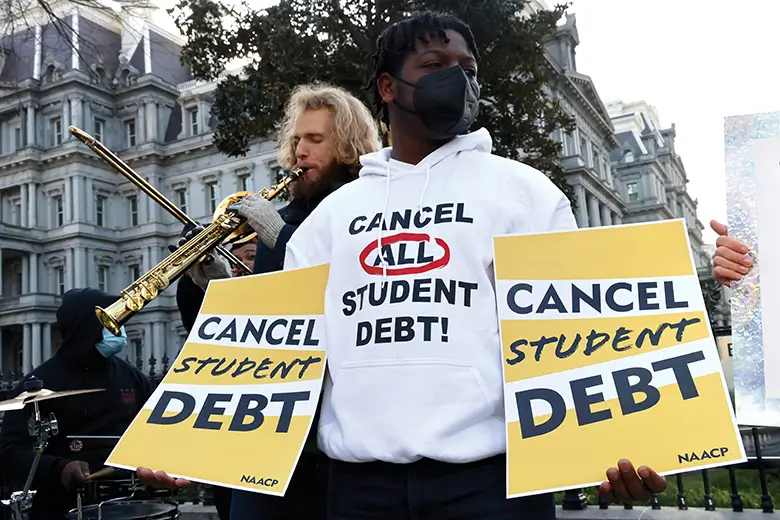
The student loan crisis looms big over students’ hopes of further education, casting a shadow of debt that many fear they will be unable to overcome.

As tuition costs rise, students and families are left wondering if pursuing a degree is worth the debt burden. The total amount of student loan debt in the US has risen to a breathtaking $1.7 trillion. This number is more than simply a figure; it is a symbol of millions of hopes, innumerable study hours, and the unwavering quest for knowledge.

However, it also represents a financial burden that can hinder the financial prospects of intelligent people. The dispute continues, with some saying that investing in education pays off in the long run. Higher education is linked to higher lifetime wages, employment security, and quality of life. But, at what cost? For many, the debt is a disincentive, a barrier that prevents them from achieving their scholastic ambitions.

There is no universal solution to this complex story. Some people believe that going to college will lead to successful employment that will pay off their loans. Others struggle with financial instability and missed life milestones because repaying debt outweighs rewards.

In the middle of this crisis, a call for reform may be heard in academic halls and leadership avenues. There is a growing consensus that something needs to change. The present system is unsustainable, whether through regulatory changes, tuition regulation, or novel finance solutions.

As we delve into this topic, we ask you to join the discussion. Share your experiences, hopes, and solutions. How has the student loan issue impacted you and people around you? What do you think is the genuine value of higher education? And, most importantly, how can we all navigate this financial maze to ensure that education stays a ladder to achievement rather than a trapdoor to debt?

Join us for an interactive discussion of one of today’s most critical challenges. Your voice is important in defining the future of higher education and the lives of students worldwide.

READ ALSO; 2024 BECE Candidates To Perform Exceptionally: Here Is Why

2024 BECE Candidates To Perform Exceptionally: Here Is Why

2024 BECE Candidates To Perform Exceptionally: Here Is Why

The predicted results this year, is the exceptional results we await from all 2024 BECE candidates in the third quarter of the year.

As the Basic Education Certificate Examination (BECE) for 2024 approaches, there is tangible confidence among Ghana’s educators, parents, and students. This optimism is not unjustified; it stems from a number of purposeful educational reforms and efforts designed to raise learning and evaluation standards.

The Ghana Education Service (GES) plans to restructure the BECE into a 5-subject exam. This simplification is supposed to minimise a student’s workload, allowing them to focus more intensely on core courses and so improve their performance.

Furthermore, the new curriculum, which was introduced in 2019, has already had enough time to settle, and the first batch of students who have been engaged in this system since the beginning are scheduled to take the BECE in 2024. This programme is designed to promote critical thinking, problem-solving, and analytical skills, all of which are necessary for academic success.

Another aspect contributing to the predicted success is schools and parents’ proactive attitude to candidate preparation. Many people have turned to well-structured mock exams that reflect the expected format and content of the 2024 BECE. These mocks are more than just practice examinations; they are full performance assessments that give pupils feedback, allowing them to discover and improve their inadequacies.

The trend analysis of previous BECE performances also gives reason for confidence. Despite concerns about performance inequalities between rural and urban schools, the Ministry of Education has made a deliberate effort to guarantee equitable distribution of resources, such as infrastructure and instructional materials, throughout the system. This is supposed to level the playing field and increase overall performance.

Additionally, the grading system, which uses a nine-point numerical scale, places equal emphasis on understanding and application of knowledge as it does on raw results. The transition from competency-based evaluation to rote memorization is probably going to be advantageous for the pupils who have been supported by the new curriculum.

In addition to these variables, Education News Consult’s projected BECE questions and Home Mock exams, available at Ghanaeducation.org, are useful resources. These materials allow students to practise with questions that are similar to those they may experience on the actual exams. The Home Mock tests, in particular, imitate the exam environment and provide students with a realistic experience of the BECE.

Given these variables, the 2024 BECE is poised to be a watershed moment in student performance, with major improvements expected. A modernised curriculum, improved preparation tactics, and equitable resource allocation signal a year of great achievement for BECE candidates.

As we await the potential results, it is apparent that the collaborative efforts of all stakeholders in the education sector are about to bear fruit. The 2024 BECE candidates are doing more than just taking an exam; they are demonstrating Ghana’s future possibilities.

READ ALSO; Coding as a Second Language: Should Programming Be Mandatory in Schools?

Ghana Education News