
How 2025 WASSCE Results Reflect the Impact of BECE Performance and the Placement of Weak Students Under Free SHS

Ghana’s 2025 WASSCE Results Reignite Debate Over Free SHS and Foundational Gaps in Basic Education
Ghana’s disappointing 2025 WASSCE outcomes—particularly in Core Mathematics—have reignited national debate over the country’s education reforms, the quality of basic schooling, and the lingering effects of the Free Senior High School (Free SHS) policy.
Following the release of the results, analysts, parents and educators have expressed growing concern that the collapse of academic standards at the foundational level is now fully reflected in the poor performance at the senior high school level. The latest figures from the West African Examinations Council (WAEC) validate these fears.
According to WAEC’s Head of Public Relations, John Kapi, over 96,000 fewer candidates attained the required A1–C6 pass in Core Mathematics compared to 2024. Only 48.73% of candidates met the minimum benchmark for tertiary admission—a drastic decline described as “deeply troubling” by examiners.
Yet WAEC insists the 2025 Mathematics paper was not unusually complex. “The challenge came from the candidates’ own weaknesses, not the quality of the paper,” Mr. Kapi emphasized during an interview on Channel One TV’s The Point of View.
A Systemic Problem, Not a One-Year Decline
Educational observers argue that the poor performance is not an isolated event but a symptom of deeper structural weaknesses—many dating back to the Basic Education Certificate Examination (BECE) stage.
With the introduction of Free SHS came the removal of cut-off points for senior high school placement. As a result, students scoring as high as aggregate 48 in BECE have been admitted into SHSs year after year. Such candidates typically struggle in core subjects—Mathematics, Science, and English—and enter secondary school with fragile academic foundations.
Stakeholders now argue that without robust BECE diagnostic data—particularly pass/fail statistics for core subjects—it is difficult to properly interpret national WASSCE performance trends. Calls are intensifying for WAEC to publish BECE performance breakdowns just as it does for WASSCE.
Seven Key Weaknesses Behind the Mathematics Failures
The Chief Examiners identified seven critical deficits that severely undermined student performance in Core Mathematics this year. They include:
-
Difficulty representing mathematical information in diagrams
-
Inability to solve global or real-life mathematics problems
-
Weakness in constructing cumulative frequency tables
-
Challenges interpreting real-life data
-
Inability to translate word problems into mathematical expressions
-
Poor understanding of simple interest calculations
-
Misinterpretation of cumulative frequency curves
These weaknesses, examiners noted, reflect poor conceptual foundations rather than a lack of exam preparation alone.
Beyond Mathematics—Social Studies Also Suffers
Social Studies, another key requirement for university admission, also recorded significant challenges. Many candidates failed to:
-
Explain government policies designed to improve livelihoods
-
Analyse how extravagant funerals impede national development
-
Discuss Ghana’s cooperation with UN agencies coherently
-
Demonstrate basic critical thinking and application skills
These deficiencies, experts warn, point to a worrying literacy and comprehension crisis that cannot be ignored.
A Call for Solutions, Not Blame
While some stakeholders blame poor student attitudes, others point to concerns over teacher quality, overcrowded classrooms, and political interference in school placements—especially the admission of weak-performing students into top-tier institutions through protocol.
WAEC says it is committed to working with the Ministry of Education and other partners to implement targeted interventions that address these root causes rather than merely treating symptoms.
“Our findings provide a roadmap for remedial action. We will continue to collaborate with all stakeholders to strengthen teaching and learning,” Mr. Kapi assured.
The 2025 WASSCE results have become more than an annual performance review—they are now an urgent wake-up call. From the basic school level to national policy, Ghana’s education system is confronting consequences years in the making.
As the nation digests the data, one thing is clear: without bold reforms, better foundational teaching, and a renewed commitment to quality, the cycle of poor performance will continue—at the cost of Ghana’s future human capital.

| LATEST EDUCATION STORIES |
| [display-posts posts_per_page="10" include_date="true"] |
| View All Breaking News → |

 Take Free 2026 BECE Online Mocks: Over 10,000+ Questions Uploaded
 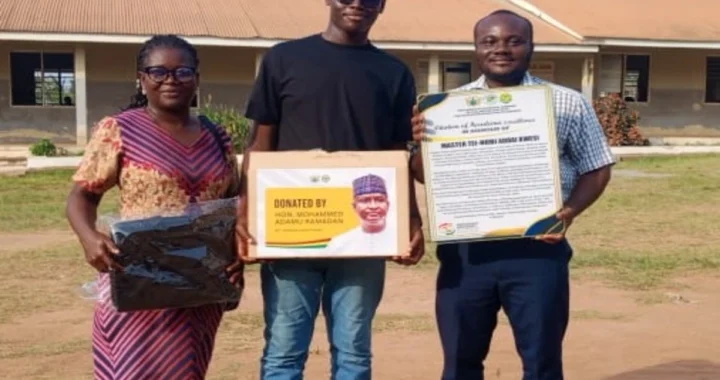 Worry Your Teachers With Questions’: 2025 BECE Presidential Award Winner Kwesi Tei-Nobi Reveals Secret to 522 Raw Score
  Buy 2026 BECE Mocks and Term 2 Exam Questions Online for Schools
  NSA Issues 14,349 PIN Codes for Trained Teachers; 13 Colleges Blacklisted for Deadline Failures
  GES Trains 260 School Heads and Accountants to Fix Audit Infractions and Financial Leakages
  Release of February 2026 BECE Home Mock Results and Registration for March Super Mock
  Grab BSc, MSc, and PhD Full Scholarships From the 100 Top World Scholarships
  GES Issues Stern Warning to Teachers: New Disciplinary Measures for ‘Besieging’ National Office and Side-Stepping Regional Structures
  Parliament Passes Act 1023: Private Universities Given 6-Year Ultimatum to Secure Charter or Face Sanctions
  Amrahia Community School’s Kwesi Tei-Nobi Crowned Best 2025 BECE Student in Adentan