Registration Opens: Join the 2026 BECE Home Mock to Secure Grade 1s JOIN NOW ×

Analyzing the Ghana Cedi’s Recent Appreciation and Its Implications for Trade and Business Sustainability

The Cedi Dollar exchange rate for March 13th, 2024

Ghana Cedi’s recent appreciation has undeniably transformed the country’s economic framework, presenting challenges and opportunities that require careful consideration. With CEDI gaining strength against the main foreign currencies, such as the US dollar, the immediate effects on commercial dynamics are substantial and justify a more detailed examination. Improved fiscal policies and macroeconomic stability initiatives promulgated by the Government have played a fundamental role in this change, promoting confidence among investors and facilitating a healthier economic environment (Ayiah-Menseh et al., 2023).

 Ghana Cedi’s Recent Appreciation and Its Implications for Trade and Business Sustainability

One of the most prominent impacts of CEDI’s appreciation is its influence on imports.

The strengthened CEDI has resulted in lower costs for imported goods, a crucial development for Ghana, a nation that is based significantly on foreign products to meet their domestic need. This trend not only relieves inflationary pressures, which allows consumers to benefit from reduced prices of the necessary items, but also encourages diversification in the market: correctors can stock up on a broader range of foreign goods without incurring prohibitive costs (Zubairu et al., 2024). However, although the positive implications for consumers and importers are evident, there is a potential risk for local companies and manufacturers that may have difficulty competing with more affordable imported goods. National products suppliers must ensure that their offers are distinctive and driven by the value to retain customer loyalty in the midst of greater import competition.

On the export front, the CEDI appreciation presents a double -edged sword.

While the strong local currency generally benefits importers, it can complicate the export panorama. Ghana exporters face a decrease in competitiveness on the global scenario as their products become more expensive in relation to the goods produced in countries with weaker currencies. This possible erosion of price advantage accentuates the need for a solid strategy to maintain exports, which are crucial to generate foreign exchange income. It is imperative that the government and key stakeholders within the export sector implement measures aimed at strengthening productivity and improving the quality of exported goods, thus ensuring the market share despite the adverse effects of the valuation of the currency (Raga, 2023).

To navigate this economic scenario in constant evolution, it is essential to propose strategies that guarantee the sustainability of the appreciation of CEDI. First, to promote continuous dialogue between political leaders and business leaders should be a priority, allowing adaptations in fiscal and monetary policy that reflect economic conditions in real time. In addition, encouraging local production in several sectors can strengthen the economic fabric and improve resilience against external shocks. Providing support through fiscal subsidies or incentives for local manufacturers can level the field of play, which allows them to compete more effectively with imported goods.

Investing in technology and innovation to modernize production processes can improve efficiency and quality, further strengthening Ghana’s position in international markets. In addition, expanding access to financing for small and medium enterprises (SME) will allow local companies to climb their operations, increasing their participation in national and export markets. By prioritizing these strategies together with continuous efforts to monitor the macroeconomic environment, Ghana can strive not only to maintain the positive trend of CEDI but also to promote a more balanced and equitable economic climate., The impact of the recent appreciation of Ghana Cedi on exports and companies is undeniably multifaceted, encapsulating opportunities and challenges. For exporting companies, the increase in the value of CEDI correlates with a decline in price competitiveness for ganenses abroad. Nuhu and Bukari (2021) state that as Cedi strengthens other currencies, exporters are facing higher effective prices in foreign markets, potentially leading to reduced sales volumes. This change can prevent the advantages of the international market on which exporters have long been based, resulting in decreased revenues and restricting the profitability of such companies.

However, this scenario is not devoid of positive implications. Cedi appreciation has the potential to significantly increase domestic demand, especially through its effect on inflation. As discussed by Nimoh et al. (2017), a stronger CEDI can lead to lower costs of imported goods and services, indirectly promoting an economic environment favorable to domestic consumption. With imported prime and machines becoming more affordable, companies serve the local market can witness an increase in consumer spending. As consumers adjust their preferences in relation to locally produced goods, there is an opportunity for local companies to capture a more significant portion of the market, thus increasing general economic activity.

However, these gains are invariably dependent on a balance between leveraging the benefits of a stronger Cedi, maintaining a globally competitive presence for exports. The conflict arises when local production is favored at the expense of the export market; The need for flexibility in exchange rate policies becomes fundamental. Adopting a more dynamic approach to managing currency values ​​can help mitigate the adverse effects faced by exporters. As Tankia-Allado (2021) postulates, the introduction of flexible exchange rate regimes would not only strengthen companies against unexpected fluctuations, but would also allow rapid adjustments to predominant economic conditions.

In addition, to support the favourable impacts of Cedi’s assessment, stakeholders should create strategic structures that encourage productivity and innovation in local industries. Government initiatives designed to improve the productivity of export -oriented sectors will be essential. This can cover investments in technology, improved logistics and access to financing, allowing companies to improve the quality and competitiveness of their offers in international markets. In addition, encouraging collaboration between exporters and educational institutions can promote a skilled hand pipeline designed to meet the evolutionary needs of the sector.

In addition, it is essential to implement political measures that may cushion the vulnerability of local companies dependent on exports against external economic shocks. Personalized export incentives, such as tax incentives, financing support or even commercial missions to promote ganenses, could help revitalize the export sector. By increasing support for these initiatives, the government can facilitate a business environment that not only absorbs the dynamics of currency appreciation, but also cultivates resilience within the economy.

 Although the appreciation of CEDI has thorny challenges for exporters and companies, its benefits, particularly in increasing domestic consumption and mitigating inflation, should not be neglected. Through exchange rate policies, strategic empowerment of local companies and promotion of innovative practices, Ghana can take advantage of the strengths of Cedi’s increased value increasing their associated disadvantages. The adoption of a holistic approach will determine how effective ghana’s business can navigate these complexities and support a favorable economic climate in the near future.

To ensure the sustainability of the positive trend of Ghana Cedi, a multifaceted approach is essential. Political decision-makers are at the forefront of this initiative and should prioritize the mechanisms aimed at stabilizing exchange rates. Strategies such as strategic management of reserves can be at the heart of maintaining a balanced currency. By judiciously managing national reserves, Ghana can amortize the economy against sudden external shocks which generally disrupt exchange rates, thus promoting confidence among investors and stabilizing the CEDI (Padi, 2019).

In addition, improving direct foreign investment (IDE) remains a vital strategy in this context. By creating a climate suitable for investors – with incentives, rationalized regulatory frameworks and robust infrastructure – Ghana can attract the capital necessary to strengthen its economic position and improve the value of the CEDI. The increase in FDI can stimulate job creation, stimulate technological transfer and improve productivity in various sectors, creating a cycle of self-reproduction of growth and stability.

In addition to attracting foreign investments, the increase in investments in non -traditional agricultural exports is essential in the diversification of Ghana income sources. The country has immense agricultural potential which often remains unexploited. By promoting goods such as cashew nuts, shea and horticultural products, Ghana can position itself as a crucial player in international markets (Umar, 2022). This diversification not only meets the economic challenges associated with dependence on traditional export products such as cocoa and gold, but also the economy against market volatility. The commitment of farmers thanks to the training and the supply of necessary resources will improve the quality of the products, thus increasing competitiveness on the global markets. As agricultural exports increase, Cedi’s demand too, supporting its appreciation and its global stability.

In addition, it is essential for national companies to adopt innovation and to adapt to evolving market conditions. Ghanaian companies must cultivate a culture of continuous improvement and adopt technological progress to remain competitive (Agyemang-Adjei, 2019). This involves investing in research and development, training partnerships with technological companies and the operation of new technologies to optimize operations and reduce costs. Companies that prioritize agility and reactivity to market trends can better capitalize on emerging opportunities, support growth and contribute to the overall resilience of the economy. Such adaptation will not only help companies flourish in the face of international competition, but will also enrich the global economic landscape, stabilizing the CEDI.

Also, collaboration between industry stakeholders, government agencies and financial institutions can catalyze the implementation of these strategies. Public-private partnerships, for example, can shape a harmonious economic environment in which the two sectors contribute to fighting systemic weaknesses. The allocation of resources to the construction of financial literacy and to ensure fair access to credit facilities in small and medium -sized enterprises (SMEs) will allow local businesses to participate vigorously in trade, thus strengthening the strength of money (Tweneboah, 2016; Antwi, 2021). In addition, established companies can play a mentoring role for start-ups, promoting an innovation community that ultimately raises the economy.

In summary, strategies for stabilizing exchange rates thanks to the strategic management of reservations, the improvement of the IED, the diversification of agricultural exports, the promotion of commercial innovation and the encouragement of public-private collaborations set the foundations for a resilient economic framework. By weaving these tactics in the very fabric of economic policies and commercial practices of Ghana, the nation can support the continuous assessment of Ghana Cedi while promoting robust commercial relations that benefit all sectors of the economy (Inusah, 2020; Tampuri, 2018).

Citations:

Zubairu, I., Alenezi, M., Iddrisu, A. J., & Dawson, S. (2024). The Dynamics of the Ghanaian Currency Depreciation: A Case Analysis of the Performance of Ghana Cedi (GHC) Against Its Major Trading Currencies. International Journal of Economics, Finance and Management Sciences, 12(1), 18-43. https://www.researchgate.net/profile/Ibrahim-Zubairu-2/publication/377974002_The_Dynamics_of_the_Ghanaian_Currency_Depreciation_A_Case_Analysis_of_the_Performance_of_Ghana_Cedi_GHC_Against_Its_Major_Trading_Currencies/links/65c0ed8a790074549765769f/The-Dynamics-of-the-Ghanaian-Currency-Depreciation-A-Case-Analysis-of-the-Performance-of-Ghana-Cedi-GHC-Against-Its-Major-Trading-Currencies.pdf

Ayiah-Mensah, F., Arthur-Nunoo, P., Acquah, J., & Addor, J. A. (2023). Trend Analysis of Exchange Rate of the Ghana Cedi against the US Dollar Using Time Series. Open Journal of Statistics, 13(5), 734-745. https://www.scirp.org/journal/paperinformation?paperid=128265

Raga, S. (2023). Ghana: macroeconomic and trade profile. ODI Emerging analysis. London: ODI. http://cdn-odi-production.s3.amazonaws.com/media/documents/Ghana_macroeconomic_and_trade_profile_2023_final.pdf

Nimoh, S. A., Addai-Asante, J., & Obeng, D. K. (2017). Exchange Rate Policy and Inflation in Ghana. American Scientific Research Journal for Engineering, Technology, and Sciences (ASRJETS), 38(1), 48-63. https://core.ac.uk/download/pdf/235050421.pdf

Tankia-Allou, A. Z. (2021). Effect of exchange rate volatility on economic growth in Ghana (Doctoral dissertation, University of Cape Coast). https://ir.ucc.edu.gh/xmlui/handle/123456789/7376

Nuhu, P., & Bukari, D. (2021). An analysis of export, import and exchange rate oscillation in Ghana. International Journal of Economic Policy Studies, 15(2), 301-327. https://link.springer.com/article/10.1007/s42495-021-00060-7

Padi, F. T. (2019). The Effects of the Depreciation of the Ghana Cedi on Foreign Direct Investment in Ghana (Doctoral dissertation, University of Ghana).

Agyemang-Adjei, M. A. R. Y. (2019). Impact of macroeconomic variables on exchange rate movements in Ghana.

Antwi, A. (2021). The impact of crude oil price changes on output, inflation, and the exchange rate in Ghana (Master’s thesis, Norwegian University of Life Sciences, Ås).

Tampuri, W. A. S. I. L. A. T. U. (2018). Exchange Rate Volatility and Export Performance: Evidence from the Ghanaian Export Sectors (Doctoral dissertation, University of Ghana).

Inusah, Z. (2020). THE EFFECTS OF EXCHANGE RATE VOLATILITY ON DOMESTIC CONSUMPTION IN GHANA (Doctoral dissertation).

Umar, A. D. A. M. (2022). IMPACT OF NONTRADITIONAL AGRICULTURAL EXPORTS ON GHANA’S ECONOMIC GROWTH (Doctoral dissertation).

Tweneboah, G. (2016). Dollarization and macroeconomic instability in Ghana. University of the Witwatersrand, Johannesburg (South Africa). https://search.proquest.com/openview/6eed10e5428b2ee7669eb9ae2886e171/1?pq-origsite=gscholar&cbl=2026366&diss=y

Investing in Education: The Role of Alumni in Public Basic Schools

girl scored 8 ones in 2023 BECE after using BECE Home Mocks

Alumni support appeared to be one of the essential assistants in Ghana’s education system, especially at the senior high school level throughout the years.

Nevertheless, it is also vital to canal these same resources to furnish primary education or education at the basic level. This idea was encouraged by Dr Mary Asabea Ashun’s article “The Power of alumni giving: How high school alumni are changing education.” In Ghana, one and the other primary education and senior high schools have vast and extensive help to get by looking upon and inspiring on the favourable outcomes of past students.

If nothing unexpected happens, a child’s substructure shows who and how he or she will become in the nearby future.

Nevertheless, the necessity for giving  alumni especially in government schools or state schools, is extremely abandoned causing harm to the upcoming future leaders. If alumni providing to several Senior High Schools lacked a solidified substructure at their primary education they would miss the chance to brag about their various alma mater. In this country, many renowned most respected leaders were enrolled in government school, which formed and guided them to be like how they are today.

Nevertheless, they select to provide and supply enormously to their SHSs and abandon their basic schools which may be in discreditable state. When alumni increase their providing to their primary schools, it offers the pupil some sort of expectation to learn diligently with the belief of becoming like their past students. Occasionally, Haruna Iddrisu and his Deputy had their primary education in the Northern part of Ghana, of which majority of students are recognised to be doing massive in the Basic Education Certificate Examination (BECE).

Accordingly, if alumni contributing is increase to government schools in the Northern Region, there will likely be a reversal in students performance indicators and the producing of renowned individuals, like both ministers. In time of the 90th anniversary celebration of the Komenda M/A Basic School ‘B’, in June 2024, Professor Jane Naana Opoku-Aagyemang, the Vice President of the Republic of Ghana, and Professor George Oduro, the Technical Advisor to the Education Minister, who are old students set their own selves as example for students to copy.

This represents the reality that alumni contribution, in some aspects, can help present-day students by caring for and protecting their hopes and capabilities.

Investigations depicts that, helping hands placed on education are accountable for a lurching half of world economic development in the last 30 years. Regardless, particular persons do contribute to their primary institutes, it does not give the awaiting level, by that means resulting to bad performances from students and the disrespect for tution, especially by children in the countryside.

While improving missions in government schools keeps falling behind the story can be transformed from person to alumni contribution through  improving educational facilities, providing up to date materials aiding in teaching and learning, designing a motivation programme for teachers, awarding scholarships to clever and intelligent but financially weak students and advancing mental grow to students with disabilities and needy.

Putting into effect an appeal on alumni contributing to government schools can be concluded from the 2022 Transforming Education Summit on Education Investment, which has huge eventual benefits. The damage of not putting money in education is substantial; for that reason a crucial standard transfer is necessary to prime concern and increase alumni contribution to primary schools.

In order attain SDG4, alumni contributions to basic schools must be recognised as a tactical extended investment, costless. At the moment we have to contribute to government schools and unseal the maximum capacity of the future generation. The chances are excessive to suspend.


READ: Oda community benefits from new Education Endowment Fund initiative

Teacher Demotivation in Ghana’s Education System Amid Bureaucratic Inefficiencies and Political Interference

continous professional development

Teacher demotivation is a significant problem in the Ghanaian education sector, with teachers at the pre-tertiary level being the ones receiving end of the greatest demotivation. This affects not only teachers but also students and the whole community. Understanding the causes of teachers’ demotivation is essential, as it highlights the consequences of bureaucratic inefficiencies and political influences. These factors contribute to the marginalisation of teachers, which can affect the quality of education in Ghana.


Major causes of teacher demotivation in Ghana

Teacher demotivation in Ghana’s education system is real and a circle that has never been halted, no matter the government in power.

Overly bureaucratic systems

One of the main causes of teacher demotivation in Ghana refers to the problems of the bureaucratic system. Many teachers face challenges by looking for promotions and updates in their careers. Yeboah and Kuranchie (2022) discuss how slow processes and responses from educational authorities can leave teachers without support and undervalued. Long waiting times for promotions can discourage teachers from being fully committing to their jobs. This feeling of disappointment becomes evident when teachers compare their efforts with the lack of recognition from their superiors.

Political influences and manipulations

Political influences also play a critical role in affecting teachers’ motivation. The educational policies established by the government may often seem disconnected from the realities faced by teachers in the classroom. Asim et al. (2024) highlight that management practices at various levels of the education system are difficult by political agendas that do not prioritise the needs of teachers. Political instability and change in regimes can lead to inconsistent education policies, making it difficult to adjust and feel safe in their roles.

Unfair treatment in the promotion process

In addition to bureaucratic and political inefficiencies, there are perceptions of unfair treatment in the promotion process. Osi, Awuku-Larbi and Blewushie (2023) found that teachers often fight for promotion processes in human resources departments. Many teachers believe that promotions are not based on merit, but on personal connections with administrators. This creates an environment of distrust and frustration among teachers, causing many to lose interest in their professional growth. When teachers do not see a fair and transparent system for rewards and recognition, their motivation suffers.

Head teachers’ leadership styles significantly affect teachers’ morale

In addition, principal leadership styles significantly affect teachers’ morale. According to Lilian, Hinneh and Kweku (2024), the motivational strategies employed by the principals influence teachers’ work performance. Some leaders may ignore the importance of supporting their team, leading to a lack of inspiration and enthusiasm among teachers. A support director can raise the teachers’ spirits, while an indifferent one can have the opposite effect, pushing them to disagreement and less productivity.


Effects of teacher demotivation

The question of marginalisation within the educational system goes beyond individual experiences; Affects the entire educational ecosystem. Unmotivated teachers tend to show less commitment to the needs of their students. This can lead to poor teaching quality, which negatively affects student learning results. ADU (2022) discusses how first -class public school principals face various challenges, including inadequate resources and support, which makes it difficult to motivate their teachers. Consequently, when teachers feel marginalized, they can provide education less effective to their students, perpetuating a cycle of insufficiency in schools.

The impact of unmotivated teachers is not contained in the classroom. It can lead to greater teacher turnover, further destabilizing an already fragile educational system. Chukwukelu (2023) points out how leadership styles that do not consider teachers’ feedback can remove experienced educators from the profession. Constant team turnover creates an unstable learning environment for students. Students not only suffer from the lack of continuity in teaching, but schools also incur additional costs related to the recruitment and training of new teachers.

Decentralization policies designed to improve school quality can also have unintentional consequences. Kwaah and Nishimuko (2023) argue that although decentralization was intended to enable local schools, the reality is that many teachers feel without support in their roles. This feeling is aggravated by a system that does not provide adequate resources or professional development opportunities. When teachers feel abandoned by the system, he aggravates his demotivation.

Although there are efforts to provide training and motivation strategies, they are usually poorly implemented. Mohammed and Abdullahi (2023) emphasize that educational leaders need to adopt effective motivation strategies that really raise teachers. However, inefficiencies in the way training is often delivered to the potential benefits of such programs. These inefficiencies may include improper training sessions, poorly qualified coaches or lack of follow -up after training initiatives.

READ: Sample GES Salary Adjustment Letter for Teachers: Download here

In short, teachers’ demotivation in Ghana has serious consequences for the educational system. Bureaucratic inefficiencies create barriers to career advancement, while political influences lead to inconsistent policies that do not meet the needs of teachers. Teacher marginalization results in decreased motivation, affecting their performance and, finally, the quality of education that students receive. It is necessary to make efforts to create a more favorable environment for teachers, focusing on fair promotion processes, effective leadership strategies and better resource allocation to increase job satisfaction. Only then can the demotivation cycle be broken, paving the way for a stronger educational system in Ghana, which really benefits teachers and students.

Citations:

Yeboah, S., & Kuranchie, A. (2022). Challenges teachers encounter while seeking for promotion and upgrading. European Journal of Education Studies, 10(1). https://oapub.org/edu/index.php/ejes/article/view/4613

MOHAMMED, A. A., & ABDULLAHI, S. S. (2023). Motivation Strategies of Educational Leaders in Enhancing Teachers’ performance: A Case of Ghana and Nigeria. https://www.researchgate.net/profile/Sani-Sule-3/publication/374061856_Motivation_Strategies_of_Educational_Leaders_in_Enhancing_Teachers’_performance_A_Case_of_Ghana_and_Nigeria/links/650c1e7182f01628f034763d/Motivation-Strategies-of-Educational-Leaders-in-Enhancing-Teachers-performance-A-Case-of-Ghana-and-Nigeria.pdf

Lilian, C. N., Hinneh, K., & Kweku, E. D. (2024). Relationship between Headteachers’ Motivational Strategies and Teachers’ Job Performance in Selected Public Basic Schools in Ablekuma Central Municipality, Ghana. Journal of Humanities Education, 1(1), 161-184. https://johe.unilorinedu.sch.ng/index.php/johe/article/view/45

Adu, H. (2022). Challenges facing head teachers of early grade public schools in Awutu-Senya West District (Doctoral dissertation, University of Education, Winneba). http://ir.uew.edu.gh:8080/handle/123456789/2666

Adu, H. (2022). Challenges facing head teachers of early grade public schools in Awutu-Senya West District (Doctoral dissertation, University of Education, Winneba). https://ir.uew.edu.gh/handle/123456789/2666

Osei, E., Awuku-Larbi, M. M., & Blewushie, H. (2023). Challenges Faced by Human Resource Department Regarding Teachers’ Promotions and Salary Upgrading: A Case of GA West Education Directorate of the Greater Accra Region of Ghana. Asian J. Educ. Soc. Stud, 42(2), 33-47. https://www.academia.edu/download/117525023/1780.pdf

DONKOH, K. E. (2023). Emerging Culture And Tutor Job Satisfaction In Public Colleges Of Education In Ghana (Doctoral dissertation, University of Cape Coast). https://ir.ucc.edu.gh/xmlui/handle/123456789/11829

Kwaah, C. Y., & Nishimuko, M. (2023). Improving school quality in junior high schools in Ghana: Teachers’ myth and reality of a decentralization policy. Sage Open, 13(3), 21582440231188559. https://journals.sagepub.com/doi/abs/10.1177/21582440231188559

Asim, M., Bell, S., Boakye-Yiadom, M., Nudzor, H. P., & Mundy, K. (2024). Management Practices and Implementation Challenges in District Education Directorates in Ghana. Educational Administration Quarterly, 60(3), 275-309. https://journals.sagepub.com/doi/abs/10.1177/0013161X241230527

Chukwukelu, T. I. (2023). EXAMINING THE IMPACT OF LEADERSHIP STYLES ON TEACHER MOTIVATION AND TEACHER TURNOVER INTENTIONS. https://cdn.unicaf.org/websites/unicaf/wp-content/uploads/2024/06/Theodora-Ifeyiuche-Chukwukelu-FINAL-thesis.pdf

Why Are Ghanaian Teachers So Marginalized and Suffering? The Bureaucratic Nightmare

Teacher Posting and Salary Issues Spark Fresh Anger financial clearance to pay teachers

Easy to deal with challenges the Ghanaian teacher faces that the GES takes forever to deal with have indeed created enmity between the teacher and the GES at all times to date. Why Are Ghanaian Teachers So Marginalised? The Bureaucratic Nightmare Within the systems and processes, as well as the politically skewed decisions and choices made by the political appointees, have significantly eroded the best practices that the GES should have had in place by now. 


Why Are Ghanaian Teachers So Marginalised and Suffering?

The Ghanaian teacher stands as one of the most marginalised government workers in Ghana, facing numerous unwarranted challenges. Over the years, the government of Ghana, through its relevant public institutions, has cultivated unprofessional and excessively bureaucratic cultures and procedures. These systemic issues impede the efficient and effective management of nearly all aspects of teacher management, including recruitment, promotion, and other related services. Consequently, a persistent and recurring problem plagues every stage of a teacher’s career, from initial recruitment and deployment to remuneration, transfer, and promotion.

The Ghanaian teacher has, regrettably, become a mere puppet in the hands of public officials, a situation that urgently demands an end. Despite the advancements in technology, teachers continue to grapple with the burden of excessive paperwork. Furthermore, they are frequently required to be physically present at various levels of engagement, be it at district, metro, regional, or national offices.

Adding to the frustrations of teachers seeking recruitment or promotion is the pervasive presence of middlemen. These individuals exploit the inefficiencies within the Ghana Education Service (GES) and the Ministry of Education, charging teachers for services that these institutions should readily provide. This intermediary layer further inflates the cost associated with accessing essential teacher-related services.

Ghanaian teachers are so marginalised and suffering because of the wrong choices made and the continuous use of ineffective approaches to resolving problems that have been with the GES for several decades. 

The fundamental question arises: why should newly recruited teachers endure months without their salaries simply because their identification cards have not been generated? In an era of technological advancement, why can’t the recruitment process be streamlined? Could teachers not be recruited at the district level and then provided with specific dates to complete their posting processes at a central location, where they receive their IDs before departing? The GES’s consistent failure to issue staff IDs to teachers promptly and proactively is undeniably deterring many young individuals from entering the teaching profession. It is disheartening to note the frequency with which teachers are in the news, voicing complaints about basic processes and documents that the GES should handle seamlessly.

Currently, when a school faces a shortage of teachers, the cumbersome process involves publishing vacancies in letter form and resorting to social media to attract applicants. Why hasn’t the GES developed and upgraded its existing online portal to allow schools with subject-specific vacancies to upload them for qualified individuals to apply? Ideally, these applicants should be professional teachers who have met all GES requirements but are yet to be employed, rather than those seeking transfers from other schools. Allowing already recruited teachers to transfer merely shifts the vacancy from one school to another, without addressing the core issue. The failure to pay teachers their due salaries for extended periods raises serious concerns about their ability to survive and meet their basic needs.

Ghanaian teachers are so marginalised and suffering and the GES has failed its employees. 

The call to action is clear for the GES

Pay teachers their outstanding eight months’ salaries and cease this gradual financial deprivation. The majority of teachers reside in rented accommodations and face regular rent obligations; they have families and children to support. Landlords and landladies are relentlessly pursuing them for rent and utility payments, forcing many to rely on credit and the charity of others, if available. By withholding salaries for such a prolonged duration, the GES demonstrates a profound insensitivity to the well-being of its employees, negatively impacting their mental and emotional state. How can these dedicated educators be expected to perform their duties effectively when treated with such disregard?

The stagnation of promotions for lower-ranked teachers over an eight-year period is deeply demoralising. This protracted delay creates a situation where teachers who have met all the necessary requirements remain on the same scale, position, and salary for an inordinate amount of time. It is imperative that the GES adopts proactive measures to address these significant demotivating factors within the teaching profession.

The previous government’s alleged “scam” involving teacher recruitment for political gain in the lead-up to the 2024 election is a matter of regret. Today, the phrase “Pending for consideration” has become a common and concerning status for university graduates who have applied for posting on the GES portal.

Without hesitation, it must be stated that the Ghana Education Service is mistreating its employees, the teachers, while paradoxically expecting them to be content. The university-educated teachers who were posted to villages around the time of the election are enduring hardship – lacking staff IDs and salaries – yet the expectation is that they should be satisfied. The Minister of Education and the Director General must remember that their positions are not permanent; the distress of these innocent teachers will undoubtedly have lasting consequences.

Ghanaian teachers are dedicated to their work and give their best. The current treatment they face sends a disheartening message, suggesting that the government, the Ministry of Education, and the Ghana Education Service are not genuinely concerned about the holistic well-being, morale, and safety of educators.

READ: Ghana’s College of Education set for transformation with new bill to revise act

If teachers were to dedicate the same level of effort to their work as the GES demonstrates in its treatment of them, the nation’s educational system would undoubtedly collapse. The current approach of the GES towards teachers at various levels is frankly exasperating. The time for significant improvement in systems and processes is long overdue. These systems must become seamless and responsive to the needs of teachers and the cyclical demands within the GES calendar. When undertaking teacher recruitment, it is crucial to ensure that the systems are flawless and responsive and that the processes are time-bound, thereby establishing an internal framework for both efficiency and effectiveness.

Dakoa Newman writes: Breaking barriers and raising awareness to build an inclusive future for people with autism.

Dakoa Newman Writes to raise autism awareness

Dakoa Newman Writes to raise autism awarenes

In 2007, the United Nations General Assembly officially declared April 2nd as World Autism Awareness Day. This day — and the month that follows — serves as a reminder of the many challenges people on the autism spectrum face in schools, workplaces, and communities. More importantly, it’s a time to promote greater acceptance, celebrate achievements, and support efforts that help create a more inclusive world.

READ:GES Releases List of Teachers with Suspended Salaries Over NIA Issues

Autism Spectrum Disorder (ASD), as defined by the U.S. National Institutes of Health, is a neurological and developmental condition that affects how individuals communicate, interact socially, learn, and behave. While every autistic person is different, many face barriers that prevent them from accessing the support and opportunities they need.

Globally, the World Health Organization estimates that 1 in 100 children is on the autism spectrum. In the United States, the Centers for Disease Control and Prevention (CDC) reported in 2023 that 1 in 36 children has been diagnosed with autism — an increase from the previous rate of 1 in 44. These numbers point to a growing need for awareness, early diagnosis, and inclusive policies worldwide.

This year’s theme, “Advancing Neurodiversity and the UN Sustainable Development Goals (SDGs),” underscores how central inclusion is to global progress. Neurodiversity — the idea that neurological differences like autism should be recognized and respected — is not just a matter of social justice; it’s also key to achieving the SDGs. When we make systems more accessible for neurodivergent individuals, we pave the way for broader equity, innovation, and sustainable development.

Throughout April, international experts, policymakers, and people with lived experience of autism took part in talks and panel discussions. These conversations focused on developing concrete strategies to include neurodiversity in policy planning — particularly in healthcare, education, employment, and urban development. The goal: create spaces where autistic individuals can live, learn, and work with dignity and support.

ALSO READ THIS: Double track taking toll on SHS staff — Parliamentary Select Committee on Education

For countries like Ghana, this global focus brings into sharp relief the need for systemic changes at home. To truly support autistic individuals and build a more inclusive society, Ghana must rethink and reform its education and health systems.

A crucial first step is reviewing existing policies. This means mandating comprehensive training for early childhood educators and healthcare workers, so they can spot early signs of autism and developmental delays. Early intervention is essential, and frontline professionals must be equipped with the tools and knowledge to act quickly and effectively.

Moreover, all early childhood development centers and basic schools in Ghana should be required to have at least one teacher trained in autism support. These professionals can offer personalized assistance that helps children on the spectrum learn and grow alongside their peers.

Affordability of care is another major concern for many families. Speech, occupational, and behavioral therapies — all vital for autistic children — can be expensive. To ease this burden, it’s recommended that Ghana’s National Health Insurance Scheme cover a significant portion of these therapy costs. Making these services more accessible can transform outcomes for children and families.

Workplaces also have a role to play. Employers should be encouraged to hire neurodivergent individuals into mainstream roles, not just out of fairness, but because of the valuable perspectives and skills they bring. Inclusion in employment leads to greater independence and self-worth for individuals with autism and enriches the workplace as a whole.

Still, one of the biggest hurdles autistic people face is a lack of understanding from the broader society. Misconceptions and stigma often lead to exclusion and judgment. But autism is simply a different way of experiencing the world — not something to fear or avoid. Instead of isolating neurodivergent individuals, we should embrace and integrate them into our communities with compassion and respect.

Even though there’s still a long way to go, each of us can help foster a more inclusive world. Whether it’s educating ourselves, advocating for policy change, or simply being more understanding in our daily interactions, small actions can make a big difference.

FOR MORE; CLICK Here

Manasseh Azure Awuni has asked Mahama to cancel the YEA-Zoomlion contract.

Cancel the YEA-Zoomlion contract.

Manasseh Azure Awuni

Earlier this week, I submitted a formal petition to President John Dramani Mahama, urging him to end the long-standing 19-year contract between the Youth Employment Agency (YEA) and Zoomlion Ghana Limited

Under the most recent contract, which expired in September 2024, GH¢850 was allocated per sweeper each month. However, Zoomlion took GH¢600 of that amount and paid only GH¢250 to the sweepers. In addition, if the YEA delayed payments for three months or more, Zoomlion charged interest—resulting in a GH¢90 million charge in 2024 alone.

Just yesterday, Zoomlion disclosed that a new proposal is being reviewed by the YEA. In this updated arrangement, Zoomlion wants the per-sweeper allocation increased to GH¢1,308. Out of this, Zoomlion would keep GH¢888, while sweepers would receive GH¢420.

READ: Double track taking toll on SHS staff — Parliamentary Select Committee on Education

This contract has long been plagued by issues of transparency and accountability. For years, Zoomlion has claimed to have 45,000 sweepers on its payroll. However, the YEA lacks verifiable data to support that figure. Back in 2018, the agency raised concerns after conducting a headcount and finding only 38,884 sweepers on the ground—far fewer than Zoomlion’s claim. The YEA’s CEO at the time, Justin Kodua Frimpong (now General Secretary of the NPP), revealed that Zoomlion refused to provide its payroll for verification despite repeated requests.

In 2022, the YEA was again unable to back up its numbers when the Accra Metropolitan Assembly complained that many sweepers had stopped showing up for work. Yet Zoomlion continued to bill the government for 45,000 sweepers every month.

Kofi Baah Agyepong, the immediate past CEO of YEA, told the agency’s board that it was fully capable of managing the sweeping module without any third-party involvement. He recommended the termination of the Zoomlion contract, noting that YEA independently manages other employment modules—paying beneficiaries directly and at higher rates than the sweepers, whose payments are funneled through Zoomlion.

In my petition to President Mahama, I proposed that the YEA and local assemblies directly manage the sweepers. Since the sweepers are funded through the District Assemblies Common Fund (DACF), it makes sense for the assemblies to take over supervision and payments. Doing so would ensure better oversight and fairer wages for the sweepers. Without Zoomlion acting as the middleman, more of the allocated funds could go directly to the workers—likely improving attendance and productivity.

It’s important to note that Zoomlion holds a separate contract with local assemblies for waste collection. This contract, known as the Sanitation Improvement Package (SIP), covers the transportation of garbage collected by the sweepers to designated dumping sites. While I’ve recommended ending Zoomlion’s involvement in the sweeping module, I’ve advised the President to allow the SIP contract to continue for now. Terminating it immediately could create sanitation issues in areas where assemblies lack the necessary waste trucks.

This isn’t the first time I’ve raised concerns about this issue. In 2013, I conducted a detailed investigation into GYEEDA (now YEA), which led to significant action by President Mahama. He terminated several problematic contracts, passed the YEA Act, oversaw the prosecution and imprisonment of two individuals, and ensured the recovery of misused funds.

The Zoomlion contract is the only major one that remained untouched, despite serious findings in the official GYEEDA report commissioned by President Mahama himself. That report included strong recommendations against Zoomlion due to numerous irregularities.

With the new documentary evidence I’ve submitted, I am hopeful that the President will now take decisive action and finally bring this contract to an end. It is long overdue, and doing so would send a strong message that public funds must be managed responsibly and that the welfare of ordinary workers matters.

ALSO READ: GES Releases List of Teachers with Suspended Salaries Over NIA Issues

I am incredibly grateful to everyone who has supported this ongoing campaign to fight the corruption tied to the YEA-Zoomlion contract. The sweepers—some of the hardest-working and most underpaid individuals in our public sector—deserve better. We cannot continue to look the other way while a private company takes the lion’s share of funds meant to support the livelihoods of thousands of poor Ghanaians.

We trust that President Mahama will act in the best interest of the nation and the workers, and finally bring justice to this long-neglected group.

Signed,

Manasseh Azure Awuni

Investigative Journalist

May 2, 2025

FOR MORE; CLICK Here


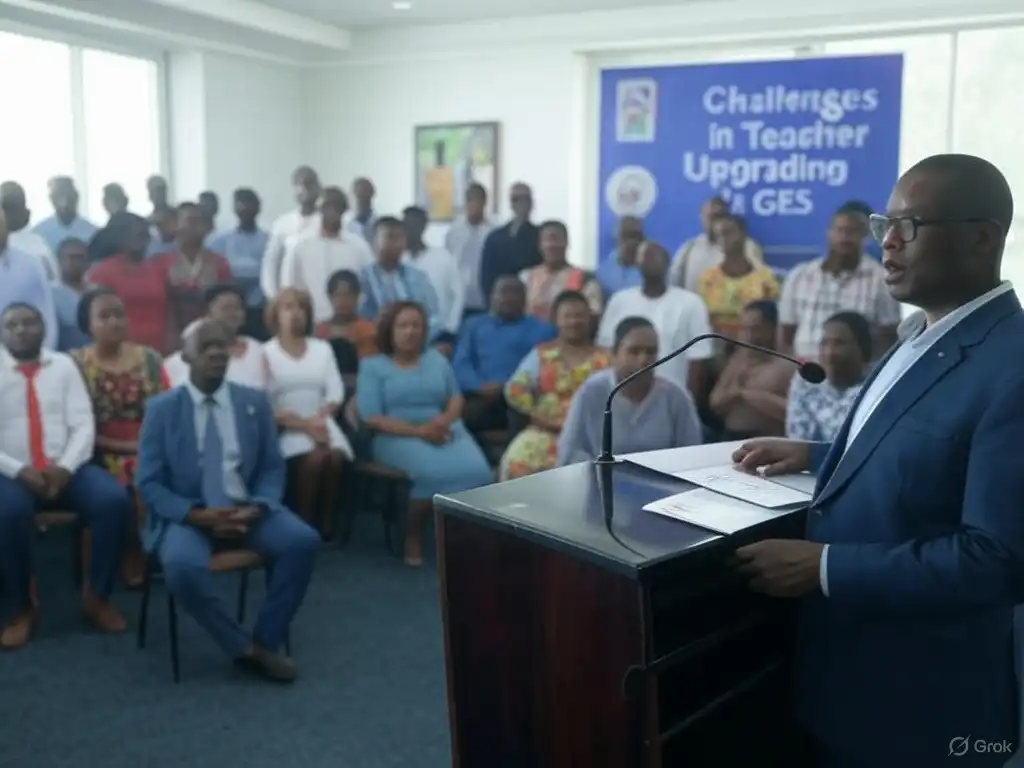
Challenges in Teacher Upgrading within the Ghana Education Service: Hon Jerry Akporhor writes

Challenges in Teacher Upgrading within Ghana
The Ghana Education Service (GES) has undergone significant changes in its entry requirements and teacher upgrading processes, impacting educators across the country. With the minimum qualification now set at a First Degree, many teachers are compelled to pursue further studies to meet this standard. However, the journey to upgrading qualifications is fraught with challenges, from securing study leave to gaining official recognition for new credentials. This post explores the evolving entry points, the struggles teachers face in meeting new requirements, and the systemic issues affecting their career progression.

There were two main entry points into the Ghana Education Service (GES). You could either enter with a Diploma in Basic Education and be appointed as a Senior Superintendent II, or with a First Degree and be appointed as a Principal Superintendent.

Before these became the standard entry routes, people could join the service with WASSCE (as Pupil Teachers) or Teacher’s Certificate ‘A’ (as Superintendent II). However, the current minimum requirement for entry is a First Degree.
To meet this new minimum requirement, teachers who entered the service with WASSCE, Certificate ‘A’, or Diploma now have to pursue further studies.
To do so, they are expected to apply for study leave, either with pay or without pay. To qualify for study leave with pay, a teacher must have served a minimum of two years in a deprived area or four years in a town or city.
Over time, however, securing study leave (especially for regular, full-time programs) has become very difficult due to the high number of applicants. As a result, many teachers have opted for alternative modes of study, including sandwich and Open and Distance Learning (ODL).
Some teachers, however, do not have the patience to wait for the required number of years or fear that their study leave applications will not be approved. So, they go ahead and enroll in programs without official permission or approval.
When these teachers complete their studies, GES often refuses to recognize their new qualifications for upgrading, because they lack the required approval letter from the Director-General.
Some officers try to use what is commonly called the “maturity period”. According to this practice, teachers must wait for seven years after acquiring their diploma before they can submit a new certificate for upgrading. This is seen as an assured route.
There is also a group of teachers who were the last batch of diploma graduates. The minimum qualification was changed to a degree before they completed their diploma programs. GES still employed them based on the diploma but directed them to upgrade to a degree as soon as possible.
In response, GES, teacher unions, and the University of Cape Coast (UCC) collaborated to design a 3-Semester Top-Up Program to help them meet the new requirement. GES granted these teachers official approval, along with a cover letter, to pursue the program starting that same year.
Unfortunately, after completing the top-up program, GES has refused to upgrade them based on the new qualification. Despite their efforts to seek redress, no one is willing to listen to their concerns.
According to feedback from a recent meeting between the teacher unions and the Director-General, all these affected teachers are supposed to be upgraded and issued with the appropriate letters.
However, a new challenge has emerged: some affected teachers have already had their ranks upgraded through informal means (commonly referred to as the “backdoor”). What they lack is the official upgrading letter.
It is unclear if this issue was addressed during the meeting. The big question now is: Should their upgrading be reversed so they can reapply officially, or should they simply be issued the upgrading letters retroactively?
The challenges faced by teachers in the Ghana Education Service highlight the need for a more streamlined and transparent upgrading process. While initiatives like the 3-Semester Top-Up Program show promise, the lack of follow-through and recognition from GES has left many educators in limbo. The unresolved question of how to handle informal upgrades further complicates the situation, leaving teachers uncertain about their career paths. Moving forward, GES and teacher unions must work together to address these systemic issues, ensuring that all teachers are supported in meeting the new standards and receiving the recognition they deserve for their efforts.

Finance Minister Unveils Plan to Clear Ghana’s 2024 Payables and Strengthen Fiscal Discipline

Finance Minister Unveils Plan

Finance Minister Unveils Plan

Ghana’s Finance Minister, Dr. Cassiel Ato Forson, recently laid out a series of steps aimed at tackling the growing backlog of unpaid government bills in 2024. Speaking to investors during a meeting in Washington, D.C., he presented a detailed strategy designed to restore fiscal discipline, build confidence in Ghana’s public financial system, and enhance transparency. The government’s objective is not just to clear the debts that have accumulated over the years, but also to put in place robust systems that prevent similar problems in the future.

One of the key initiatives Dr. Forson discussed involves a comprehensive audit of all outstanding financial obligations the government has yet to honor. To ensure this process is both thorough and independent, the Ministry of Finance has enlisted the Auditor General as well as two separate audit firms to conduct a focused eight-week review of these liabilities. According to Dr. Forson, this audit will help determine which claims are valid and which might be irregular or inflated. The findings are expected to serve as a roadmap for resolving discrepancies and improving overall financial accountability across government institutions.

He stressed that cleaning up these commitments is a necessary step toward creating a more stable fiscal environment. “We’re not just reviewing these obligations to pay them off,” Dr. Forson explained. “We want to understand where things went wrong, address the root causes, and ensure such problems don’t persist in the future.” This kind of retrospective analysis, he said, is crucial for rebuilding trust with both domestic and international stakeholders.

In addition to addressing existing payables, the government is taking action to prevent the future accumulation of unauthorized expenditures. A significant step in this direction is the amendment of Ghana’s Procurement Act. Under the new law, which comes into effect on April 3, 2025, no government contract can be approved unless it receives prior authorization from the Ministry of Finance. This rule aims to tighten spending controls and ensure strict compliance with the Public Financial Management (PFM) Act, which governs how public resources are handled in Ghana.

READ: Bright Simons: Ghana’s IMF Exit Is More Politics Than Progress

These measures are part of a broader push to overhaul the country’s public financial management framework. Another major development is the amendment of the Public Financial Management Act of 2016 (Act 921). With the recent changes, two critical fiscal rules have been introduced. The first is a debt rule, which targets reducing the debt-to-GDP ratio to 45% by the year 2035. This is a long-term goal aimed at lowering Ghana’s public debt burden to more sustainable levels. The second rule requires the government to maintain an annual primary budget surplus of at least 1.5% of GDP, calculated on a commitment basis. In simple terms, this means the government must ensure that its revenue exceeds its spending, excluding interest payments on existing debt.

To make sure these new rules are followed, the government has set up an Independent Fiscal Council. This body will track fiscal performance and publish reports, adding another layer of transparency to the system. Dr. Forson noted that this kind of independent oversight is essential for building credibility and ensuring that the new policies are not just words on paper, but actually implemented and followed.

In a further move to reinforce accountability, the Ministry of Finance has created a Compliance Division. This division is specifically tasked with monitoring how well Ministries, Departments, and Agencies (MDAs) are adhering to their financial responsibilities. A new Director has already been appointed to lead this division, and their mission is to ensure that MDAs stay within their budgets and meet their financial obligations in a timely manner.

To make this monitoring process more visible and competitive, the government plans to roll out a Public Financial Management Commitment Control Compliance League Table. This tool will publicly rank MDAs based on how well they manage their expenditures and stick to financial guidelines. The goal here is to foster a culture of fiscal responsibility by recognizing those who perform well and highlighting areas that need improvement.

ALSO READ: IMF Pledges Support for Ghana Amid Global Tariff Impact

Dr. Forson emphasized that all these efforts demonstrate the government’s serious commitment to fixing past issues while laying a strong foundation for the future. By actively resolving unpaid bills, enforcing new financial regulations, and increasing transparency, the government hopes to rebuild investor confidence and promote sustainable economic growth. “We’re not just interested in quick fixes,” he said. “We’re creating a system that will work now and continue working long into the future.”

The Finance Minister’s message to investors was clear: Ghana is taking decisive steps to improve its fiscal health, manage public resources more effectively, and create a transparent system of financial governance. These reforms, if fully implemented, could go a long way in stabilizing the economy, attracting investment, and fostering long-term development.

For more interesting articles, Click Here


Bright Simons: Ghana’s IMF Exit Is More Politics Than Progress

Ghana’s IMF Exit Is More Politics

Ghana’s IMF Exit Is More Politics

Ghana’s recent decision to exit the International Monetary Fund (IMF) program ahead of schedule seems to be driven more by political image than genuine economic strategy, according to Bright Simons, Vice President of the policy think tank IMANI Africa. In his view, the move is largely symbolic, with both the government and the IMF aiming to present a public image of success—even if the underlying fiscal goals remain unachieved.

Simons expressed skepticism about the long-term significance of this decision. He painted a picture of a government eager to showcase progress but unwilling to commit fully to the difficult reforms that would ensure lasting financial stability. “The IMF will do a victory lap, the government will join in celebrating, and it will all look like a win,” he said. “But by 2028, we still won’t meet those targets. And by that point, we’ll no longer be in the program, so there will be no one to hold us accountable.”

READ: IMF Pledges Support for Ghana Amid Global Tariff Impact

For him, the early withdrawal isn’t just about exiting a financial agreement—it symbolizes a loss of commitment to fiscal discipline. The targets, such as reducing debt-to-GDP ratios or tightening public spending, were supposed to guide Ghana’s economic reforms. But once the structure and oversight provided by the IMF are gone, there’s little incentive for the government to stay on track. “The question becomes: do we still care about those targets without the program? Right now they matter, but by then, they probably won’t anymore.”

Simons was critical of both the government and the IMF, accusing them of focusing more on how the situation looks than on the actual economic realities. “They’ve elevated signalling above substance,” he argued. “And the government is going to take full advantage of that shift in priorities.” Without the external pressure and technical assistance the IMF provides, Simons doubts the government will maintain the political will necessary to carry out the difficult reforms.

One of his key concerns is that ending the program early removes the mechanisms that would have helped Ghana stay the course between 2026 and 2028—the period when much of the program’s intended impact would be most needed. According to him, if the IMF had truly wanted Ghana to meet those fiscal targets, it would have supported the government’s earlier request to extend the program. That extension, he said, would have kept the necessary “program levers” in place to push for the reforms and discipline required.

Without those levers, Ghana now has more freedom to chart its own path. While that might sound empowering, Simons suggests it could actually be a way to avoid the hard decisions. “Now they have more flexibility, sure—but that also means less accountability,” he explained. He believes that Ghana will try to regain access to international markets and source financing through other channels, possibly from countries or institutions that don’t demand the same level of fiscal reform. “If they think they can return to market borrowing, which they probably will by that time, then IMF goals like reducing debt to 55% or 70% of GDP will become irrelevant.”

He pointed to other African nations like Kenya and Nigeria as examples Ghana might try to follow. Kenya, he noted, ended its own IMF program early and managed to raise $1.5 billion from the Gulf region. Nigeria, on the other hand, has refused to engage with the IMF entirely in recent years. But while these countries may have found alternative sources of financing, Simons warned that Ghana’s situation might not be comparable. The real question is not whether Ghana can find money elsewhere—but whether it can implement meaningful reforms without the external discipline provided by institutions like the IMF.

“If you’re not serious about achieving those targets, then the whole discussion becomes irrelevant,” Simons said. “What matters is whether you’re truly reforming your institutions and economy. And right now, we don’t see that hunger, that urgency.”

ALSO READ: Nursing Training Admission Forms for 2025/2026 Out: Buy and Apply Here

He emphasized that while IMF programs often don’t come with huge financial payouts, their value lies in the credibility and discipline they bring. It’s not about how much money Ghana receives directly from the IMF, but about the trust and structure the program provides to the government and investors alike. “The real strength of the IMF program is that it forces governments to make hard, necessary choices. That’s where its power lies—not in the cash, but in the commitment it demands.”

Simons ended his commentary with a blunt assessment of the situation: “This is politics over purpose,” he said. “And we’ve seen how that story ends. It never ends well.”

In his view, Ghana’s early exit from the IMF program may offer short-term political advantages, but it risks undermining the long-term fiscal reforms the country desperately needs. The concern is not just about missing targets, but about missing the opportunity to truly reshape the economy in a sustainable way.

FOR MORE: CLICK Here


Analyzing Chief Justice Torkornoo’s Suspension and the Implications of Article 146(6) of the Ghanaian Constitution

Mahama suspends Chief Justice Gertrude Torkornoo

The suspension of Chief Justice Gertrude Torkornoo not only causes immediate interruptions within the judiciary, but also puts a long shadow on the independence and integrity of the legal system in Ghana. These actions, in particular against a polena of the judiciary, challenge the fundamental principle according to which the judges should operate free from external pressure and influences, in particular those that emit from the executive branch. The independence of the judiciary is essential to support the state of law; Any compromise perceived in this independence can lead to a significant erosion of public trust in legal institutions.

As discussed by Osafo (2022), the Judicial History of Ghana is marked by a complex interaction of cooperation and conflict, suggesting that the judiciary has sailed long political landscapes full of challenges. The suspension of Chief Justice Gertrude Torkornoo embodies this ongoing struggle, raising questions about possible branches for judicial appointments and political supervision, or their lack, which can come into play. The population could consider this suspension as an omen of a greater political invasion in judicial matters, establishing a precedent concerning that threatens the delicate balance necessary for an independent judiciary.

In a wider context, the uncertainty that surrounds its suspension can generate anxiety among the lawyers, the officials of the court and the public. As articulated by Yankson-Mensah (2020), the role of the judiciary of referee of justice is strongly based on the perception that its functions are performed without prejudice or undue influences. When a head of justice is suspended, it creates a chain effect: the owners of the judicial system can find themselves questioning the legitimacy and status of ongoing legal proceedings, fearing that decisions can be motivated politically rather than based exclusively on legal merit. This can inadvertently lead to self -censorship between judges and legal practitioners who could feel under pressure to align their decisions with the prevailing political narratives in order to safeguard their positions, further complicating the independence of the judiciary.

In addition, this suspension raises critical implications for future interactions between the judiciary and the executive branch. If this act of suspension is not contested, it can consolidate a dangerous precedent that allows the executive to exert influence on judicial actions. In fact, each of these suspensions could create a chilling effect, dissuading the judges from making bold decisions that could go against the interests of politically powerful figures. Consequently, the judiciary risks losing its essential function as a control of government power, leading to potential abuse of authority and the marginalization of vulnerable populations that depend on judicial interventions for justice.

The formal survey on the conduct of the main judge Tukornoo will probably be a litmus test for the resilience of the Ghana judiciary in the midst of a growing climate of political interference. The results of this investigation can reaffirm or dismantle the trust in judicial independence, modeling the future trajectory of legal governance in Ghana. While the interested parties await these developments, the judiciary is at a precipice, facing the double challenge of maintaining the trust of the public, safeguarding the principles on which it was built., In analyzing article 146 (6) of the constitution of Ghana, it is essential to understand the structure that provides for judicial conduct and the mechanisms to blame the high-ranking judicial authorities.

This article outlines the reasons for the removal of a head of justice, suggesting that misconduct must be proven by formal investigation, balancing the vulnerability to political influence with the necessary verifications on authority (AYETEY, 2020).

The circumstances of the suspension of Judge Torkorno require a careful examination of this constitutional protection, as the investigation process will test the principle of judicial liability versus the potential of politically motivated actions against judges. Scholars of law state that this balance is not only critical for individual judges, but it is fundamental to preserve the democratic principles of Ghana and strengthen constitutionalism amid evolutionary governance challenges (PHEA, 2023).

An exploitation of article 146 (6) reveals the legislative intention behind judicial liability in Ghana. The provision stipulates that a head of justice can only be removed from office by “inability to perform the duties of his office, whether due to the body or mind disease or any other cause” or misconduct. Such conditions are projected not only as a means of protection for judicial employees, but also as safeguards for the independence of the judiciary of political interference. The requirement of a formal investigation means an essential procedural step that aims to ensure that any allegations of misconduct are subjected to strict scrutiny. This can be interpreted as a commitment to the constitution of defending the rule of law and ensuring that the integrity of the judiciary is maintained.

The implications of the suspension of Chief Justice Gertrude Torkornoo in relation to article 146 (6) raise critical questions about the interaction between judicial independence and political power. With its suspension being perceived by some as politically loaded, it forms the backdrop against which the inquiry will unfold. If the inquiry is perceived as fair and impartial, it may reaffirm public confidence in the judiciary and confirm that the judicial mechanisms of responsibility are actually functioning. However, if the inquiry reveals prejudice or seem to serve political goals rather than a search for truth, it may undermine the judiciary’s credibility and promote public skepticism in relation to its role as a check on government power. Judicial investigations on high-ranking employees, especially in the current political climate of Ghana, have the potential to strengthen the position of the judiciary or to expose it to greater politicization.

In addition, the procedural integrity of the investigation itself becomes a focal point for evaluating the results of Judge Torkorno’s suspension. If it follows the rigorous patterns established by Article 146 (6), the resulting discoveries and recommendations would play a significant role in defining the future of the judiciary in Ghana. The results may vary from a reintegration that strengthens the position of the head of justice against political opponents to potential removal that can establish a precedent to maneuver policies against judges in the future. The procedures and conclusions of the inquiry can trigger a broader debate on checks and balances in the political system of Ghana and the methods used to blame powerful court figures.

Finally, the implications of being involved with Article 146 (6) in light of the suspension of Judge Torkorno serves as an important reminder of the fragile balance between judicial independence and responsibility. Understanding this relationship is vital to ensure that the judiciary of Ghana remains a bastion of democratic governance and an authorized voice in defending the country’s constitutional structure. The results of the inquiry will certainly have branches not only for the head of justice, but to the broader legal and political scenario in Ghana.

The results after the formal investigation into the conduct of the Torkornoo can significantly affect public confidence in the Judicial Power and the broader legal panorama of Ghana. Given the fundamental role played by the Chief Justice of the Supreme Court of Ghana which includes to defend the rule of law and guarantee the impartial administration of justice, the findings of this investigation will have deep implications for the perception of judicial integrity among the Ghanaians.

If the investigation concluded that the Chief Justice Torkorno maintained the highest required behaviour standards, it could serve to strengthen public confidence in the Judiciary. This statement would not only solidify its legitimacy, but it could also reinforce the independence of the Judiciary as a cornerstone of Ghana’s democratic framework (Abankwa, 2023). The act of cleaning the name of the Supreme Court leader would be emblematic of a commitment to competent governance, embodying the values ​​of responsibility, transparency and adhesion to ethical standards.

On the contrary, the unfavorable findings of the investigation could give a significant blow to the entire judicial institution. If accusations of misconduct are justified, it could generate generalized skepticism with respect to the integrity of the Judiciary, irrevocably damaging the public’s perception of their justice and independence (Nyamekye, 2022). This could discourage citizens to participate fully with the legal system, particularly among those who could already feel marginalized by existing social inequalities.

A negative result could lead to a culture of distrust and further erode the already faint relationship between the Judiciary and the population. In a nation where the rule of law is essential for governance and civil society, this result could have repercussions that extend far beyond immediate judicial concerns, affecting civil rights and public discourse.

In addition to the public feeling, the findings of the investigation could precipitate substantial institutional reforms within the Judiciary. If the investigation reveals areas in which the conduct of the president of the president of Torkornoo was diverted from the established ethical norms, this could pave the way for radical changes destined to safeguard against future violations, improving the mechanisms of responsibility that govern judicial behaviour. These reforms can also point to other judicial figures and applicants the non -negotiable behavior standards that are expected of them, thus reaffirming a culture of professionalism (Kuruk, 2020).

In addition, research is not only a matter of individual responsibility, but also embodies a broader social struggle for justice and equity. The process by which the investigation is carried out will be analyzed as closely as its results. It highlights the importance of maintaining exhaustive and transparent processes in judicial consultations, which are essential to promote a healthier legal environment. If the process is handled diligently, it can also offer a model for future judicial consultations, emphasizing the need for institutional processes that reflect democratic responsibility and integrity.

READ: Mahama suspends Chief Justice Gertrude Torkornoo

The implications of the investigation are of great reach, configuring not only the future of Chief Justice Gertrude Torkornoo but also establishing a precedent of how the judiciary operates within the democratic framework in evolution of Ghana. As the investigation is starts, continues and ends hopefully, it is still crucial to recognize its potential to strengthen or undermine the fundamental principles of justice that support the legal system of the nation.


Citations:

Osafo, B. (2022). Cooperation and conflict: a history of the judiciary in Ghana, 1853-1966 (Doctoral dissertation, University of Cape Coast).

Yankson-Mensah, M. (2020). Transitional justice and constitutionalism: The case of Ghana. South African Journal of Criminal Justice, 33(3), 542-561.

Ayetey, J. S. (2020). Ghana’s jury crisis: implications for constitutional human rights. Oxford University Commonwealth Law Journal, 20(1), 1-26.

Phea, G. (2023). Culturally Respected but Not Legally Protected: Legal Case Disparities and Intellectual Property Rights In Contemporary Ghanaian Textile Design (Doctoral dissertation).

Abankwa, D. (2023). The Receptivity, Viability, and Implications of China’s State Capitalist Development Model: A Ghana Case Study. University of Delaware.

Nyamekye, R. (2022). Unseating Broken Stories: A Decolonizing Case Study of Warrior Queenmother, Nana Yaa Asantewaa (Doctoral dissertation, University of Saskatchewan).

Kuruk, P. (2020). Traditional knowledge, genetic resources, customary law and intellectual property: A global primer. Edward Elgar Publishing.

Ghana Education News