Registration Opens: Join the 2026 BECE Home Mock to Secure Grade 1s JOIN NOW ×

ECOWAS donates to Dzorwulu Special School

ECOWAS donates to Dzorwulu Special School

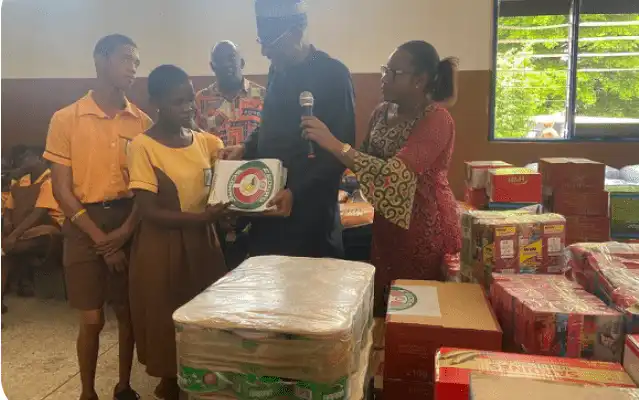
Last Wednesday, the Economic Community of West African States, ECOWAS, made a donation of assorted items to the Dzorwulu Special School situated in Accra Ghana.

This donation was made as part of the school’s 49th anniversary celebration of the regional bloc.

Some of the many items donated to the Dzorwulu Special School are rice, bags of sugar, boxes of vegetable oil, boxes of palm oil, cartons of sardines, cartons of mackerel, cartons of milk, bags of salt, bags of gari, cartons of matches, bags of pure water, cartons of soap-bar, cartons of milo, and cartons of canned tomatoes.

The ECOWAS also donated cartons of soap-powder, cartons of bathing soap, cartons of toothpaste, packs of toilet rolls, packs of sanitary pads, colouring books, pens, pencils, colouring pencils, eraser, sharpener, ruler (20cm), and white board marker.

Ambassador Baba Gana Wakil, the Resident Representative of ECOWAS in Ghana, is the one who led the delegation to present the items to the school.

He said that this donation was part of the ECOWAS community’s effort to promote an all inclusive society where the safety of children with special needs are met.

He opined that all children in ECOWAS, no matter their peculiarities, are citizens of the bloc, hence their welfare was of topmost priority to the bloc, pledging the commitment of ECOWAS in supporting vulnerable members of society.

Ambassador Gana Wakil said the gesture had been replicated in all the ECOWAS member states.

ALSO READ: Teacher licensure exams ‘insult’ to Colleges of Education – Mahama

“This is something that aligns with the social inclusion agenda of ECOWAS through the region and member states. What I am doing is what my colleagues and ambassadors of the ECOWAS all over the other countries are doing,” he stated.

For him, the items were to complement the effort of government in meeting the needs of the school, noting that children with special needs must be supported by all in order to enable them to achieve their goals in life.

He said all children in ECOWAS, no matter their challenges, are citizens of the bloc, hence their welfare was of topmost priority to the bloc, pledging the commitment of ECOWAS in supporting vulnerable members of society.

Amb. Gana Wakil said the gesture had been replicated in all the ECOWAS member states.

“This is something that aligns with the social inclusion agenda of ECOWAS through the region and member states. What I am doing is what my colleagues and ambassadors of the ECOWAS all over the other countries are doing,” he stated.

In addition, he noted, “We give special attention to these young people. And we hope that these items will support the work of the school. These children are ECOWAS citizens in Ghana, and it is our duty to support them in any way possible.”

The headmaster of the Dzorwulu Special school, Frederick Tetteh, thanked ECOWAS for the kind gesture, pointing that the school was in dire need of the items donated.

He said the items would be used for the purpose for which they were donated, calling on citizens and NGOs to emulate the shining example of ECOWAS in supporting vulnerable children in society.

“We did not expect that the Ambassador in his capacity will have time to pay us a visit and give us these items. We are very grateful to him and his team for this great support. Indeed, we try to feed the kids four times daily and having all these foodstuffs will add to our efforts. Thank you, Ambassador, for these gifts,” Mr Tetteh observed.

He also called on the ECOWAS Ambassador to use his office to promote the rights of children with special needs in the region, stressing that society has stigmatized such persons.

Share Our Post on the Topic ‘ECOWAS donates to Dzorwulu Special School’.

To Read More Stories, Click Here.

ECOWAS lifts all sanctions on four member states run by military

ECOWAS lifts all sanctions on four member states run by military

The Economic Community of West African States (ECOWAS) lifts sanctions imposed on Niger Republic, Mali, Burkina Faso, and the Republic of Guinea-Bissau, member states that are ruled by the military.

The ECOWAS officials said on Saturday, Feb. 24, that the decision was based on humanitarian concerns, particularly given the Lent season and the approaching month of Ramadan.

The day marked a significant turn as the regional bloc decided to lift sanctions imposed on the countries following coups. This decision comes amidst a backdrop of political turmoil across the region.

The lifting of sanctions includes measures such as the no-fly zone and border closures, effective immediately, as announced by ECOWAS Commission President Omar Alieu Touray. Touray emphasized that the decision was made on humanitarian grounds to alleviate the suffering caused by the sanctions.

The summit aimed to address the pressing challenges facing the region and urged three military-led nations – Niger, Mali, and Burkina Faso – which had previously withdrawn from the bloc, to reconsider their decision.

READ ALSO: Akufo Addo Reacts To Mali And Burkina Faso’s Exit From ECOWAS

ECOWAS Chairman and Nigerian President Bola Tinubu stressed the importance of restoring constitutional order in member states, including the suspended countries and Guinea.

The summit also discussed the conditions for lifting sanctions, including the immediate release of Niger’s ousted President Mohamed Bazoum and his family.

The move to ease sanctions is seen as a gesture of appeasement to persuade the withdrawing states to remain within the alliance, amidst concerns about potential coups and the fragmentation of ECOWAS.

The summit underscored the importance of regional integration efforts and the need for dialogue to resolve political crises in the region.

ECOWAS stands for the Economic Community of West African States. It’s a regional intergovernmental organization founded in 1975 with the aim of promoting economic integration and cooperation among its member states in West Africa. ECOWAS has 15 member states, including Benin, Burkina Faso, Cape Verde, Ivory Coast, The Gambia, Ghana, Guinea, Guinea-Bissau, Liberia, Mali, Niger, Nigeria, Senegal, Sierra Leone, and Togo. Its activities include promoting regional trade, facilitating economic development, and fostering political stability and peace in the region.


Akufo Addo Reacts To Mali And Burkina Faso’s Exit From ECOWAS

National Cathedral: Akufo-Addo should be made to pay the $58m Akufo Addo Reacts To Mali And Burkina Faso's Exit From ECOWAS

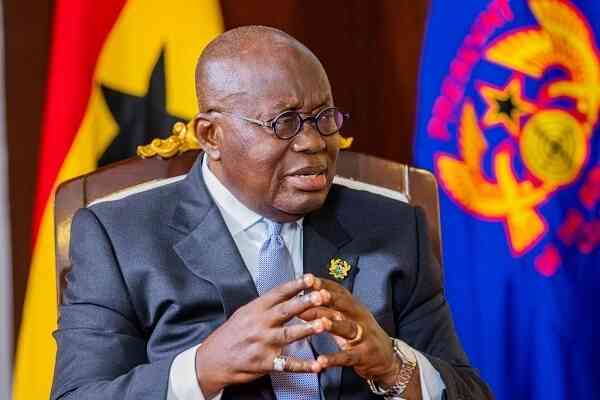
President Akufo-Addo expressed deep disappointment with Mali, Niger, and Burkina Faso for opting to withdraw from the Economic Community of West African States (ECOWAS). He emphasized the potential negative impact this decision could have on the citizens of these nations. Discussions are yet to occur to thoroughly assess the consequences of their withdrawal and to chart a course forward.

Former ECOWAS Chair, President Akufo-Addo, underscored the need for a summit to examine the implications of the withdrawal. He mentioned awaiting a signal from the current ECOWAS head, Nigerian President Tinubu, to determine the timing of the summit.

Mali, Burkina Faso, and Niger jointly declared their immediate withdrawal from ECOWAS, expressing dissatisfaction and claiming that the regional organization had deviated from its intended purpose, no longer aligning with their interests. In a joint press statement released on Sunday, January 28, the three countries formally announced the denunciation of their ECOWAS membership.

The statement expressed regret and disappointment after 49 years of ECOWAS membership, asserting that the organization had drifted from the ideals of its founding fathers and the spirit of Pan-Africanism. This withdrawal followed the suspension of Mali, Burkina Faso, and Niger by ECOWAS, a response to coups in these countries and their failure to comply with ECOWAS directives to restore civilian rule.

In summary, the withdrawal is a complex situation marked by dissatisfaction, disappointment, and a perceived deviation from the founding principles of ECOWAS by Mali, Burkina Faso, and Niger, leading to a formal denunciation of their membership. The situation underscores the challenges within the region regarding political stability and adherence to regional directives.

ECOWAS, the Economic Community of West African States, is a regional economic union in West Africa. Established in 1975, its main objectives include promoting economic integration, peace, and stability in the region. ECOWAS member states collaborate on various issues, such as trade, agriculture, and infrastructure development, to foster regional cooperation and development. The organization also plays a role in conflict resolution and maintaining political stability in West Africa.

Burkina Faso, Niger and Mali Quit the ECOWAS Regional Block.

Burkina Faso, Niger and Mali quit the ECOWAS regional block.

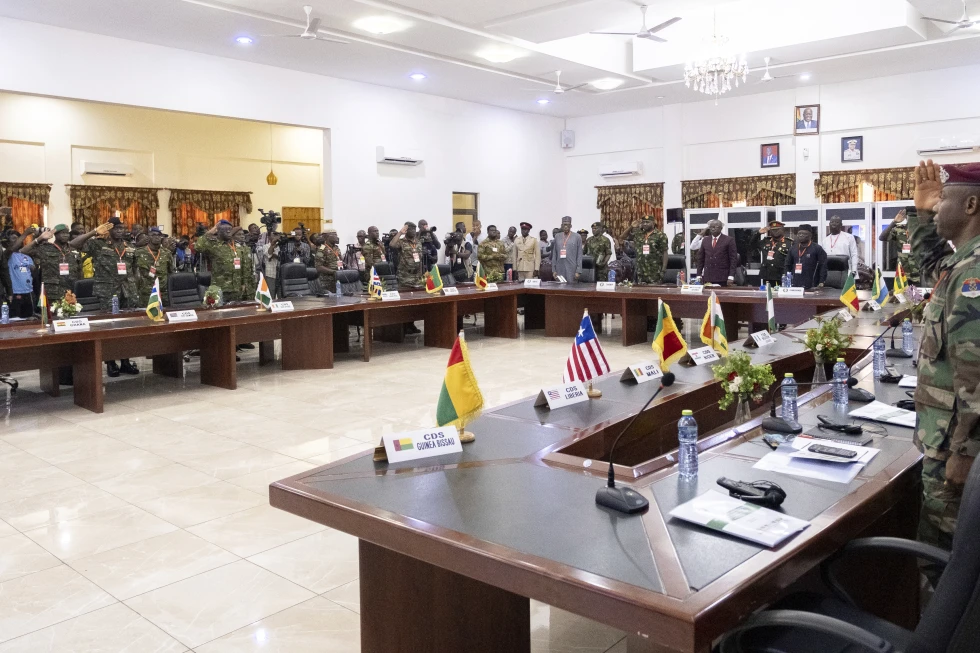
A meeting between the defense chiefs from countries in the Economic Community of West African States (ECOWAS) excluding Mali, Burkina Faso, Chad, Guinea and Niger was held on Thursday, August.

The regional economic bloc known as ECOWAS has been quit by three West African nations. In a joint statement on Sunday, January 28, 2024, their respective juntas said the bloc had imposed “inhumane” sanctions to reverse the coups in their nations and had also “moved away from the ideals of its founding fathers and Pan-Africanism.”

Burkina Faso, Niger and Mali Quit the ECOWAS Regional Block.

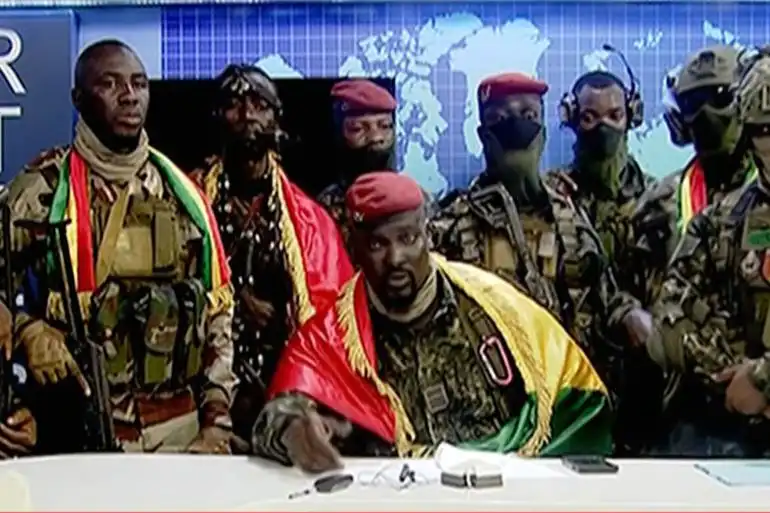
ECOWAS, the regional economic bloc known as ECOWAS, has been withdrawn by Mali, Burkina Faso, and Niger, their respective juntas announced Sunday.

READ: Free SHS is expensive – Parents bemoan as over 137,000 students fail to report to school due to lack of funds

According to a joint statement read out on state television in all three countries, the juntas have decided to withdraw Burkina Faso, Mali and Niger from the Economic Community.

“Furthermore, ECOWAS, under the influence of foreign powers, betraying its founding principles, has become a threat to its member states and its populations whose happiness it is supposed to ensure,” their statements read.

Widely seen as West Africa’s top political and regional authority, the 15-nation of ECOWAS regional block — formed in 1975 to “promote economic integration” in member states — has struggled in recent years to reverse rampant coups in the region where citizens have complained of not benefitting from rich natural resources.

It’s not immediately clear how that process of the countries’ withdrawal from the bloc would be carried out. ECOWAS didn’t immediately respond to an Associated Press inquiry, though the bloc has said it only recognizes democratic governments.

ECOWAS said in a statement that it had not been notified of the countries’ decision to quit the bloc.

Its protocol provides that withdrawal takes up to one year to be completed.

“Burkina Faso, Niger and Mali remain important members of the Community and the Authority remains committed to finding a negotiated solution to the political impasse,” it said.

Widely seen as West Africa’s top political and regional authority, the 15-nation bloc of ECOWAS — formed in 1975 to “promote economic integration” in member states — has struggled in recent years to reverse rampant coups in the region where citizens have complained of not benefitting from rich natural resources.

READ: How to get your Banned WhatsApp Account Restored in 72 Hours (Based on Experience)

In parts of West Africa, ECOWAS is fast losing its effectiveness and support among citizens, who see it as representing only the interests of the leaders and not that of the masses, said Oge Onubogu, director of the Africa Program at the Washington-based Wilson Center think tank.

day’s announcement is the latest twist in a series of events that have deepened political tension in West Africa since it experienced its latest of a string of coups — in Niger — last year. It also comes as the three nations have formed a security alliance after severing military ties with France and other European nations and turning to Russia for support.

The joint statement accused ECOWAS regional block of failing to assist those three countries in fighting “existential” threats like terrorism — the common reason cited by their militaries for deposing their democratically elected governments.

“When these States decided to take their destiny into their own hands, it (ECOWAS) adopted an irrational and unacceptable posture in imposing illegal, illegitimate, inhumane and irresponsible sanctions in violation of its own texts,” the statement noted.

Rather than improve their situations, the juntas said the ECOWAS sanctions have “further weakened populations already bruised by years of violence.”

MORE STORIES: CAGD Salary Payment | The Controller set payment dates for 2024

Last week’s botched meeting between Niger and ECOWAS regional block— which said its delegation couldn’t visit Niger because of a flight problem — was seen by Niger’s junta as an opportunity to blame the bloc for how it has responded to the coup there, according to Cheta Nwanze, an analyst at Lagos-based SBM Intelligence geopolitical research firm.

“This withdrawal looks like an even more diminishing influence of the two traditional superpowers in West Africa — France and Nigeria,” Nwanze said

Ghana Education News