Registration Opens: Join the 2026 BECE Home Mock to Secure Grade 1s JOIN NOW ×

Council of private schools questions rationale for Smart Schools Project

The Ghana National Council of Private Schools (GNACOPS) has raised significant concerns about the government's Ghana Smart Schools Project, a program designed to advance technological education by providing tablets to Senior High School students across the nation

The Ghana National Council of Private Schools (GNACOPS) has raised significant concerns about the government’s Ghana Smart Schools Project, a program designed to advance technological education by providing tablets to Senior High School students across the nation.

Enoch Kwasi Gyetuah, the National Executive Director of GNACOPS, criticized the initiative as misguided and a misallocation of resources that could be better spent addressing the core challenges plaguing the country’s educational system.

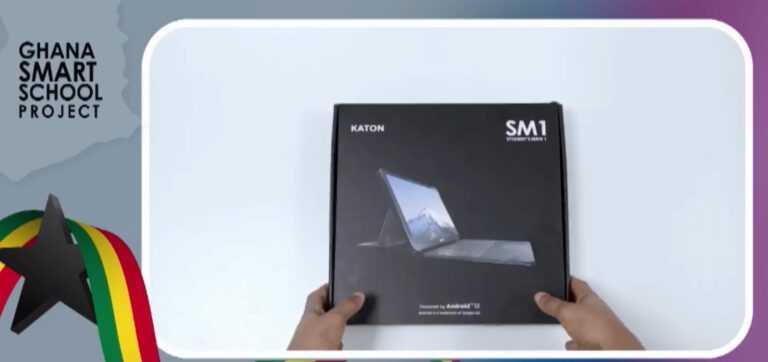
The initiative, championed by President Nana Akufo-Addo, promises to distribute 1.3 million pre-programmed tablets to students, aiming to bolster computer literacy and technological skills.

However, Gyetuah, in a candid interview on the Onua FM Etifi Nsem show, voiced skepticism about the project’s prioritization amid more pressing infrastructure and connectivity issues facing many schools.

Gyetuah’s concerns extend beyond the logistics of distributing and maintaining the devices.

He questioned the feasibility of integrating these tablets into the educational framework, especially in areas plagued by network challenges and inadequate infrastructure.

ALSO READ: MTN Ghana commissions GHC2.3m robotics center at MEGHIS

His remarks underline a fear that the initiative, while technologically forward-looking, might not adequately address or even acknowledge the foundational problems within the educational sector.

Moreover, Gyetuah hinted at a political motive behind the timing and rollout of the project, labeling it more as a political maneuver than a genuine educational policy aimed at benefiting the student population.

This criticism is sharpened by the fact that 2024 is an election year in Ghana, suggesting that the initiative might be aimed more at garnering political favor than addressing educational needs.

Another layer of Gyetuah’s critique involves the current policies prohibiting the use of electronic devices by students in schools.

He questioned how the new initiative would align or conflict with existing regulations, indicating a potential policy contradiction that could undermine the project’s implementation.

Furthermore, Gyetuah expressed disappointment over the government’s consistent exclusion of private schools from such educational policies, highlighting a broader issue of equity and inclusiveness in policy formulation and implementation.

In essence, while the Ghana Smart Schools Project might represent a step towards modernizing the country’s educational system, the criticisms from GNACOPS underscore the need for a more holistic approach that addresses foundational educational challenges while also ensuring inclusivity and practicality in its execution.

Share Our Post on The Topic ‘Council of private schools questions rationale for Smart Schools Project’.

To Read More Stories, Click Here.

15 SHS Selected for Initial Phase of Smart Schools Project

planned demonstration

Nana Gyamfi Adwabour, the Executive Director of the Center for National Distance Learning and Open Schooling (CENDLOS), has said that 15 Senior High Schools (SHS) have been selected for the initial phase of Smart Schools project.

This initiative, slated for inauguration by President Nana Addo Dankwa Akufo-Addo on March 25, 2024, in Accra, aims to revolutionize e-learning and digital education in the country.

According to a statement from the Ministry of Education, released on March 20, the project intends to bolster senior high school (SHS) education by providing cutting-edge teaching and learning management systems, digital educational content, and electronic devices to all senior high and Technical Vocational Education and Training (TVET) schools nationwide.

In an interview on Citi FM’s Eyewitness News, Nana Adwabour elaborated on the project’s rollout strategy, revealing that it will be executed in phases. The initial phase will involve 15 carefully selected SHSs across the country, with a focus on assessing the impact and effectiveness of the initiative on Ghanaian students.

READ ALSO: Ghana Wins All Three Awards At WAEC Excellence Awards

Nana Adwabour emphasized that the first phase will concentrate on SHS levels 1, 2, and 3. However, he assured that all remaining 488 SHSs will eventually benefit from the project as it progresses through subsequent phases. He urged patience from stakeholders, affirming that the project aims to benefit all schools in due course.

Collaboration with the Ghana Education Service (GES) and TVET is integral to ensuring the successful implementation of the Smart Schools Project, Nana Adwabour highlighted. He outlined a structured distribution plan for laptops and electronic devices, which will prioritize a pyramid approach, starting from the national level and cascading down to the regional and district levels.

“We have selected 15 schools for the first phase, and additional schools will be included in subsequent phases. We have close to 503 SHSs, so everyone should be patient and wait for their turn,” Nana Adwabour reiterated.

This ambitious project represents a significant leap forward in Ghana’s educational landscape, promising to empower students with the tools and resources necessary for success in the digital age. With collaborative efforts from government agencies and stakeholders, the Smart Schools Project aims to pave the way for a brighter future for Ghanaian youth.


Ghana Education News