Ghana to Criminalize Paternity Fraud as ‘A Plus’ Proposes Mandatory DNA Testing Bill
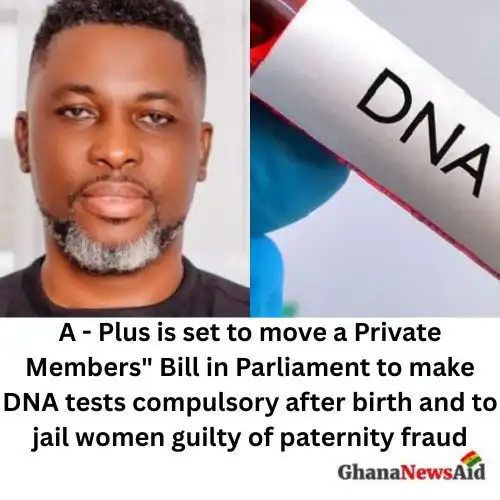
In a move that has sent shockwaves through the Ghanaian social and political landscape, the Member of Parliament for Gomoa Central, Kwame Asare Obeng (popularly known as A Plus), is set to introduce a groundbreaking Private Member Bill aimed at criminalizing paternity fraud.
The proposed legislation, which is gaining significant traction online, seeks to impose stiff penalties, including prison terms, on women who deliberately mislead men regarding the biological parentage of a child.
The Paternity Fraud Bill: What You Need to Know
The bill is reportedly sponsored by Chris Vincent and a collective of legal and social advocates. Its primary objective is to protect “innocent men” from being forced to shoulder the financial and emotional responsibilities of children who are not biologically theirs.
Key features of the proposed bill include:
Criminal Sanctions: Potential prison sentences for women found guilty of deliberate paternity misrepresentation.
Mandatory DNA Testing: The legislation is likely to mandate DNA testing immediately after every delivery to ensure biological certainty from day one.
A Global Perspective: How Other Countries Handle Paternity Fraud
Ghana is not alone in grappling with this sensitive issue. The proposal by A Plus draws parallels with legal frameworks in several top-tier nations where paternity fraud is treated with varying degrees of severity.
Australia: One of the World’s Strictest Jurisdictions
Australia serves as a primary reference point for the Ghanaian bill. In Australia, paternity fraud cases are taken extremely seriously and can result in up to 10 years in prison for those found guilty of the deception. Australian courts also allow for “restitution,” where the non-biological father can sue for the recovery of child support payments made during the period of the fraud.
The United Kingdom and the United States
In the United Kingdom, while paternity fraud itself is rarely prosecuted as a specific criminal offense, it is often treated as “fraud by false representation” under the Fraud Act 2006.

In the United States, laws vary significantly by state. However, many states have introduced “Paternity Disestablishment” laws. These allow men to stop paying child support if DNA evidence proves they are not the father, though many courts still prioritize the “best interests of the child” over biological accuracy, often sparking intense legal debates.
Nigeria and the African Context
Regionally, Nigeria has seen a surge in calls for similar laws following reports from DNA testing centers suggesting high rates of paternity mismatch. The Ghanaian bill could set a major legal precedent for the West African sub-region if passed.
The Human Impact: Biology vs. Responsibility
The debate in Ghana is polarized. Supporters of A Plus’s bill argue that paternity fraud is a form of emotional and financial “slavery.” They contend that forcing a man to invest years of his life and resources into another man’s responsibility is a grave injustice.
Conversely, human rights activists and child welfare advocates express concern that mandatory DNA testing could destabilize families and lead to an increase in abandoned children. There are also questions regarding who would bear the cost of mandatory testing in a country already facing economic challenges.
Understanding the Science: The Role of DNA
The bill relies on the absolute accuracy of DNA (Deoxyribonucleic acid) testing. In biological terms, a child inherits half of their genetic material from the mother and half from the father.
READ: Kwame A Plus To Host Current Affairs Show On UTV
While the body manages complex systems—such as the digestive system converting food into absorbable substances or the circulatory system transporting oxygen via Red Blood Cells (RBCs)—the genetic blueprint remains the most definitive way to prove parentage.
What’s Next for the Bill?
As a Private Member Bill, the proposal will undergo rigorous scrutiny in the Ghanaian Parliament. It must be read on the floor, referred to a committee (likely the Committee on Constitutional, Legal, and Parliamentary Affairs), and survive public hearings before it can be voted into law.
Whether the bill passes or not, A Plus has succeeded in starting a national conversation that was previously whispered in private. As the 2026 legislative year progresses, all eyes will be on the Gomoa Central MP to see if Ghana will follow the Australian model of strict criminalization.