Mathematics remains a core pillar for success in the BECE. With the full implementation of the Common Core Programme (CCP), the 2026 examination will place a higher premium on problem-solving strategies and real-life application.
To help candidates navigate the syllabus effectively, we have identified the projected key topics that are frequently tested and aligned with the new inquiry-based goals.
1. Number and Numeration
This is the foundation of the entire paper. Students must be proficient in handling:
Number Bases: Operations in various bases, specifically binary.
Fractions, Decimals, and Percentages: Conversion, simplification, and application in word problems.
Ratio, Proportion & Rates: These are among the most frequently tested areas in both Paper 1 and Paper 2.
CHEAP NON-EXPIRING DATA
MTN Telecel ATBuy affordable data bundles that never expire. Reliable and Instant Delivery!
BUY CHEAP DATA NOWIndices and Logarithms: Mastering laws of indices and basic logarithmic operations.
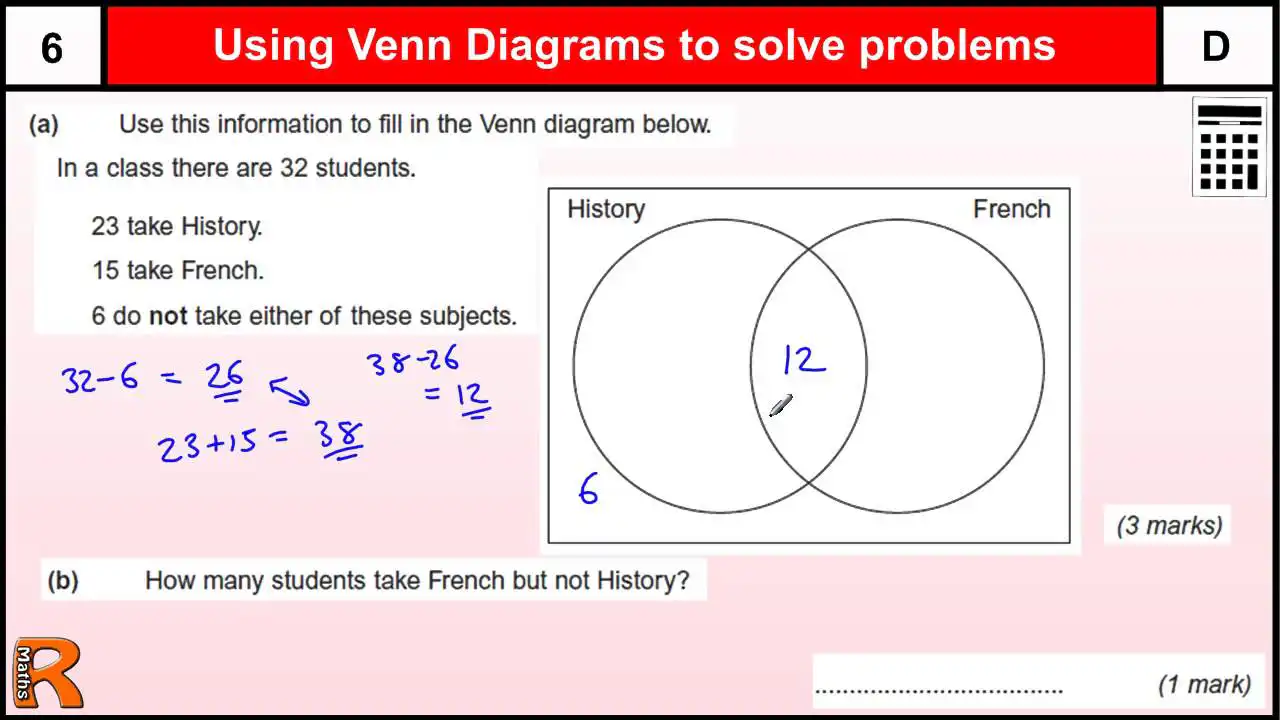
Sets: Operations on sets, including union, intersection, and Venn diagrams.
2. Algebraic Processes
Algebra often carries significant marks. Focus your revision on:
EXCEL IN YOUR EXAMS
Get instant access to the most reliable Mocks and Marking Schemes.
BUY TOP 2026 BECE MOCKS AND ANSWERSAlgebraic Expressions and Operations: Simplifying terms and factoring.
Simple Equations and Inequalities: Solving linear equations and representing inequalities on a number line.
Quadratic Equations: Solving quadratic expressions through factorization or formulas.
Linear Functions and Graphs: Plotting coordinates and interpreting graphs of linear equations.
3. Geometry and Trigonometry
This section tests your spatial awareness and calculation accuracy:
Lines and Angles: Calculating missing angles and understanding properties of parallel lines.
Polygons: Specific focus on triangles and quadrilaterals.
Circles: Mastery of circle theorems and properties.
Trigonometric Ratios: Using Sine, Cosine, and Tangent (SOH CAH TOA) to solve for sides and angles.
Transformations: Understanding translation, rotation, reflection, and enlargement.
4. Mensuration
Applied measurement is a core CCP competency:
Plane Figures: Calculating the perimeter and area of shapes like circles and squares.
Solid Shapes: Finding the surface area and volume of solids like cubes, cuboids, cylinders, cones, and spheres.
Geometric Constructions: Precision in drawing using a mathematical set and compass is essential for practical marks.
5. Statistics and Probability
The CCP emphasizes “Everyday Mathematics” for informed decision-making:
Data Presentation: Interpreting bar charts, pie charts, line graphs, and histograms.
Central Tendency: Calculating and interpreting the Mean, Median, and Mode.
Probability: Understanding the basic likelihood of everyday events.
6. Consumer Arithmetic
These topics bridge classroom learning with real-life financial literacy:
Interest: Understanding Simple and Compound Interest calculations.
Profit and Loss: Solving problems related to buying and selling.
Discounts and Commission: Practical calculations for trade and business scenarios.
Rates and Taxes: Solving applied problems related to daily financial contexts like income tax and utility rates.
7. Vectors and Matrices
Newer additions to the standard JHS toolkit:
Vectors: Basic concepts, including vector addition, subtraction, and finding magnitudes.
Matrices: Basic operations and notation (often integrated into advanced algebraic tasks).
| Topic Area | Actual Formula / Key Rule |
|---|---|
| Consumer Arithmetic | Profit % = Profit Cost Price × 100 Simple Interest (I) = Compound Amount (A) = P(1 + r/100)n |
| Mensuration (Plane) | Circle Area = πr2 | Circumference = 2πr Trapezium Area = ½(a + b)h Triangle Area = ½ × base × height |
| Mensuration (Solids) | Cylinder Volume = πr2h | C.S.A = 2πrh Sphere Volume = 4⁄3πr3 | Surface Area = 4πr2 Cone Volume = 1⁄3πr2h |
| Algebra & Trig | Pythagoras: a2 + b2 = c2 Trig (SOH CAH TOA): sin(θ) = Opp/Hyp | cos(θ) = Adj/Hyp | tan(θ) = Opp/Adj Quadratic Formula: x = -b ± √(b2 – 4ac) 2a |
| Vectors & Stats | Magnitude of Vector |v| = √(x2 + y2) Mean (x̄) = ∑fx ∑f Probability P(E) = Favourable Outcomes Total Outcomes |