
All 2026 WASSCE Social Studies Questions To Expect From WAEC
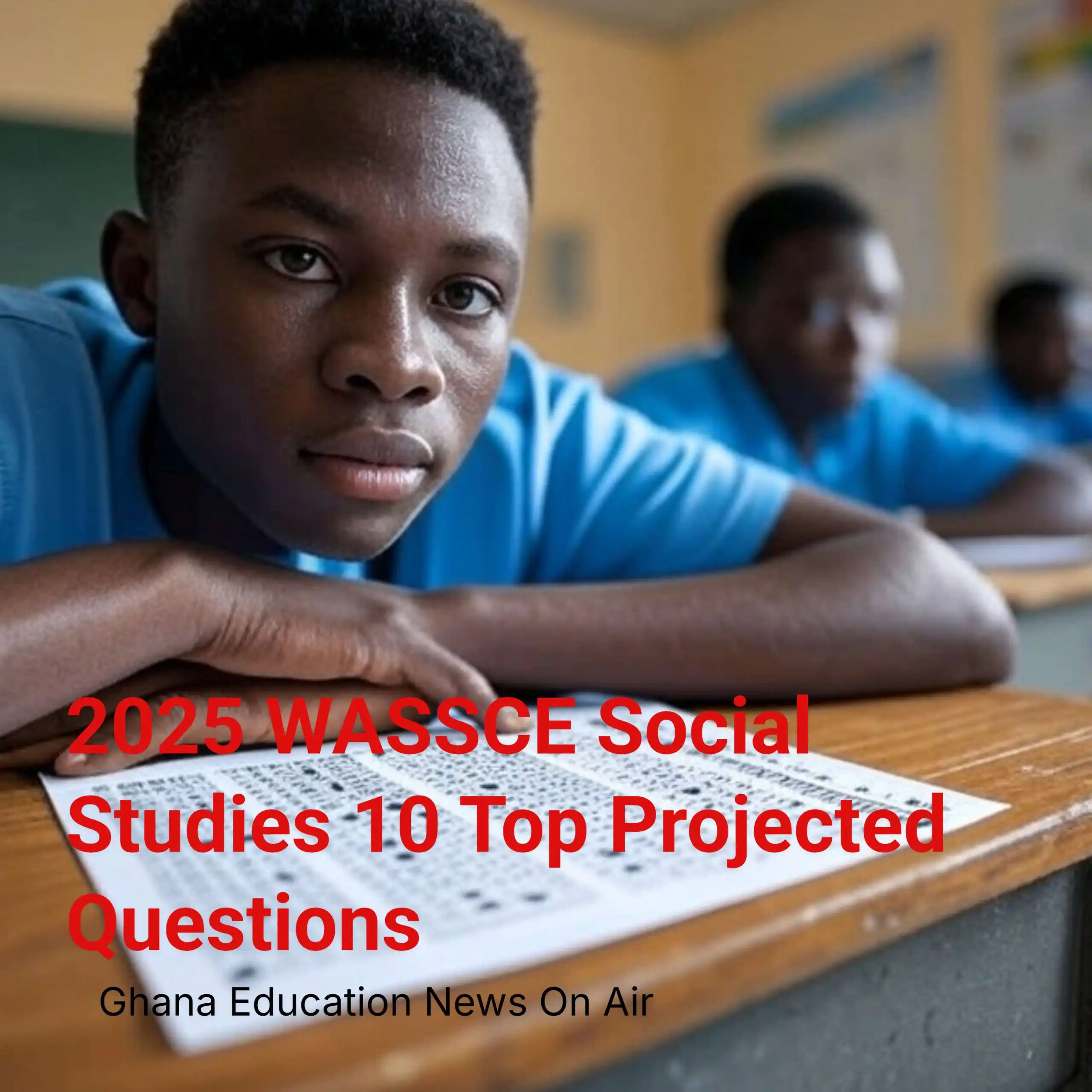
As you prepare for the WASSCE, take a look at the following WASSCE social studies questions. At the end of these questions, we have shared with you one key objective test quiz for you to solve. The questions in this 2026 WASSCE Social Studies Questions To Expect From WAEC cover both sections A and B.
WASSCE candidates who take the WASSCE Home Mock examination for March and April are getting the best support for their preparation from our expert examiners. Currently, students are taking their Home Mock examination that covers the four core subjects.
This means that the questions and answers provided here are among the most likely to be accessed by WAEC.
Solve these WASSCE Social Studies questions as though you were solving a WASSCE question.
Plan the essays well.
If any of the questions give you a tough time, revise the topic or topics
Read the WASSCE social studies questions below and plan how to solve them as well.
WANT TO PASS 2027 BECE? REGISTER FOR BECE HOME MOCK
Register your ward for Ghana's premier Home Mock service, active since 2022.
REGISTER YOUR WARD NOWSECTION A: THE ENVIRONMENT
(a) Outline the five levels of Abraham Maslow’s theory of needs.
(b) Discuss five ways in which Maslow’s theory of needs is relevant to Ghanaian society.
(a) Discuss four irresponsible behaviours adolescents must avoid in society.
(b) Identify four reasons why adolescents need to know about their reproductive features.
(a) Explain the term ‘socialisation’.
(b) Examine four challenges inherent in the socialisation process of the child.
(a) Differentiate between courtship and marriage.
(b) Discuss four challenges that confront couples in marriage.
(a) Explain the term conflict resolution.
GOVERNANCE, POLITICS, AND STABILITY
(b) Highlight four reasons for which ethnic conflicts should be discouraged in Ghana.
(a) Differentiate between written and unwritten constitutions.
(b) Examine four ways by which the Ghana Police Service can be made much more effective in the maintenance of law and order in the country.
(a) Explain the following terms:
(i) Leadership
(ii) Followership
(b) Outline any four roles of a good leader.
SECTION C: SOCIO-ECONOMIC DEVELOPMENT
- (a) Define the term resource.
(b) Examine the four factors responsible for natural resources.
- (a) Explain sustainable development.
(b) Describe four ways by which you can ensure sustainability in your personal life.
(a) Differentiate between state-owned enterprises and private enterprises.
(b) Discuss four ways of achieving a high level of productivity in Ghana.
Solve the WASSCE Social Studies objective test questions below. In all, there are 50 questions.
WASSCE Social Studies: Advanced Objective Mock
Time Allowed: 45 Minutes
The primary essence of the “Self and Identity” concept in Social Studies is to enable the individual to A. overshadow others in society. B. identify their unique role in national development. C. eliminate cultural diversity. D. prioritize personal needs over national goals.
Which of the following best defines “Socialization” in the context of nation-building? A. The process of making friends across borders. B. The internalizing of norms and values for social harmony. C. The legal process of acquiring citizenship. D. The migration of people from rural to urban areas.
A major psychological barrier to national integration in Ghana is A. the lack of a national language. B. ethnocentrism. C. the existence of many political parties. D. high levels of illiteracy.
The most significant difference between a “Nuclear Family” and an “Extended Family” is the A. number of children. B. level of educational attainment. C. depth of generational kinship ties. D. geographical location of members.
Adolescent chastity is primarily promoted in traditional societies to A. reduce the population growth rate. B. ensure the honor and dignity of the family. C. prevent the spread of modern diseases. D. encourage early marriage.
Which of these is a non-codified source of the 1992 Constitution of Ghana? A. Acts of Parliament. B. Judicial Precedents. C. Constitutional Instruments. /D. Traditional customs and usages.
The “Separation of Powers” doctrine is most effective when complemented by A. a powerful Executive. B. Checks and Balances. C. a unicameral legislature. D. military intervention.
In a democratic state, the “Rule of Law” implies that A. lawyers are above the law. B. the government can change laws at will without notice. C. law is supreme over all citizens and authorities. D. only the poor are subject to legal scrutiny.
Sustenance of the 1992 Constitution is the responsibility of A. the Ghana Armed Forces only. B. the Judiciary and the Police. C. every citizen of Ghana. D. the President and his Cabinet.
Which factor most significantly hinders the effectiveness of the Commission on Human Rights and Administrative Justice (CHRAJ)? A. Lack of qualified lawyers. B. Public interference. C. Limited financial and logistical resources. D. The location of its headquarters.
“Direct Democracy” is often difficult to practice in modern states because of A. high technology costs. B. large population sizes and complex issues. C. lack of interest among the youth. D. the absence of traditional rulers.
A citizen’s right to life can be legally curtailed in Ghana when A. the person is a political rival. B. a court of competent jurisdiction passes a death sentence. C. the person is unable to pay taxes. D. there is a change in government.
The main purpose of the “Directive Principles of State Policy” is to A. punish criminals. B. guide the government in achieving national goals. C. abolish the Chieftaincy institution. D. increase taxes for development.
Which of these is a “Civic Responsibility”? A. Receiving a free education. B. Protection from discrimination. C. Defending the Constitution. D. Traveling outside the country.
Traditional marriage in Ghana is considered a “process” rather than an “event” because A. it takes place at night. B. it involves a series of rites and negotiations over time. C. it is always expensive. D. it requires the presence of the Chief.
One disadvantage of a “Patrilineal” inheritance system is that it may A. favor the mother’s side too much. B. marginalize daughters in terms of landed property. C. lead to the collapse of the clan. D. prevent the father from working.
The most effective way to resolve a communal conflict is through A. the use of police force. B. dialogue and mediation. C. ignoring the parties involved. D. biased media reporting.
Chieftaincy remains a relevant institution in modern Ghana primarily because A. chiefs are paid by the government. B. it serves as a repository of cultural heritage. C. all chiefs are highly educated. D. it replaces the work of the Parliament.
A major challenge facing the “Socio-Economic Development” of Ghana is A. the over-reliance on primary products. B. the presence of too many schools. C. high levels of rainfall. D. the use of English as a national language.
“Sustainable Development” implies meeting the needs of the present without A. paying any taxes. B. compromising the ability of future generations to meet theirs. C. using any natural resources. D. involving the youth in decision making.
The main reason for the establishment of the African Union (AU) was to A. create a single African army. B. promote unity and cooperation among African states. C. colonize smaller nations. D. fight the United Nations.
Ghana’s “Non-Aligned” foreign policy means she A. does not belong to any international organization. B. does not take sides in power bloc rivalries. C. only trades with African countries. D. is against democracy.
The “New Partnership for Africa’s Development” (NEPAD) focuses on A. military expansion. B. poverty eradication and sustainable growth. C. building more prisons. D. discouraging foreign investment.
Which organ of the United Nations is responsible for maintaining international peace? A. The Secretariat. B. The International Court of Justice. C. The Security Council. D. The Economic and Social Council.
Globalization can negatively affect Ghana’s local industries through A. increased access to technology. B. competition from cheaper imported goods. C. improved communication. D. cultural exchange.
The “Dependency Ratio” in a population is the ratio of A. males to females. B. the non-working age group to the working age group. C. literate people to illiterate people. D. urban dwellers to rural dwellers.
Rapid population growth in developing countries is mainly caused by A. high death rates and low birth rates. B. high birth rates and declining death rates. C. mass emigration to Europe. D. the adoption of family planning.
One way to improve the quality of human capital in Ghana is through A. increasing the number of holidays. B. investing in vocational and technical education. C. importing more luxury cars. D. reducing the retirement age.
The “Informal Sector” of the economy is characterized by A. large-scale manufacturing. B. lack of formal registration and small-scale operations. C. high government regulation. D. fixed monthly salaries for all workers.
Which of these is an example of “Productive Work”? A. Sleeping during working hours. B. Farming to provide food for the market. C. Gossiping at the workplace. D. Destroying public property.
To improve work ethics in Ghana, there should be A. more frequent strikes. B. higher rewards for punctuality and productivity. C. less supervision at work. D. an increase in social media usage at work.
“Entrepreneurship” is vital to the Ghanaian economy because it A. discourages competition. B. promotes innovation and job creation. C. relies solely on government funding. D. leads to the closure of small businesses.
Which factor is most likely to discourage private investment? A. Political stability. B. High inflation and unstable exchange rates. C. Good infrastructure. D. Transparent legal systems.
The primary goal of “National Planning” is to A. ensure equal distribution of poverty. B. ensure efficient allocation of resources for growth. C. stop people from traveling. D. build houses for only politicians.
“Conflict Value” refers to A. the cost of buying weapons. B. values that create tension between individuals or groups. C. the value of a peace treaty. D. values that everyone agrees on.
Which of the following is a symptom of “Under-development”? A. High life expectancy. B. Low per capita income. C. Efficient transport systems. D. High levels of industrialization.
A “Positive Self-Image” is important for a student because it A. makes them arrogant. B. boosts confidence and academic performance. C. allows them to cheat in exams. D. makes them look better than others.
“Emotional Intelligence” involves A. hiding all feelings from others. B. the ability to manage one’s own emotions and those of others. C. crying whenever there is a problem. D. being angry all the time.
The most effective way to prevent HIV/AIDS among adolescents is through A. avoiding the use of public toilets. B. abstinence and behavioral change. C. eating a balanced diet only. D. shaking hands with everyone.
Which of these is a consequence of “Drug Abuse”? A. Improved concentration. B. Mental health disorders and social deviance. C. Better physical health. D. Increased popularity in school.
“Gender Stereotyping” is harmful because it A. promotes equality. B. limits the potential of individuals based on their sex. C. encourages people to marry early. D. improves the economy.
The “Greenhouse Effect” leads to A. cooling of the earth’s surface. B. global warming and climate change. C. increased forest cover. D. cleaner air in the cities.
Which of these human activities contributes most to desertification? A. Re-afforestation. B. Over-grazing and bush burning. C. Building of skyscrapers. D. Fishing in the sea.
“Human Rights” are described as “Universal” because A. they apply only to adults. B. they belong to all human beings regardless of their status. C. they are created by the United Nations. D. they can be bought with money.
The “Public Agenda” is often set by the A. police. B. mass media. C. local chiefs. D. school children.
“Brain Drain” refers to the A. loss of memory in old age. B. migration of highly skilled professionals to other countries. C. increase in the number of universities. D. use of computers in schools.
In a “Command Economy”, resources are owned and controlled by A. private individuals. B. the state (government). C. foreign investors. D. religious organizations.
The “Primary Sector” of the economy includes A. Banking and Insurance. B. Manufacturing and Construction. C. Agriculture and Mining. D. Teaching and Nursing.
Ghana joined the Economic Community of West African States (ECOWAS) to A. create a new language for West Africa. B. facilitate trade and economic integration in the sub-region. C. fight against European countries. D. close all its borders.
The “Executive” arm of government is responsible for A. interpreting the laws. B. making the laws. C. implementing and enforcing the laws. D. amending the constitution.
Answers to the 2026 WASSCE Social Studies Questions – Section A
B | 2. B | 3. B | 4. C | 5. B | 6. D | 7. B | 8. C | 9. C | 10. C
B | 12. B | 13. B | 14. C | 15. B | 16. B | 17. B | 18. B | 19. A | 20. B
B | 22. B | 23. B | 24. C | 25. B | 26. B | 27. B | 28. B | 29. B | 30. B
B | 32. B | 33. B | 34. B | 35. B | 36. B | 37. B | 38. B | 39. B | 40. B
B | 42. B | 43. B | 44. B | 45. B | 46. B | 47. B | 48. C | 49. B | 50. C


Can I download it please
Can I have the question on my email account
Please
Can I have the questions on my Email account
Which questions are you talking about?
Likely questions about mathematics
It will come soon
Social studies
Can I have likely questions on social studies