Five (5) Driving Offences You Didn’t Know Were Illegal
Many traffic offenses are well-defined. You are breaking the law if you drive faster than the posted speed limit on a particular road. You are breaking the law if you cross a solid white line to overtake another vehicle.
But there are other driving offenses you may not have realized were illegal, and some of us may commit them on a regular basis without even realizing it.
Here are five ways you may be breaking the law without even realizing it. Keep an eye out for them and make sure you don’t commit them.
1. Driving drunk and sleeping in your car
You should not consider driving if you have had too much to drink. If you don’t have anywhere else to stay, you might consider sleeping in your car until you’ve sobered up. However, you may be subject to a drunk in charge fine if you do so.
The law prohibits those in charge of a motor vehicle from being inebriated. This is not overly specific, and while you could argue that being asleep means you are not necessarily ‘in charge’ of the vehicle, the police can (and have historically) used this as an excuse to charge people with a driving offense.

2. Flashing your lights to alert others
Many of us will use them to allow other drivers to pass through gaps, but this technically could be considered a driving offense if an accident occurs as a result of it.
Flashing headlights should only be used to alert drivers to your presence on the road. Simply put, it’s open to misinterpretation (especially since it means different things in different countries), so think twice before reaching for the beams.
WANT TO PASS 2027 BECE? REGISTER FOR BECE HOME MOCK
Register your ward for Ghana's premier Home Mock service, active since 2022.
3. Overtaking a pedestrian crossing
Approaching a pedestrian crossing on a multi-lane road? Is there already a car parked there? If the lights turn green, do not use your extra momentum (speed) to pass the stopped car – this is illegal.
You must not pass the vehicle closest to the pedestrian crossing. Why? Because their vehicle could be concealing a pedestrian who is already on the crossing.

4. Allowing animals to leave the car while it is broken down on the hard shoulder
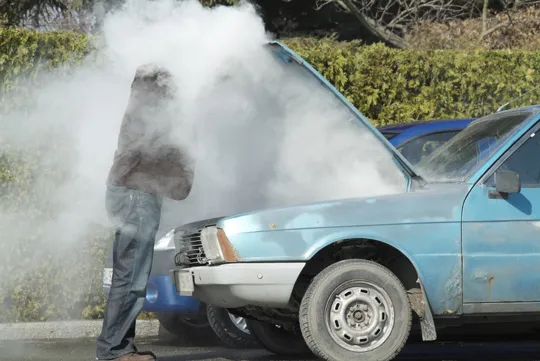
When stranded on the hard shoulder, the Highway Code clearly states that you must leave any animals in a broken-down vehicle.
Only in an emergency should you consider letting them out; if you don’t and your animal causes an accident on the hard shoulder, you could face a driving offence charge.
5. Parking on the wrong side of the road at night
At night, drivers should not park on the wrong side of the road. This is not because, as some may believe, you must drive on the opposite side of the road to enter and exit the space; rather, it is due to the risks of dazzling.
You’ll dazzle other drivers with your headlights as you park and exit, and your rear light reflectors won’t be visible once you’ve parked. This is a driving offense under Highway Code Rule 248 and may result in a Penalty Charge Notice.
READ ALSO: Effects of Major power outages (Dumsor) in US history