
SHS students are being trained for world of work – GES PRO defends regulation on students’ appearance
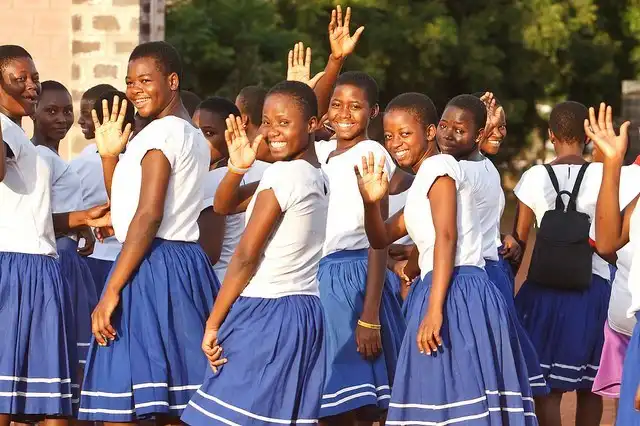
The Public Relations Officer (PRO) for the Ghana Education Service (GES), Mr Daniel Fenyi, has defended the Ministry of Education’s directive for students in second-cycle schools to keep their hair short.
Speaking in an interview monitored by GhanaEducation.org, the GES spokesperson said education is not only about academic learning but also about preparing students for the realities of the professional world.
Mr. Fenyi explained that the world of work is highly regulated, and as such, Ghana’s education system must reflect those same principles if it seeks to produce disciplined and employable graduates.
“We are training these children for the world of work, and the world of work is purely regulated. If we are being honest, there are many things we would love to do or say, but because of the places we find ourselves and the accompanying laws, we can’t,” he said in an interview on Onua FM on October 29.
The Public Relations Officer cited professions such as the military and nursing, noting that individuals aspiring to join such fields are required to conform to strict grooming and appearance standards.
“The students who want to go into the military, the boys with beards, even those with neatly kept ones will have to trim them off because of the regulations. Those who want to go into nursing will have to put aside their expensive clothes and wear their uniforms,” he added.
According to Mr. Fenyi, if Ghana’s schools are truly committed to training students to be useful in the world of work, then discipline and regulation cannot be ignored.
“We have to regulate their behavior, their perception, and their thinking,” he stressed.
On the issue of hairstyles and grooming in schools, the GES spokesperson addressed public criticism that Ghana should emulate Western countries where students have more freedom over their appearance.

“People are quick to say, ‘In America or the UK, they allow students to wear their hair however they want,’ but the thing is, in those countries, 90% of students are day students who go home every day. In Ghana, about 80% of our students are boarders, so the dynamics are different,” Mr. Fenyi explained.
Mr Daniel Fenyi cautioned against blindly copying foreign education models, citing the double-track system as an example of a policy that was imported without fully adapting it to Ghana’s realities.
“We can’t say because America does it this way, we should adopt it in Ghana. That’s how someone went to adopt the double track system—and we all saw how that turned out,” he remarked.



interesting