Registration Opens: Join the 2026 BECE Home Mock to Secure Grade 1s JOIN NOW ×

John Mahama pledges quality education outcomes when elected

John Mahama pledges quality education outcomes when elected

In a significant commitment to the future of Ghana’s education system, former President and National Democratic Congress (NDC) flag bearer, John Mahama, has vowed to overhaul the quality of education in Ghana if elected in the upcoming December elections.

Labeling the current state of education as “appalling,” Mahama emphasized the need for a comprehensive strategy, inclusive of stakeholder engagement and visionary leadership, to usher in transformative changes.

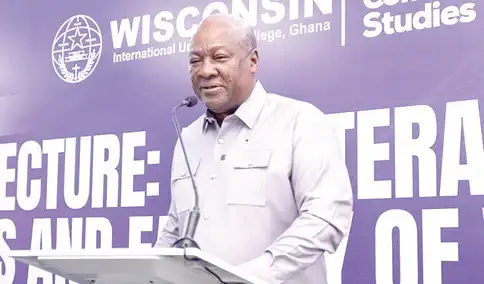
Addressing an audience at the maiden edition of the presidential aspirants public lecture at the Wisconsin International University College, Ghana, Mahama, alongside his running mate, Prof. Naana Jane Opoku-Agyemang, outlined a vision for an education system that transcends mere access.

He stressed the importance of expanding infrastructure to achieve equity and quality education outcomes.

Central to Mahama’s educational reform is a three-pronged approach focusing on access, quality, and equity.

ALSO READ: Top 10 Note-Taking Methods for Better Retention

Highlighting the foundational significance of basic education, he proposed targeted investments to strengthen this level, thereby improving secondary education outcomes.

His strategy includes the construction and renovation of schools in underserved communities, eliminating schools under trees, and enhancing equity and inclusivity through financial support mechanisms like a reformed student loan scheme.

Moreover, Mahama reassured that the Free Senior High School (SHS) policy would be retained but refined, particularly aiming to abolish the contentious double-track system.

Plans for building more community SHSs in densely populated urban areas and providing dormitory blocks for rural community day schools were also mentioned as part of his strategy to improve education accessibility and quality.

Mahama’s vision extends to promoting gender equity, creating job opportunities for the youth, and fostering stronger connections between Technical and Vocational Education and Training (TVET) institutions and the industry.

He proposed a novel approach to STEM education by upgrading existing science resource centers into STEM centers, thus democratizing access to STEM education across all secondary schools.

Additionally, recognizing the need for higher education opportunities across Ghana’s new regions, Mahama pledged to establish public universities in these areas.

His comprehensive education plan was met with encouragement from Prof. Obeng Mireku, President of Wisconsin International University College, who highlighted the crucial role of academia in shaping effective national policies and strategies.

This educational vision by John Mahama signifies a promising direction towards improving the educational landscape in Ghana, focusing on equity, quality, and accessibility, which are vital for the country’s growth and development.

Share Our Post on The Topic ‘John Mahama pledges quality education outcomes’.

To Read More Stories, Click Here

Some Educational policies in Ghana

Some Educational Policies introduced into Ghana’s Educational system has help in promoting good and quality education in the country. The basic reasons behind the implementation of these policies is to ensure that each and everyone in the country is being given the good and quality education needed There are numerous of Educational policies which has … Read more

Government Has Spent GH¢114.5 Billion On Education Since 2017

GES Releases SHS 1 Academic Calendar For 2023 BECE Graduates

The Member of Parliament for Suhum constituency , Oboafo Kwadjo Asante, has stated that the Akufo-Addo-led government has invested over GH¢114.5 billion in the educational sector since 2017.

He mentioned that GH¢12.96 billion was allocated to senior high schools across the country. He emphasized that the government’s investments extended to various aspects of education, including infrastructure, teaching and learning initiatives, and the school feeding program, resulting in higher literacy rates in Ghana and the Suhum Constituency.

Government Has Spent GH¢114.5 Billion On Education Since 2017

READ ALSO: Ghana Requires $12.2 Billion to Address Climate Change Impact, Says Finance Minister

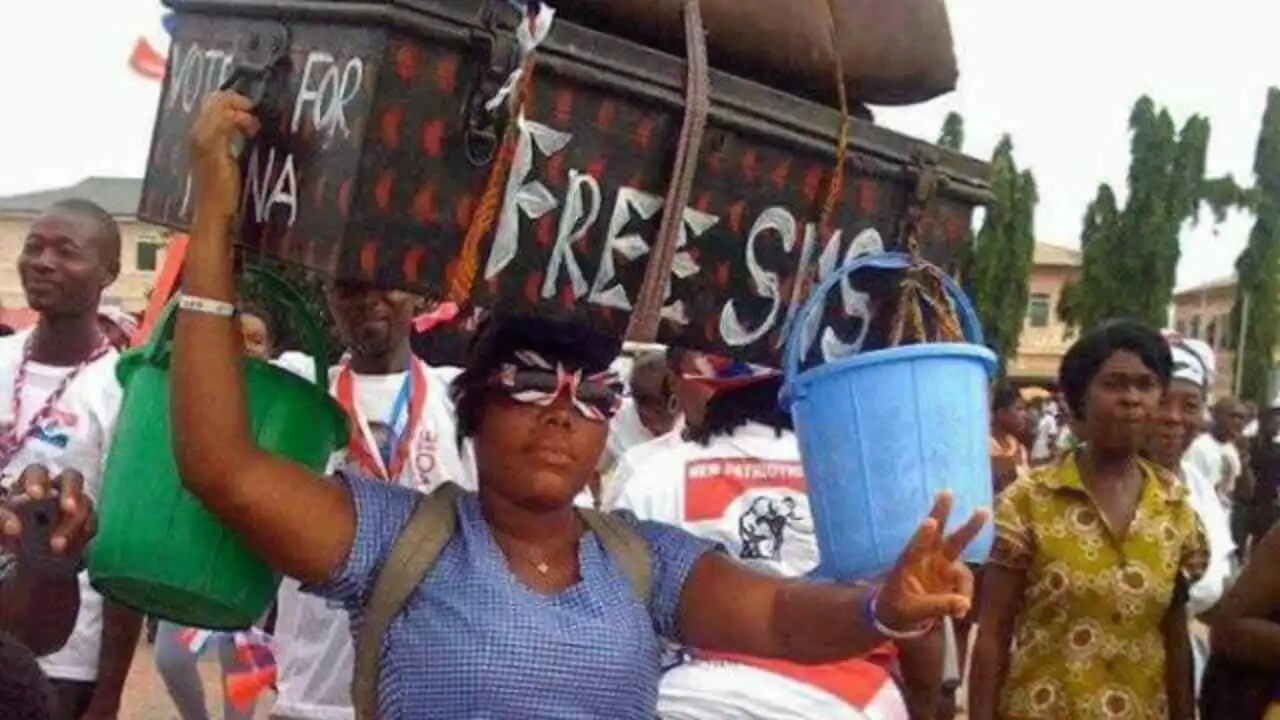
Addressing attendees at the Suhum-Okroase Odwira Festival, MP Oboafo Kwadjo Asante highlighted that the student population in senior high schools increased from 830,000 when President Akuffo Addo assumed office to 1.4 million students due to the Free SHS Policy. He underlined the commitment of the NPP government to ensuring every child’s access to quality education, aiming to transform lives and boost economic growth.

Oboafo Asante also reflected on the challenges Ghana faced before the introduction of the Free SHS program. He pointed out that, prior to this initiative, around 100,000 qualified students couldn’t attend Senior High School due to financial constraints.

Encouraging the youth, he urged them to invest their time and resources in education, prioritizing it over temporary pleasures in life.

Furthermore, Oboafo Asante shared plans for the community, including the construction of six-unit ultra-modern toilet facilities with Mechanized Boreholes at various schools.

In addition, he pledged to address the challenges in the community gradually. The Chief of Suhum-Okorase, Barima Amoako Kokora Boame, praised Oboafo Asante for supporting local schools with 50 desks and educational materials. He also called for unity among parliamentary aspirants as the 2024 general elections approached.

The Free Senior High School (Free SHS) education policy in Ghana was a government initiative introduced during the presidential administration of Nana Akufo-Addo in September 2017.

This policy had its origins in President Akufo-Addo’s campaign during Ghana’s 2016 election period and has since become a cornerstone of the country’s educational system.

The primary principles of the policy, namely, access, equity, and equality, align with the United Nations’ modified Sustainable Development Goals. Member countries, including Ghana, have adopted these principles in their educational systems to ensure quality learning experiences for students.

Various politicians and social workers are entrusted with the responsibility of ensuring the policy’s effectiveness, efficiency, and continued improvement. These leaders come from diverse government departments, including Ghana’s Ministry of Finance and Economic Planning, the Ghana Education Service, and the Ministry of Education.


The E.P. Church at 175, Contributions to Education In Ghana

The Evangelical Presbyterian Church, Ghana (EPCG) has been in existence for 175 years as a Christ-centred church that does not only focus on soul winning for the kingdom of God but also contributes to the education needs of the people of Ghana. The 175th anniversary would be launched in Accra at the Accra International Conference … Read more

4 Facts to show MoE is running education in Ghana without GES -IFEST

MoE running education in Ghana without GES

The Institute for Education Study (IFEST) in a press release dated 30th May 2022 has outlined 4 Facts to show MoE is running education in Ghana without GES. It indicated the MoE’s sidelining of GES,  which is an implementation agency, is rendering the GES weak and inefficient. The 4 Facts outlined by IFEST to show how … Read more

Ghana Education News