Registration Opens: Join the 2026 BECE Home Mock to Secure Grade 1s JOIN NOW ×

How to Study For Exams

How to Study For Exams

Writing exams is stressful, but you can make it easier by improving the way you study. Studying for your exams effectively and efficiently will keep you from feeling unprepared, and it will set you up for success!

Figure out when all of your exams will be and how much of your grade they are worth. Put these dates on your calendar or planner so they don’t sneak up on you! Let us look at BECE which will start on the 8th to 12th July.

  • Plan review sessions beginning at least a week in advance of each exam. Ideally, you’ll do several mini-reviews well in advance, gradually increase the time in which you study, rather than trying to cram everything into one mega session the night before the test.

Pay attention in class. This seems like a no-brainer, but actually paying attention while you’re in class will help you immensely once exam time comes. Don’t fall into the trap of thinking you’ll just “absorb” knowledge; be an active learner. Try sitting at the front of the class, this will make it easier to focus.

  • Listen carefully, because teachers often give hints like “The most important thing about this topic is…”. Or they may just place emphasis on certain words and issues. This is the real key to testing well. The more you absorb the information early on, the less studying you’ll need to do.
  • Teacher explanations in class represent 73% of the whole lessons, the notes represente 27%, be focus in class and avoid distractions.

Take good notes. This is easier said than done, but learning how to take good notes will help you immensely once it comes time to study. Write down everything your teacher writes on the board or puts up in slides. Try to record as much of what the teacher says as possible, but don’t allow taking notes to distract you so much that you forget to listen.

  • Review your notes daily, right after class. This will help reinforce the information you just learned.

Too often, it’s easy to view studying as something that only gets done at the last minute in a huge overnight cram session. Instead, try setting aside some time every day to study. Scheduling it just like another appointment or class may help you stay motivated to continue the habit.

  • Create a digital or paper timetable to help you schedule your studying “appointments.”
  • Reader Poll: We asked 442 readers and 62% agreed that their preferred way to organize study time is by making paper revision timetables.

Following the latest changes from WAEC and NaCCA on the Common Core Program, ask your teacher what format the test will be in, how it will be graded, if there are any opportunities for extra marks, and if they would be willing to talk to you about highlighting in your notes, what the most important broad subjects will be, etc.

Creating an Optimal Environment for Learning

 Keep anything and everything away from where you are that may cause you to get distracted. Jumping up to read a text message on your phone or periodically checking social media is ill-advised whilst studying.
 Studying in a dark room is not recommended. Add lamps at night, or in the daytime, open the window coverings (open the window a little, too). People tend to study and focus better in a brighter, oxygenated room with little noise.
While many students believe that they’re good at multitasking, such as studying with the TV on or while chatting online with friends, research suggests that this is not true for the vast majority of people. For better studying performance, eliminate distractions such as TV and loud music with lyrics. Rapidly swapping attention between studying and watching TV makes it more difficult for your brain to prioritize information acquisition.
Music’s effect on memory performance varies between individuals. Some studies have found music to aid the memory performance of individuals with ADD/ADHD, while reducing it in individuals without the disorder. Gospel music appears to be the most effective in enhancing studying performance.You must determine whether you’re better off with or without it. If you do enjoy listening to music whilst studying, make sure you’re actually concentrating on the material you have to study for, the Holyspirit can lead you surely on what to do in such atmosphere. (more effective for how to Study For Exams)

  • If you absolutely must listen to music, find instrumental Gospel music so that the words in the music don’t interfere with your studying.
  • Listen to background sounds from nature in order to keep your brain active and prevent other noises to distract you. There are several free background noise generators available online.
  • Listening to Mozart or classical music won’t make you smarter or keep information in your brain, but it may make your brain more receptive to receiving information.

ALSO READ: How to Create Good Study Habits for Exams

Organizing Your Learning

 What do you intend to accomplish during this session? Setting a concrete study goal may help you. Creating study plans is also a good idea. If 3 out of 5 lessons are easy and can be finished fast, finish them first, so you can spend quality time on the difficult lessons without fretting (especially the core subjects). Also, keeping a folder for your exam reviews is a good way to keep organized.

 Go through your notes and rewrite the most important information. Not only will this give you a more focused way to study, but it creating it is another form of studying! Just don’t spend too much time on the guide itself: you need to have time to go over it too!

 Rewriting your notes is great if you’re a kinesthetic learner. Mind mapping is the most effective way of doing this. Also, when you re-write something, you will probably think about what you are writing, what it’s about, and why you wrote it down. Most importantly, it refreshes your memory. If you took notes a month ago and just found out that those notes will be relevant in your exam, rewriting them will remind you of them when you need it for your exam.

  • Don’t simply copy your notes over and over again. This tends to lean towards memorizing the exact wording of your notes instead of the actual concepts. Instead, read and think about the contents of your notes (such as think of examples), and then re-word them.

 This can help you tell if you have remembered what you just studied. Don’t try to remember the exact wording from your notes in your answer to yourself; synthesizing that information into an answer is a much more useful tactic.

  • It can also help to say the answers to your questions out loud, as if you were trying to explain it to someone else.
(How to Study For Exams) If you missed questions on previous work, look up the answers and understand why you missed these questions. This is particularly helpful if the exam you’re studying for is cumulative or comprehensive, meaning it covers things you also covered earlier in the course.

Studying Efficiently

 Don’t study when you’re really tired. It’s better to get a good night’s sleep after studying for a short time than to push on at two in the morning. You won’t remember much and you’re likely to see a performance drop the next day.

 Don’t cram. Cramming the night before is proven to be ineffective, because you’re taking in so much information at once that it’s impossible to memorize it at all — in fact, you’ll hardly retain anything. Studying before and going over it multiple times really is the best way to learn the material. This is especially true with things like RME, Social Studies and theoretical subjects.

  • Always study when you have the chance, even if it is only for 15 or 20 minutes. These short study periods add up fast!
  • Study in chunks of 25 minutes using the Pomodoro Technique. After that make a break of 5 minutes; repeat the process 3x, then make a longer pause of 30-45 minutes.

 If you’re a visual learner, using pictures can help. Auditory learners should record themselves saying notes and recite it afterwards. If you are a physical person, lecture to yourself (out loud) while also using your hands or moving around; this way it will be easier for you to memorize.

Subjects such as mathematics require a lot of practice with problem sets in order to become familiar with the processes required. Subjects in the humanities, such as RME, Social Studies or literature, may require more information synthesis and memorization of things such as terms or dates.

  • Whatever you do, don’t just re-read the same set of notes over and over again. In order to actually learn, you need to take an active role in knowledge creation as well as information review. Try finding the “big picture” among what you’ve taken down or reorganizing your notes by theme or date.
 Ask yourself: What is my teacher most likely to ask on the exam? What materials should I focus on to give myself the best chance of knowing what I need to know? What trick questions or wrinkles could my teacher introduce that might throw me for a loop? This may help you focus on the most important information, rather than getting stuck on things that might not matter as much.
 If you need help, ask someone who is good at these subjects. Friends, family, tutors, and teachers are all good options. If you don’t understand what the person helping you is communicating, don’t be afraid to ask them to elaborate.

  • Asking teachers for help conveys your commitment to the material and can be helpful in the future as well as with your exams. Always remember to ask your teacher if you do not know what she is talking about or if you need more information. The teacher will probably be glad to help.
  • There are often resources at schools and colleges that can help you cope with stress, answer study-related questions, give you study tips and other forms of guidance. Ask your teacher or visit your school’s website to learn how to use these resources.
  • Your teacher might let you record your classes if you struggle to focus. You can review the recordings when you study for your exams.

Maintaining Your Motivation (How to Study For Exams)

Take breaks. You need some time to have fun and it is better to study when you are feeling relaxed than to exhaust yourself studying all day! Carefully structure your break and study time. Usually, 20-30 minutes of study and then a 5 minute break is the most effective method.

  • If you have trouble bringing yourself to study, instead of long uninterrupted sessions, chunk your work into 20 minute periods, taking a 10-minute break at the end of every period.
  • Make sure that you structure the chunks logically so that you’re not breaking up concepts across chunks, as this may make it more difficult to remember concepts in their entirety.
 Self confidence is important; focusing on how little you’ve studied or how badly you think you will do on the exam just distracts you from working on achieving success. However, this doesn’t mean that you shouldn’t study hard. You still need to work at it, even if you have confidence in yourself. Confidence just keeps away roadblocks to success.
 Arrange study dates at a library with your friends to compare notes or explain things the other one might not understand. Working with other people can help you cover gaps in your own knowledge and also help you remember more information, since you may have to explain things to them or have conversations about the topic. It’s also a great way to stay motivated.

  • If you ask for help from others, don’t joke around. Concentrate on what you are doing.

 If you’re stuck on a subject, do not be afraid to call a friend and ask for help. If your friends cannot help, ask a tutor for help.

  • If you have time before your exam and find that you’re not understanding material, ask if your teacher will go over it with you.

Preparing Yourself for Test Day (How to Study For Exams)

Children in elementary school require on average 10-11 hours of sleep for optimal performance. Adolescents, on the other hand, typically require at least 10+ hours. Poor sleep has been found to accumulate (referred to as “sleep debt”); in order to make up for prolonged poor sleep habits, several weeks of daily optimal sleep may be required to return to optimal performance.

  • Don’t consume caffeine or any other stimulating substance within 5-6 hours prior to sleeping. (However, if a doctor prescribed you a stimulant to take at a specific time, take it at that time regardless of when you fall asleep, and ask your doctor before changing anything.) Such substances reduce the efficiency of sleep, meaning that even with sufficient sleep time, you may not feel well rested upon waking.
Eat a healthy, light meal. Eat a balanced breakfast full of lean protein, vegetables, omega-3 fatty acids, and antioxidants. A sample breakfast might include a spinach omelet with smoked salmon, whole wheat toast, and a banana.
If your exam is a long one, bring a snack with you if you’re permitted to do so. Something with some complex carbohydrates and protein, such as a whole-wheat peanut butter sandwich or even a granola bar, will help boost your concentration when it begins to flag.
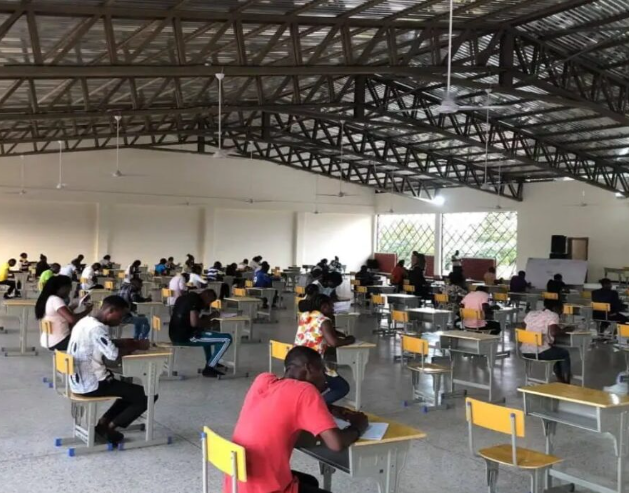
Give yourself at least five or 10 minutes to gather your thoughts before starting the exam. This way, you can get settled in and have time to relax before the test starts. Essential for How to Study For Exams.
ALSO READ: Top 10 Study Groups and How to Make Them Effective(How to Study For Exams)
 If you don’t know the answer to the question, do the next one and come back to it at the end. Struggling and concentrating on a question you don’t know the answer to can be time consuming, which makes you lose valuable marks.
 If you have a grammar test or English, its good to make flashcards to remember definitions of a word. You can take it to school and just flip through them before your exams start.
Do you want to make your studying more efficient and score single grade only, learn more quickly, and remember more information? Check out here for more expert articles. Follow the sites for more. I hope you larn mor in How to Study For Exams. Thank you!

2024 BECE Postponed? See Latest Update From WAEC

withholding WASSCE results

News coming in indicates that the 2024 Basic Education Certificate Examination (BECE) might be postponed or cancelled due to lack of funds.

This was announced by the West Africa Examination Council (WAEC). Currently, the 2024 BECE is scheduled for July, 2024. The exams will start on Monday, 8th July, 2024 and end on Monday, 15th July, 2024.

Has the 2024 BECE Been Postponed?

The 2024 BECE has not been postponed or cancelled yet. The government of Ghana is doing everything possible to pay off the debt owed to WAEC before the start of the exams. In the case, the exams date still stands.

Currently, WAEC is worried because the government has not provided the necessary funds to prepare and conduct the exams. With the exam date of July 8, 2024, quickly approaching, there is not enough time to buy the needed supplies.

John Kapi, the Director of Public Affairs at WAEC, spoke on Joy FM’s Midday News about the issue. He said that WAEC is still owed ₵698,500 for previous exams. For the upcoming 2024 exams, WAEC expects to receive a total of ₵95,837,306 from the government. So far, they have only received ₵2,284,618, which means they still need ₵93,552,688 to run the BECE.

READ ALSO; EduWatch warns July 2024 BECE candidates over exam malpractice

The Minority group in the Education Committee of Parliament raised this issue earlier this week. They are asking the government to come up with a payment plan. Peter Nortsu-Kotoe, the Ranking Member of the Education Committee, suggested a meeting with the Finance Minister, the Education Minister, and WAEC officials to discuss how to release the necessary funds. He emphasized the need for financial resources to prepare for both the BECE in July and the WASSCE in August.

However, Dr. Prince Hamidu Armah, the Vice Chairman of the committee, downplayed the urgency, saying that such financial issues have been common for the past decade. He mentioned that the government paid over ₵80 million for BECE in 2023 and has already paid ₵2.5 million plus an additional ₵6 million for 2024. He insisted that the government is committed to ensuring the exams are conducted.

High inflation in the country, which was 23.1% in May 2024 (down from 25% in April 2024), is hurting the education and health sectors. These areas are struggling with no signs of getting better. Government Statistician Prof. Samuel Kobina Annim has urged government institutions to take immediate and practical actions to fix these problems.

These financial troubles have also led to a wider conversation about the need to secure funding for education and ensure the stability of the examination system.

2024 BECE Might Be Cancelled Due to Lack of Funds

Tears Flow As Truck Rams Into Female WASSCE Student and Kills Her WASSCE for School results

The West Africa Examination Council (WAEC) has announced that the Basic Education Certificate Examination (BECE) scheduled for July 2024 might be cancelled. The reason for this potential cancellation is dues to the lack of funds.

WAEC is worried because the government has not provided the necessary funds to prepare and conduct the exams. With the exam date of July 8, 2024, quickly approaching, there is not enough time to buy the needed supplies.

John Kapi, the Director of Public Affairs at WAEC, spoke on Joy FM’s Midday News about the issue. He said that WAEC is still owed ₵698,500 for previous exams. For the upcoming 2024 exams, WAEC expects to receive a total of ₵95,837,306 from the government. So far, they have only received ₵2,284,618, which means they still need ₵93,552,688 to run the BECE.

READ ALSO; EduWatch warns July 2024 BECE candidates over exam malpractice

The Minority group in the Education Committee of Parliament raised this issue earlier this week. They are asking the government to come up with a payment plan. Peter Nortsu-Kotoe, the Ranking Member of the Education Committee, suggested a meeting with the Finance Minister, the Education Minister, and WAEC officials to discuss how to release the necessary funds. He emphasized the need for financial resources to prepare for both the BECE in July and the WASSCE in August.

However, Dr. Prince Hamidu Armah, the Vice Chairman of the committee, downplayed the urgency, saying that such financial issues have been common for the past decade. He mentioned that the government paid over ₵80 million for BECE in 2023 and has already paid ₵2.5 million plus an additional ₵6 million for 2024. He insisted that the government is committed to ensuring the exams are conducted.

The education and health sectors in the country are suffering due to high inflation, which was at 23.1% in May 2024, down from 25% in April 2024. These sectors have seen significant declines, with little sign of improvement. Government Statistician Prof. Samuel Kobina Annim called for urgent and practical measures from government institutions to address these issues.

These ongoing financial problems have sparked a broader discussion on the importance of securing funds for educational initiatives and the overall stability of the examination system.


WAEC to introduce Computer-Based Tests option in 2024 Nov/Dec

WAEC to introduce Computer-Based Tests option in 2024 Nov/Dec

WAEC to introduce Computer-Based Tests option in 2024 Nov/Dec

The West African Examinations Council (WAEC) has announced a significant development in its examination processes.

Starting from the 2024 Nov/Dec examination, also known as WASSCE for Private Candidates, WAEC will offer Computer-Based Tests (CBT) alongside the traditional Paper-Based Tests (PBT).

This new option means that private candidates sitting for the West African Senior School Certificate Examination (WASSCE) in November 2024 will be able to choose between taking the exam on a computer or using pen and paper.

Introduction of Computer-Based Tests

Dr. Amos Dangut, Head of National Office for WAEC Nigeria, revealed this initiative at a WASSCE center. He highlighted that WAEC successfully conducted its first edition of the computer-based WASSCE in early 2024.

This pilot exam, held in January and February, demonstrated notable improvements in student performance and a significant reduction in examination malpractice, dropping from five percent to 0.8 percent.

“We are now gearing up for the upcoming private candidates’ examination in October and November, offering candidates the choice between the traditional pen and paper and the computer-based method,” Dr. Dangut stated.

This move is part of WAEC’s broader strategy to gradually implement computer-based examinations for all schools in collaboration with the Federal Government and other stakeholders.

Transitioning to Computer-Based Exams

As part of the initiative to expand computer-based examinations, Dr. Dangut mentioned that WAEC is working on providing the necessary facilities and training for schools to facilitate this transition.

“The world is already moving technologically. We, as part of the global community, must ensure that we move along,” he emphasized.

This transition aims to align WAEC’s examination processes with global standards and technological advancements.

Despite some critics questioning the feasibility and success of this transition, Dr. Dangut assured that the shift to computer-based methods has been successful and has significantly reduced malpractice rates.

However, it remains unclear if Ghanaian candidates will have the option to select the CBT for the 2024 WASSCE.

Registration for 2024 WASSCE for Private Candidates

In related news, WAEC has officially opened the registration portal for the 2024 November/December WASSCE for Private Candidates. According to a blog post on Ghanaeducation.org, the registration portal will be open from Tuesday, April 2, 2024, to Friday, August 30, 2024.

The examination is scheduled to be conducted from October 25 to December 18, 2024.

ALSO READ: WAEC launches ‘mobile App’ for educational social media platform

“The WASSCE for Private Candidates will be conducted from Friday, 25th October, to Wednesday, 18th December, 2024. The registration portal will be open from Tuesday, 2nd April to Friday, 30th August 2024,” WAEC announced in the blog post.

How to Register for 2024 2025 Nov/Dec

Here are the steps to register for the 2024/25 Nov/Dec WASSCE for Private Candidates:

  1. Visit the WAEC Nov/Dec registration website.
  2. Fill in the required security information data, such as password and security question.
  3. Fill in your personal information.
  4. Upload your picture.
  5. Upload your signature.
  6. Fill in your personal information (again, if required).
  7. Select the region and the center where you wish to take the examination.
  8. Select the subjects you intend to write.
  9. Print your voucher and take it to any of the designated banks.
  10. Pay the appropriate fees at the bank or via Visa card online.
  11. Use your Invoice Number to access your Index Number and admission notice from mid-October 2024.

 Future of WAEC Examinations

WAEC’s initiative to introduce Computer-Based Tests is a forward-thinking step aimed at modernizing its examination processes.

This initiative not only enhances the integrity of the exams by reducing malpractices but also provides candidates with a flexible and modern testing option.

As WAEC continues to collaborate with government bodies and educational stakeholders, the goal is to ensure a smooth transition to computer-based exams, making them accessible and efficient for all candidates.

The introduction of CBT is expected to set a new standard for examinations in the region, paving the way for future technological integrations in the education sector.

Candidates preparing for the 2024 WASSCE for Private Candidates are encouraged to explore the new CBT option, as it represents the future of standardized testing.

Share Our Post on the Topic ‘ WAEC to introduce Computer-Based Tests option in 2024 Nov/Dec ‘.

To Read More Stories, Click Here.

WAEC Releases 2024 BECE Sample Questions For All Subjects

The West African Examination Council (WAEC) has released sample questions and approved topics for the 2024 Basc Education Certificate Examination (BECE) for all subjects. Candidates for the BECE (SC) 2024 will be examined on the new Common Core Curriculum. As part of arrangements for the smooth conduct of the examination, the Guidelines, Scheme and Structure … Read more

Two teachers in Court over alleged illegal possession of examination papers

Mason jailed 12 years for defiling 14-year-old

In Accra, two teachers, Jephtern Kwame Nkrumah and James Kodia, have been arrested and brought before a circuit court facing allegations of possession of illegal examination papers.

The case involves the illegal handling of 2020 Basic Education Certificate Examination (BECE) papers, specifically in the subjects of Information Communication Technology (ICT) and French Language.

The incident reportedly occurred at the Evangelical Presbyterian School in Mamprobi, Accra on September 16, 2020.

The charges against Jephtern Kwame Nkrumah and James Kodia include conspiracy to commit a crime and illegal possession of examination papers issued by the West African Examination Council (WAEC).

During the court proceedings, presided over by Mrs. Afia Owusua Appiah, both accused pleaded not guilty to the charges.

ALSO READ: UG-SRC To Host Cohort 2 Of Skill-Up For Jobs Bootcamp 2024

Despite the severity of the allegations, the court classified the offenses as misdemeanors and granted each teacher bail in the amount of GHC 50,000 with one surety who must reside within the court’s jurisdiction.

Additionally, the court mandated that the accused report bi-weekly to the police.

The prosecution, led by Chief Inspector Ebenezer Teye Okuffo, was instructed to prepare full disclosure of evidence within three weeks, with the case adjourned until May 20, 2024.

The initiating complaint was made by Lieutenant Colonel Rexford Adu (retired), the Security Coordinator at WAEC.

According to prosecution statements, the discovery of the examination content on the teachers’ phones was made following a tip-off about potential malpractices during the September 2020 BECE sessions.

This led to an investigation spearheaded by intelligence agent Alex Doku, who found snapshots of the exam questions on Nkrumah’s mobile device.

Investigations further revealed that Jephtern Kwame Nkrumah had allegedly instructed James Kodia to solve the examination questions, which were then found on his phone.

This incident highlights ongoing concerns over examination integrity and the measures needed to safeguard educational standards in the region.

Share Our Post on the Topic ‘Two teachers in Court over alleged illegal possession of examination papers’.

To Read More Stories, Click Here.

Exam Leaking Syndicate Promises Leakage of 2024 BECE, WASSCE and NOVDEC

Tears Flow As Truck Rams Into Female WASSCE Student and Kills Her WASSCE for School results

In recent years, the integrity of  West African Examinations Council (WAEC) has faced a growing threat from syndicates promising leaked question papers and answers to candidates. The message circulating among WASSCE, BECE, and NOVDEC candidates, promising access to all questions “ditto ditto” and guaranteeing leaked content, serves as a stark reminder of the challenges posed by such nefarious activities.

Below is one of the messages sent to candidates promising them live WAEC questions.

“Greetings, my final-year students.

I haven’t responded to majority of your messages because I’ve been offline for a while. I want to let you know that I’ve returned and will be active from now. Also, this year, all questions (WASSCE, BECE, and NOVDEC) will be available ditto ditto from me.

To those of you who just joined my channel, I’m Mr Jones . I offer authentic WAEC questions and answers (WASSCE, BECE, and NOVDEC).

Message me on WhatsApp for more inquiries about registration for all papers.”

Firstly, it’s imperative to question the readiness of WAEC and security agencies to effectively curb these activities and safeguard the integrity of the examinations. While WAEC undoubtedly invests significant resources in securing its examination processes, the persistent emergence of syndicates promising leaked content highlights the need for a more proactive approach.

WAEC, as the primary examination body, must take decisive steps to address this issue. One crucial initiative could be the establishment of an exam leakage reporting system and office dedicated to handling such incidents. This office should be staffed with individuals of unquestionable integrity, possessing the ethical values necessary to uphold the integrity of the examinations. Additionally, it should be equipped with the resources and authority needed to take swift and proactive measures to prevent leaks before they occur.

READ ALSO: Two Arrested for Illegal Registration of 2024 WASSCE Candidates

Furthermore, collaboration between WAEC and relevant security agencies is paramount in combating this menace effectively. Joint efforts should focus on intelligence gathering, surveillance, and enforcement actions to dismantle syndicates involved in exam leakage. By enhancing coordination and information sharing, WAEC and security agencies can stay ahead of evolving threats and effectively deter individuals and syndicates engaged in such illicit activities.

It’s essential to emphasize the importance of public awareness and cooperation in this endeavor.

What Should WAEC Do?

  1. WAEC should actively engage with stakeholders, including educators, students, parents, and the general public, to raise awareness about the dangers of exam leakage and the importance of maintaining the integrity of the examination system. By fostering a culture of integrity and accountability, WAEC can enlist the support of the community in its efforts to combat exam malpractice.
  2. WAEC should create an exam leakage reporting system and office and resource it with persons with high level integrity, ethical values and resources needed to take proactive steps to stop such syndicates or stop the reactive actions after the questions and answer are leaked from their end.

Safeguarding the integrity of examinations is a collective responsibility that requires concerted efforts from WAEC, security agencies, and the broader community. By implementing proactive measures, fostering collaboration, and raising awareness, WAEC can effectively combat exam leakage and uphold the credibility of its examinations. It’s time for decisive action to protect the future of education and ensure a level playing field for all candidates.


Two Arrested for Illegal Registration of 2024 WASSCE Candidates

2024 WASSCE result release date Two Arrested for Illegal Registration of 2024 WASSCE Candidates

WAEC and the Intelligence Unit of National Security have arrested two persons for illegal registration of 2024 WASSCE candidates.

The suspects, identified as Robert Hackman, 37, a private teacher from Agona Swedru, and Kwabena Baah Achemfour, 54, a part-time teacher at Kenyasi SDA Senior High School, were intercepted while attempting to register ineligible candidates.

The illegal WASSCE registration was  orchestrated by Hackman and predominantly targeted individuals from various regions including Accra, Takoradi, Agona Swedru, Cape Coast, and Dunkwa-On-Offin. It was planned that the activities would later be shifted to Tapa Abotoase in the Biakoye District of the Oti Region.

READ ALSO: Government Absorbs ¢465 WASSCE Registration Fee For Public SHS Students

Hackman and Achemfour, who were acquainted during their time in Agona Nsaba, utilized social media platforms to recruit out-of-school individuals who had previously taken the WASSCE but either failed to meet the required grades or had their papers invalidated.

Armed with a biometric device bearing the serial number AY00T004145 and login code 93868278, a Lenovo laptop, and a set of school uniforms, the duo facilitated the registration process for the unqualified candidates.

John Kapi, the Public Relations Officer of WAEC, revealed that the illicit registration commenced on March 26, 2024, at Adishie Mma Preparatory School in Swedru. Hackman secured the cooperation of the school’s headmistress to utilize their ICT laboratory as a registration center.

However, their operation was short-lived as they were apprehended by the joint security team while in the process of registering the ineligible candidates. Investigations uncovered that the login code and uniform belonged to SDA Senior High School, Kenyasi.

Achemfour, under the guise of registering candidates for a non-existent institution named Divine College, charged each candidate GH¢6,000. He successfully registered 172 individuals, some of whom were assigned to fictitious schools like High Moral, OSBY College, His Majesty College, and Trinity College.

In response to the incident, the security team recommended the derecognition of SDA Senior High School, Kenyasi, as a WAEC examination center. This measure aims to curb illegal registrations and mitigate examination malpractice within the education sector.

Furthermore, candidates submitted by SDA SHS for WASSCE-SC 2024 are slated for scrutiny against enrollment lists. Those found to be illegally registered will either be barred from the examination or subjected to further investigation.

The swift action taken by the collaborative security team underscores the commitment to safeguarding the integrity of academic assessments and upholding standards in education.


Ghana Education News