Use of mother tongue in lower primary unproductive
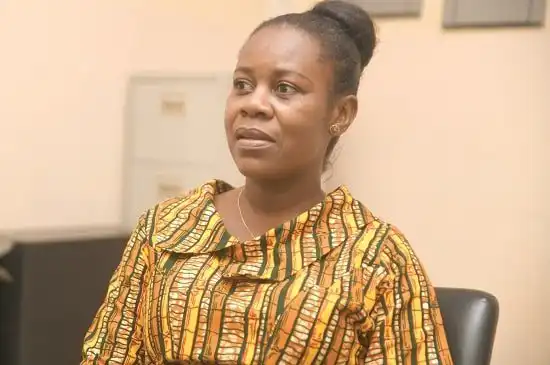
A proofreader and one-time tutor, Angela Ami Atse, has described as unproductive the country’s policy to use only the mother tongue as the medium of instruction for pupils in lower primary schools.
Mrs Atse who is the Assistant Head of Proofreading at Graphic Communications Group Ltd (GCGL) explained that that policy was part of the reasons why some pupils in lower primary in the country were unable to speak and write English language very well.
Mrs Atse has, therefore, called for the use of the English language and mother tongue simultaneously as the medium of instruction for pupils in lower primary.
“One of the reasons cited for the introduction of the mother tongue as a medium of instruction in lower primary schools is that, it will help pupils to speak and write good English. But that is not entirely the case. It is also part of the reason lower primary pupils are not speaking English well.
“They are doing literal translation. All languages have one uniform structure — they express number and time (tense) but there are some other structures that are unique to languages. So if the child does not know at what point the transfer of knowledge should be done, that is when the child learns to speak “vernacular English”. They speak English with a vernacular accent and understanding,” she explained.

What does the policy say
Ghana’s current language policy mandates the use of the child’s first language as the language of instruction from kindergarten through Grade Three with English as the LI thereafter. English is taught as a subject in the lower primary grades while Ghanaian languages become a subject of study from Grade Four through Grade Nine. The language policy states:
WANT TO PASS 2027 BECE? REGISTER FOR BECE HOME MOCK
Register your ward for Ghana's premier Home Mock service, active since 2022.
“Where teachers and learning materials are available and linguistic composition of classes is fairly uniform, the children’s first language must be used as the dominant medium of instruction in kindergarten and lower primary school “(Ministry of Education, Ghana, 2004, pp27-28).
“Instruction in the indigenous languages is limited to the 11 government-sponsored languages, namely Akuapem Twi, Asanti Twi, Fanti, Nzema, Dagaare and Dagbane, Ewe, Dangme, Ga, Gonja and Kasem.

English language as Ghana’s official language
Mrs Atse, who was speaking in an interview with the Daily Graphic, pointed out that so long as English language remained the official language of the country, it was important that the medium of instruction at all levels of education in the country remained English while the mother tongue was left for parents to teach their children at home at the family level.
This, she explained was because, the family was the first agent of socialisation for the child and the child could easily acquire the language spoken by family members compared to the school environment.
She said the multi-ethnic nature of the country was also another challenge adding that it was likely that children were introduced to a local language for the first time in school, which may not necessarily be their mother tongue.
Explaining why it was important for English Language to be used at all levels of education. She pointed out that even in examinations, with the exception of Ghanaian Language, all other subjects, including mathematics, have the instructions and questions written in English so if the child misunderstands the instructions he or she might end up not doing well in the examination
“If we really want to be part of the world, we cannot abandon English language. We still have to carry English language along because we will be dealing with people who do not speak or write any Ghanaian language.
“How do we communicate with people? How do we do business with foreigners? So we need to develop the language that can link us up with the rest of the world. Of course, we should bring our languages up so that they do not die but that should best be done at home,” she advised.
READ: SHS Basic Rules And Regulations For All BECE Graduates
Poor spoken and written English
The educationist also spoke about poor English language that was written and spoken by both students and adults nowadays, attributing it to the inability of people to learn the language well.
She, therefore, called for intensive reading on the part of students in order to improve on their written and spoken English.
Source: Graphic.com.gh