2025 WASSCE candidates failed because they focused on “Chew and Pour,” not analytical applications
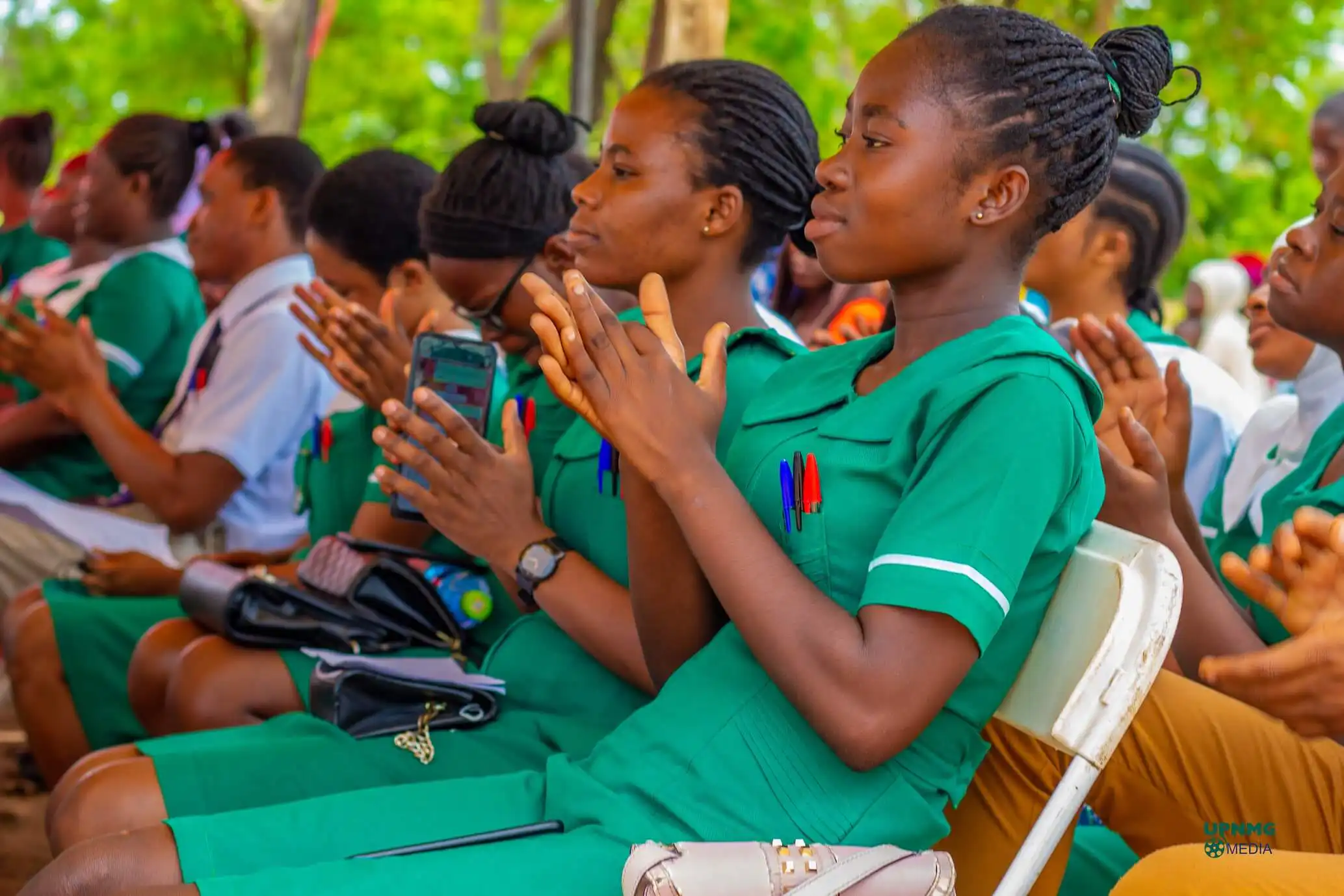
The Chief Examiner’s Report of the 2025 West African Senior School Certificate Examinations (WASSCE) has attributed the poor performance of candidates in Core Mathematics mainly to students doing memorization and not application or analytical application of what they learned.
Honorable Iddrisu Haruna, the minister of education, told council members of four colleges of education at their inauguration in Accra, “We are still studying and analyzing the chief examiner’s report and will respond with improvement in the capacity of our teachers.”
“Because of the almighty double-track system, many of the candidates did not have adequate contact hours with teachers,” the minister added. They spend less time with teachers and less time in the classroom than they should,” he said, adding that the government remained committed to addressing the challenges.
The government had secured $200 million from the World Bank to work to end double track under the Free SHS program. He commended St. Peter’s Senior High School in Kwahu in the Eastern Region for being one of the first schools that had been able to end the double-track system.
“So, I am going to reward them with infrastructure for going ahead of the government with their own intervention to end the double-track system,” the minister assured the school. The double-track system was introduced in the 2018/2019 academic year (starting September 2018) in 400 senior high schools (SHS) across the country.
It was designed to manage increased enrollment from the Free SHS policy by dividing students into two tracks (Green and Gold) to use school facilities. Not a dormitory or a classroom was added to the infrastructure, with the exponential increases in their numbers,” adding that that naturally would affect the quality of delivery of education. He said. The 2025 WASCE Examination: In the mathematics paper for this year’s WASSCE-SC, 209,068 (48.73 percent) had A1-C6; 52,991 (11.62 percent) had D7; 52,145 (12.15 percent) obtained E8, while 114,872 (26.77 percent) had F9.
For Integrated Science, 220,806 (57.74 percent) candidates scored A1-C6; 54,580 (11.85 percent) had D7; 45,783 (11.79 percent) recorded E8, while 61,243 (16.05 percent) obtained F9.
Another core subject, Social Studies, had 248,538 (55.82 percent) candidates scoring A1-C6, with 33,670 (7.38 percent) candidates recording D7, while 40,608 (9.12 percent) had E8, and 122,449 (27.50 percent) settled for F9.
In the English language, 289,673 (60 percent) of the candidates scored between A1 and C6; 37,712 (8.18 percent) had D7; 39,091 (9.23 percent) had E8; and 54,294 (12.86 percent) had F9.
A total number of 461,736 candidates, made up of 207,415 males and 254,321 females from 1,021 schools, registered for the examination.
WANT TO PASS 2027 BECE? REGISTER FOR BECE HOME MOCK
Register your ward for Ghana's premier Home Mock service, active since 2022.