Can AI Replace Accountants? What Students and Teachers Need to Know
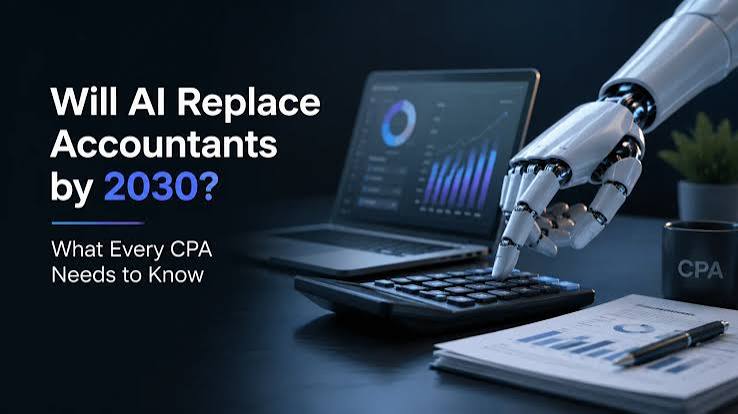
Everything you need to know about AI and accounting students has been detailed below. Teachers, students, and school administrators across Ghana are encouraged to review the complete information for full context.
Artificial intelligence is already changing accounting work by automating tasks such as data entry, bookkeeping, bank reconciliation, financial reporting and data analysis. But the teaching point from the supplied material is clear: automation does not remove the need for human judgement, experience and professional responsibility.
AI is changing accounting work
The material identifies several accounting activities that AI can perform efficiently. These include processing large amounts of data, reconciling bank statements, generating reports and financial statements, detecting unusual transactions and handling repetitive accounting work.
For accounting students, this means digital skills are becoming increasingly relevant to the profession.

AI can process information quickly and accurately, particularly where the work involves repetitive tasks and large volumes of data. This can allow accountants to spend more time examining information and helping businesses understand what the numbers mean.
What AI cannot yet replace
The material also identifies areas where human accountants remain essential. These include understanding complex business situations, exercising professional judgement, interpreting accounting standards in grey areas, building relationships with clients, providing strategic advice and dealing with ethical questions.
An accountant may therefore need to do more than produce numbers. The ability to interpret information, communicate with stakeholders and make informed professional decisions remains important.
What this means for accounting education
The supplied material recommends that learners become familiar with AI and automation tools while strengthening communication, problem-solving and analytical skills.
Teachers can use this changing environment to connect traditional accounting lessons with practical digital applications. Students can learn not only how transactions are recorded, but also how accounting information can be analysed and used for decision-making.

The central message is not that accountants are disappearing. Rather, the role is changing towards greater analysis, strategy and advice, with less time spent on manual and repetitive activities.
For accounting students, learning traditional accounting principles alongside digital skills can therefore help prepare them for a profession in which technology plays a larger role.
- Accounting Study Resources
- Business Education Resources -Principles of Cost Accounting
- ICT and Digital Skills for Students
📊 Stakeholder Guidance & Contextual Analysis
As developments continue to unfold regarding Can AI Replace Accountants? What Students and Teachers Need to Know, educational administrators, teachers, and candidates across Ghana are advised to follow established guidelines. Aligning school operations with official Ghana Education Service (GES) circulars and Ministry directives remains essential for institutional coherence and academic planning.
Key Directives for Schools and Educators:
- Administrative Alignment: School management and district directorates should cross-check official announcements before adjusting operational schedules.
- Stakeholder Transparency: Maintain active communication channels across Parent-Teacher Associations (PTAs), teaching staff, and student bodies.
- Continuous Oversight: Stay updated on supplementary directives issued by authorized public education authorities.
Frequently Asked Questions (FAQ)
Q: How does this update impact academic calendars and school operations?
A: School administrators are advised to incorporate official directives into current term plans while awaiting further formal clarifications. Refer to official channels for exact timelines.
Q: Where can educators verify authentic announcements?
A: Notices can be verified through official Ministry of Education releases, GES headquarters circulars, or accredited national education portals like GhanaEducation.org.