Registration Opens: Join the 2026 BECE Home Mock to Secure Grade 1s JOIN NOW ×

14 Top WAEC rules WASSCE and BECE candidates can’t FORGET

withheld WASSCE for School

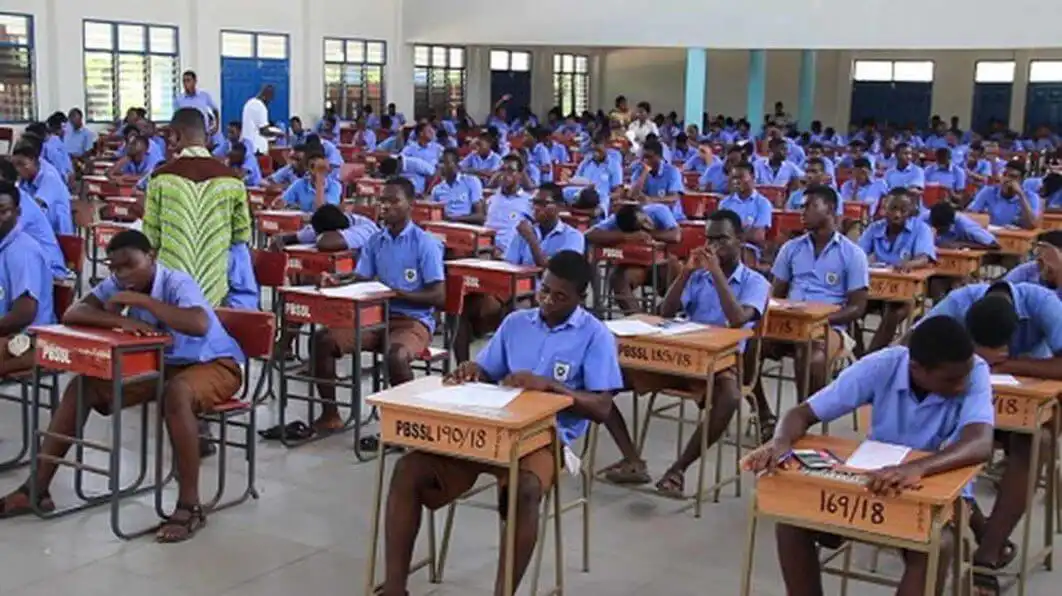
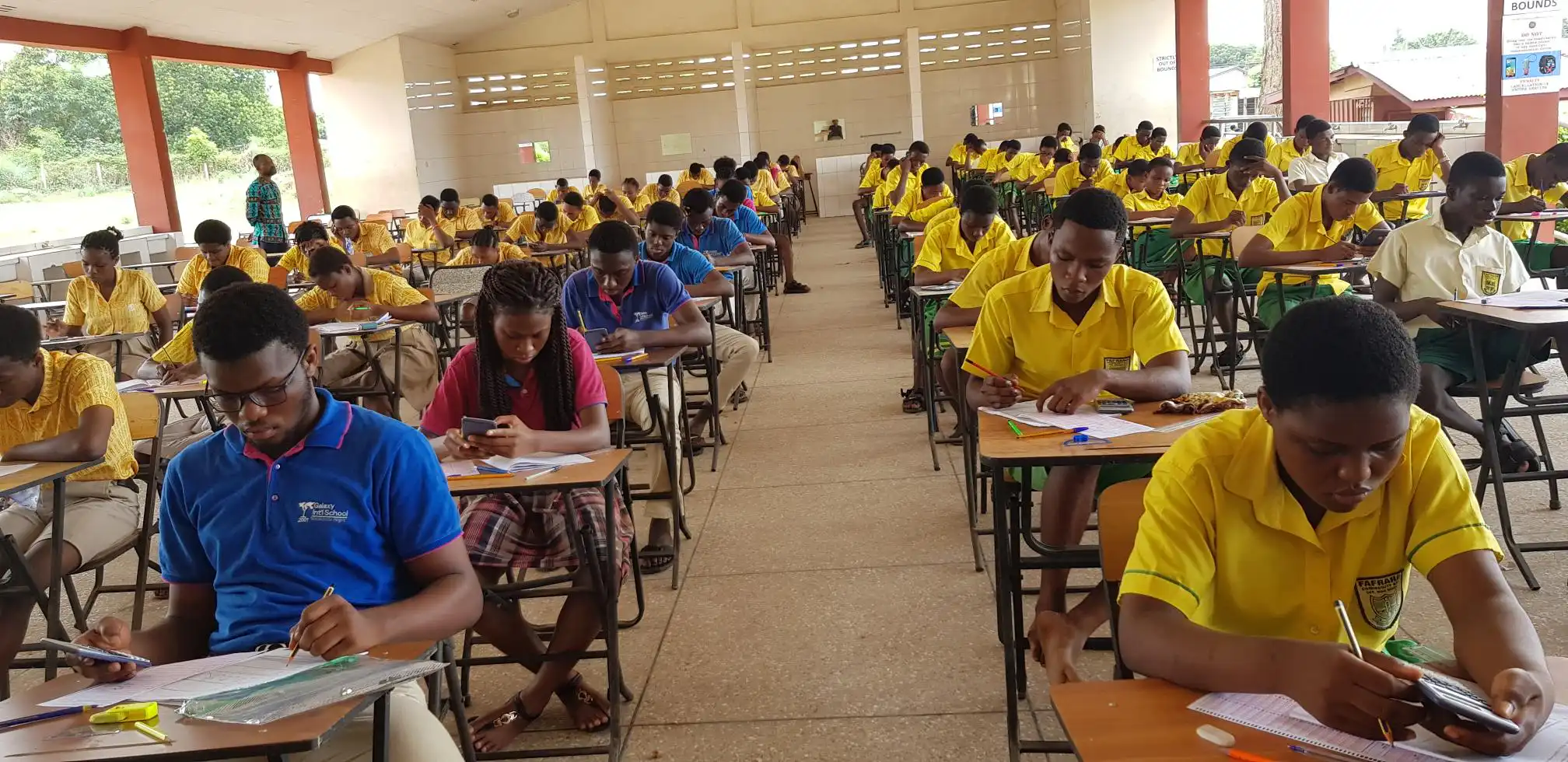
There are 14 WAEC rules that all WASSCE and BECE candidates must not FORGET when prepraring and writing the examination. As simple as they me look, they are at the heart of success and excellence. You cannot sit a WAEC administered exam without keeping in mind the 14 unforgettable WAEC rules for WASSCE and BECE.

What Are The 14 Top WAEC Rules WASSCE and BECE Candidates Must not FORGET?

These rules are at the heart of the examination and they never change.
Breaking any of these rules can spell doom for a candidate if care is not taking
1. You are required to present yourself at the examination hall at least 30 minutes before the commencement of each paper.
2. Write your full name, centre number, and candidate number clearly on the answer booklet and objective answer sheet as required.
3. You must sit for the examination at the centre assigned to you and only at the time indicated on your timetable.
4. Bring your own writing materials, including pen, HB pencil, eraser, and ruler.
5. You are not allowed to bring into the examination hall any form of written or printed materials (unauthorized books, notes, or papers), mobile phones, smartwatches, or any electronic devices.
6. Listen carefully to the invigilator’s instructions and carefully read all instructions on the question paper before you begin.
7. Do not start answering the questions until you are instructed to do so.
8. Write your answers legibly in blue or black ink. Do not use red ink. Pencils must be used for diagrams and shading objective answer sheets.
9. Candidates must not communicate with one another during the examination. Any form of cheating will be punished severely, including cancellation of results.
10. If you need assistance, raise your hand and an invigilator will attend to you.
11. Ensure you submit your answer booklet and objective sheet before leaving the examination hall.
12. Any act of misconduct (such as cheating, fighting, destruction of examination materials, impersonation, etc.) will attract severe penalties including being handed over to the police.
13. Candidates must check that the number of pages of the question paper is complete and that there are no missing questions before starting.
14. No candidate will be permitted to leave the examination room earlier than 30 minutes after the commencement of the paper.
Now that you know these rules and or you have been reminded of them, ensure that you follow them in your preperation and in the main examination as well.

What are the correct and incorrect uses of Pens and pencils during BECE and WASSCE exams?

correct and incorrect uses of Pens and pencils

What are the correct and incorrect uses of Pens and pencils during BECE and WASSCE exams? Two important writing tools needed and used by students during BECE and WASSCE assessments are the pen and the pencil. Knowing when to use these is important if you are to do a good job on your examination. Candidates must always enter the exam hall with at least two pens and three pencils for every subject. One of the pencils must be 2B pencil which will be used for shading objective test answers only. Also use only BLUE INK pens in the examination hall. The choice of pen must be the one that makes your handwriting look presentable and answers neat. Do not use any felt pen-link link for your examination. 

You must also ensure, the pencils are sharpened and neatly done before entering the exam hall. The sharpened pencils will help you do a good job without the need to sharpen them again while in the exam hall. The two pens must be the same brand. As a candidate do well to use each of the pens to write about 10 words before you go into the exam hall with them. This will ensure you know the pen is working well.

This post is a response to questions posted as a comment by Jaspers Mensah on our post titled: “How to Tackle Difficult Mathematics Questions and Solve Them Easily (For BECE and WASSCE)”

Below is his question, which will be followed by a detailed response:

“I just want to ask. WAEC has instructed students to use ink to write their name on the question paper and answer booklet. What about the OBJECTIVE PAPER? I want to know if we’re using ink to write something or pencil.”

What are the correct and incorrect uses of Pens and pencils during BECE and WASSCE exams?

Uses of pens and pencils while writing the BECE or WASSCE

  • Use the pencil to plan your answers while brainstorming.
  • Use the pencil to do rough work and mathematical calculations for objective test questions.
  • Use the pencil to think through objective test answers on the question paper.
  • Use the pencil to shade objective test answers.
  • Use the pencil to draw or sketch tables, graphs, and other forms of answers that need to be drawn.
  • For shading on WAEC exams, you should use a 2B pencil. The scoring machine can only read pencil marks, so using a 2B pencil ensures your answers are accurately scanned and graded. 
  • Use the pencil to draw lines that will be part of the answer, such as a line needed to label a part of a drawing.
  • Use a pen to write essays and all answers in your Section B, except for drawings.
  • Use a pen to write the names or parts of drawings in Section B.
  • Use a pen to write your name and index number on your question paper.
  • Use a pen to write your name, index number, and the name of the subject on your Section B answer booklet.
  • Do not use a pencil or pen to write your name or deepen your name already written on your objective test answer sheet. WAEC will always print your name, index number, and the subject on the answer sheet for Section A using a printer. Do not attempt to deepen it with a pen or pencil. If there is a mistake in the spelling of your name, do not try to correct it with a pen or pencil.
  • Do not use a pencil to write your essays or answers in Section B unless you intend to use a pen to go over them afterward.

If you have doubts about what you can or cannot use a pen or pencil for in the examination, this is the time to find out from your teachers. However, the above details are clear enough to ensure that you do not make the wrong choices as to which of the two to use when answering questions.

We hope this post on “What are the correct and incorrect uses of Pens and pencils during BECE and WASSCE exams?” has been very useful.

Topics To Study For January 2025 Private WASSCE (First Series)

Topics For January 2025 Private WASSCE

Students can now look at our projected Topics To Study For the January 2025 Private WASSCE (First Series) exam.

The 2024 WAEC Private WASSCE (January 2025) is scheduled for January 24-Feburary 15. The earlier you start learning, the better. We have compiled various topics in all subjects that you need to study before the exams.

As we do each year, we provide candidates with likely topics and questions for all subjects. About 99% of these topics and questions are usually asked by WAEC. You are lucky to be part of this family.

Topics To Study For January 2025 Private WASSCE (First Series)

Let us look at all the topics you must not skip as you prepare for the various subjects to be administered by WAEC at the January-February examination.

CORE MATHEMATICS

1. Sets and binary operation

2. Modular arithmetic

3. Statistics & Probability

4. Logarithm and indices

5. Mensuration 1&2

6. Business mathematics [profit loss, depression, ratio]

7. Trigonometry

8. Bearing and vectors

9. Simultaneous equations.

10. Matrix and coordinate geometry (equation of a line)

11. Logic Reasoning

12. Transformation

13. Quadratic graphs, quadratics & functions

14. Series & Sequence

Topics To Study For January 2025 Private WASSCE (First Series)

THE ENVIRONMENT

1. Adolescent reproductive

2. The institution of marriage

3. Responsible parenthood

4. Education and social change

5. Physical environment and environmental challenges, our culture, and national identity.

READ ALSO: First Series 2025 WASSCE Private Timetable Released for Download

GOVERNANCE, POLITICS, AND STABILITY

1. Constitution, democracy, and Nation Building

2. Ghana and the Internationally Community

3. Leadership and fellowship

4. Right and responsibilities

SOCIAL & ECONOMICS DEVELOPMENT

1. The youth and national development

2. Work, productivity, and Entrepreneurship

3. Population Growth and Development

4. Promoting National Socio-economic Development.

INTEGRATED SCIENCE

1. Cells

2. Transports in plants

3. Acids, bases and salts

4. Diseases

5. lonic and covalent bonding

6. Machine

7. Chemical compounds and IUPAC names

8. Friction

9. Photosynthesis

10. Dentition and digestion in mammals

11. Skeleton of mammals

12. Crops production

13. Force and motion

14. Electrical/Heat

15. Ecosystem

16. Evolution, Variation, and inheritance

ELECTIVE MATHEMATICS

COMPULSORY

1. Correlation & Regression

2. Binary operations

3. Functions & Partial fraction

4. Binomial expansion

5. Logarithms/Indices

6. Polynomial

7. Basic calculus

8. Circle theorem

9. Matrix

10. Sequence and Series

OPTIONAL

Statistics (Probability, combination permutation)

700 Vectors & Mechanism

700 Kinematics

100 Calculus (differentiation & integrate


Topics To Study For January 2025 Private WASSCE (First Series)

1. Microscopy, Biological drawing

2. Cell 1 & 2 as a unit

3. Biology and industry.

4. Humans and their environment

5. Genetic, variation, and ecology

6. Food and nutrition

7. Ecosystem.

8. Excretion/skeletal/respiration

9. Plant anatomy

10. Transport system

11. Paramecium, tilapia, foul, moses, fern, etc.

PHYSICS

1. Dimensional analysis

2. Properties of matter

3. Motion and forces

4. Electronics (the latter part)

5. Planets and gravitation

6. Current electricity and AC

7. Properties of waves (light)

8. Specific heat capacity

9. Atomic and nuclear physics

GEOGRAPHY

PHYSICAL/HUMAN/REGIONAL GEOGRAPHY

1. Settlement and population

2. Element of map international & maps

3. Vegetation (agricultural system)

4. The planetary system

5. Element of weather and climate

6. The hydrosphere

6. Statistical maps & Diagrams

7. ECOWAS

PRACTICAL GEOGRAPHY

Statistical maps and Diagrams

~Map interpretation
•Map reading & interpretation

CHEMISTRY

1. Structures of the Atom

2. Standard Separation Techniques for Mixtures

3. Periodic chemistry

4. Chemical Bonds

5. Stoichiometry and Chemicals

6. Reactions

7. States of Matter

8. Energy and energy changes acids, Bases, and Salts, Solubility of Substances, Chemical Kinetic and equilibrium Systems

BUSINESS MANAGEMENT

1. Globalization & Economic integration

2. Role of government in the economy

3. Finance Financial institutions

4. Legal Environment of Business

5. Nature of Management

6. Management Information Technology

7. Functions of Management

8. Entrepreneurship Small Business

ECONOMICS

1. The concept of production and time period

2. Demand and Supply analysis

3. Public Finance

4. Price & Planning Theory

6. International Economic organization

7. Agricultural

8. Utility or Equilibrium

9. Economic Growth and Development

10. National Income Accounting

11. Industrialization

12. Population

Topics To Study For January 2025 Private WASSCE (First Series)

1. Marginal

2. Standard costing

3. Joh costing

4. Control Account

5. Budget And Budgetary Account

6. Elements of costing

7. Contracts Costing

8. Accounting for Labour

9. Overhead Analysis SHEET Break-even analysis

7. Political Party -Party System

8. AU, UNO & AIMS, achievements, problems

9. Crown Colony

10. Constitution

AGRICULTURAL SCIENCE

1. Nitrogen Cycle

2. Crop & Animal Production

3. Ruminant and Non-Ruminant Production

4. Soil ConElectronic

5. Agricultural ecology

6. Farm mechanization

7. Agricultural economics & extension

MANAGEMENT IN LIVING

1. Parenthood

2. Principles Of Management

3. Clothing The Family

4. Courtship and Marriage

5. Consumer Education

6. The Family

7. Wealth Creation And Management

FINANCIAL ACCOUNTING

1. Introduction to financial accounting/concepts

2. Control accounts and self-balancing ledgers

3. Partnership and company accounts

4. Departmental and branch accounts

5. Financial system

6. Single entry and incomplete records

7. Accounts of Not-for-profit making organizations

8. The Final accounts of a sole trader/proprietorship

9. Information Technology in Accounting

10. Provisions and Reserves

HISTORY

1. African History

2. Archaeology

3. Trans-Sahara trade in Africa

4. European contact with West Africa

5. Colonial rule in west African

6. Problem of independence

7. West African and International Organizations

8. Christian missionary

GOVERNMENT

1. Foreign Policy

2. Nationalism

3. Pressure Group

4. Mass Media

5. Local Government

6. Colonial rule in Africa

7. Political Party- Party System

8. AU, UNO & AIMS, achievements, problems

9. Crown Colony

CHRISTIAN RELIGIOUS STUDIES(CRS)

1. Creation and the fall of humankind

2. Leadership roles

3. Miracles Of Christ Jesus

4. Faith in God

5. Parable of Jesus

6. History of early

GRAPHIC DESIGNING

1. Communication design

2. Reproductive process in graphics design

3. Bookbinding

4. Colour Exhibition

5. Graphic design and its importance


READ: How to Pass 2025 BECE and 2025 WASSCE: 5 Special Tips for Serious Students Only

CLOTHING & TEXTILES

1. Career opportunities in clothing & textiles

2. Fibre & Fabric

3. Good Grooming

4. Wardrobe planning

5. Sewing process

6. Garment construction

7. Clothing design

8. Entrepreneurship

9. Organising clothing & textiles exhibitions/modeling and Fashion show

FOOD AND NUTRITION

1. Food Preparation

2. Food storage and preservation

3. Art of Entertaining

4. Self Employment

5. Nutrition and Health

6. Beverages

7. Consumer Education

8. Re-chauffe Food and Festive Dishes

NB: Candidates should also learn other topics which may not be included in the topics below.


How to Apply to Any University in Ghana with D7 in WASSCE

How to Apply to Any University in Ghana with D7 inWASSCE

Navigating the pathway to university education in Ghana with a D7 grade in your West African Senior School Certificate Examination (WASSCE) can seem daunting. Many students believe that a D7 grade, particularly in key subjects like Maths or English, automatically disqualifies them from pursuing university education.

However, there are alternative paths available that not only allow you to reach your academic goals but also offer unique advantages. Here’s how you can still apply to a university in Ghana and eventually earn a degree.

How to Apply to Any University in Ghana with a D7 in WASSCE

1. Verify Your Aggregate Score: To start, find out if your overall score is 36 or higher. This is important since it determines whether you can pursue additional education.

2. Choose Appropriate Universities: Do your homework and locate colleges that provide two-year diploma programmes with the option to upgrade to a degree. Such programmes are well-known at universities including the University of Ghana (Legon), the University of Education, Winneba, and Kwame Nkrumah University of Science and Technology (KNUST) through its Institute of Distance Learning.

3. Apply for a Diploma Programme: After deciding on a university, submit an application to be admitted to a two-year diploma programme. Make sure you fulfil all the prerequisites for admission, excluding the WASSCE scores.

4. Finish Your Diploma: Pay close attention to your marks throughout the diploma programme. This is crucial since your performance can decide whether or not you can sign up for a degree top-up programme.

5. Go for a Degree Top-Up: Following a successful diploma programme, you can apply for a two-year programme that will enable you to upgrade your diploma to a bachelor’s degree.

ALSO READ: 9 Challenges Shattering the Foundation of Ghana’s Education System (ghanaeducation.org)

Advantages of Reading a Diploma Before a Degree

At first, choosing to pursue a diploma rather than a direct degree programme may seem like a mistake, especially if many of your classmates are enrolled in these programmes. Nevertheless, this route has a number of strong benefits:

– Practical Experience: Diploma courses frequently focus more on practical abilities, which can be incredibly valuable in the job market. This practical approach gets you ready for work and real-world issues.

– Cost-Effective: Direct enrollment into degree programmes is usually more expensive than diploma programmes. If there are financial concerns, this may be a very important consideration.

– Flexibility: Students who have other responsibilities or must work during the week may find that diploma programmes provide more flexible scheduling, including weekend classes.

– Smaller Class numbers: A closer-knit student body and more individualised attention from instructors are advantages of many diploma programmes’ smaller class numbers.

– Advanced Entry: Rather of taking the usual four years, the degree top-up usually only takes two years after finishing your diploma. By using this enhanced entrance, you can start your job sooner and save time.

– Dual Qualifications: Having two degrees and a diploma together strengthens your resume. It demonstrates to prospective employers your adaptability and solid educational background.

In summary, getting a D7 in the WASSCE does not mean that you cannot pursue higher education.

You can still meet your academic objectives by choosing a diploma programme followed by a degree top-up, and you’ll frequently receive extra benefits that aren’t available to individuals who choose a more conventional path.

Employers may find your approach incredibly appealing since it not only displays perseverance but also provides you with a distinct set of skills and qualifications.

Share Our Post on the topic ‘How to Apply to Any University in Ghana with D7 in WASSCE’.

WAEC issues warning against false BECE and WASSCE topics available on the Internet

WAEC BECE and WASSCE topics

The West African Examinations Council (WAEC), in preparation for this year’s West African Senior School Certificate Examination (WASSCE) and Basic Education Certificate Examination (BECE), has issued a stern warning to students to disregard any purported lists of confirmed examination topics circulating online.

In a post observed by ghanaeducation.org, WAEC emphasized that these so-called confirmed topics are not associated with the upcoming 2024 BECE and WASSCE exams scheduled for July and August/September, respectively.

The organization highlighted the importance of relying on officially sanctioned materials and announcements.

In an effort to assist students in their preparation for the Basic Education Certificate Examination, WAEC has released sample questions for the subjects included in the 2024 BECE.

These questions are based on the new curriculum introduced by the Ghana Education Service, ensuring that the content is relevant and up-to-date.

This initiative aims to provide students with a clearer understanding of what to expect and to help them practice effectively.

The subjects available for the 2024 BECE are comprehensive, covering a wide range of disciplines. They include:

1. Arabic

2. Career Technology

3. Computing

4. Creative Art and Design

5. English Language

6. French

7. Ghanaian Languages, which encompass:

– Dagaare

– Dagbani

– Dangme

– Ewe

– Fante

– Ga

– Gonja

– Kasem

– Nzema

– Twi (Akuapem)

– Twi (Asante)

8. Mathematics

9. Religious and Moral Education

10. Science

11. Social Studies

WAEC’s decision to release sample questions is part of a broader strategy to enhance transparency and provide students with the tools they need to succeed.

These sample questions are designed to mirror the structure and type of questions that will appear on the actual exams, thereby demystifying the examination process and reducing anxiety among students.

ALSO READ: Ghana, South Korea sign MoU for education exchange programme

The release of the sample questions also aligns with WAEC’s mission to maintain high educational standards and ensure fairness in the examination process.

By making these resources available, WAEC hopes to level the playing field, allowing all students, regardless of their background, to have access to the same preparatory materials.

For students preparing for the BECE, this is a crucial opportunity to familiarize themselves with the format and expectations of the examination.

It is advised that students make full use of the sample questions and the accompanying guidelines. This preparation will not only help them perform better but also build their confidence as they approach the examination dates.

To access the sample questions and the detailed booklet containing the scheme, structure, and guidelines for the 2024 BECE, students should click here.

The booklet provides a comprehensive overview of the examination format, including marking schemes and specific instructions for each subject area.

The 2024 BECE is scheduled to take place from July 8, 2024, to July 15, 2024. During this period, students will be tested on the subjects listed, with the goal of assessing their understanding and mastery of the curriculum.

The results of these exams will play a significant role in determining their educational pathways and future opportunities.

WAEC’s proactive approach in releasing these materials and issuing warnings against false information highlights the council’s commitment to maintaining the integrity of the examination process.

Students are urged to stay focused, use the official resources provided, and avoid falling prey to misinformation that could jeopardize their preparation and performance.

In conclusion, the West African Examinations Council’s efforts to provide sample questions and clear guidance for the 2024 BECE demonstrate a commitment to student success and educational excellence.

By leveraging these resources, students can enhance their readiness for the exams and approach their studies with greater confidence and clarity.

Share Our Post on the Topic ‘WAEC issues warning against false BECE and WASSCE topics ‘.

To Read More Stories, Click Here.

How schools cheat in BECE and WASSCE exams

The strategies used by some schools who collaborate to cheat in BECE and WASSCE exams is still a mystery for WAEC. However, if WAEC is aware of the issues explained in this post but they does not do anything about it, then were are in for more trouble. Every year, schools prepare their BECE and … Read more

2024 WASSCE Timetable

Assessing WAEC's Role in WASSCE Exam Malpractices Ahead of 2025 WASSCE 2024 WASSCE Timetable

Has the West African Examination Council (WAEC) released the 2024 WASSCE Timetable? This is one of the questions that is being asked by most candidates. As you already know, WAEC has already revealed that date in which the 2024 WASSCE will be written. It would be written from 1st July, 2024 to 31st August, 2024. … Read more

2024 WASSCE Confirmed Subjects

Assessing WAEC's Role in WASSCE Exam Malpractices Ahead of 2025 WASSCE 2024 WASSCE Timetable

WAEC has released the list of all confirmed subjects for the 2024 WASSCE. The 2024 WASSCE is expected to begin in June, 2024. The following subjects have been confirmed by WAEC and GES.

1. English Language
2. Integrated Science
3. Mathematics (Core)
4. Social Studies
5. General Agriculture
6. Animal Husbandry
7. Crop Husbandry and Horticulture
8. Fisheries
9. Forestry
10. Biology
11. Physics
12. Mathematics (Elective)
13. Geography
14. French
15. Music
16. ICT (Elective)
17. Business Management
18. Financial Accounting
19. Principles of Cost Accounting
20. Economics
21. Typewriting (40wpm)
22. Clerical Office Duties
23. Literature in English
24. Technical Drawing
25. Applied Electricity
26. Auto Mechanics
27. Building Construction
28. Electronics
29. Metalwork
30. Woodwork
31. Chemistry
32. Management-In-Living
33. Clothing and Textiles
34. Foods and Nutrition
35. General Knowledge-In-Art
36. Textiles
37. Graphic Design
38. Picture Making
39. Basketry
40. Ceramics
41. Jewellery
42. Leatherwork
43. Sculpture
44. Christian Religious Studies
45. Arabic
46. Government
47. History
48. Islamic Religious Studies
49. West Africa Traditional Religion
50. Dagaare
51. Dagbani
52. Dangme
53. Ewe
54. Ga
55. Gonja
56. Kasem
57. Nzema
58. Twi (Akuapem)
59. Twi (Asante)

READ ALSO: Confirmed Subjects For 2024 BECE

The West African Senior School Certificate Examination (WASSCE) is a standardized test administered by the West African Examinations Council (WAEC). It is designed for students in their third year of Senior High School in West Africa and also for private candidates. The primary purposes of the WASSCE are selection for tertiary education and certification.

The examination is conducted twice a year, typically in May/June for school candidates and in September/October for private candidates. For school candidates, registration usually occurs between September and November. Schools are responsible for registering their candidates and uploading their entry data online. Entry documents, along with evidence of payment, are submitted to the Council’s office. Private candidates can register online between February and May.

WASSCE offers a wide range of subjects categorized into core, elective, and optional subjects. Core subjects include English Language, Integrated Science, Mathematics (Core), and Social Studies. Elective subjects vary across different programs such as Agricultural, Business, Technical, Vocational, General Arts, and General Science.

Results are typically released in July to allow successful candidates to proceed to tertiary institutions at the beginning of the academic year. Results are sent to participating schools, and candidates can also check them online. Scripts are kept for three months after the release of results, during which a review can be requested for a fee. However, reviews are only allowed at the instance of the Head of school or an accredited representative.

Certificates are sent to schools for collection by individual candidates. Replacement of lost or damaged certificates is not done as certificates are produced only once. Candidates who lose their certificates may confirm their results to prospective employers and educational institutions. They can also request attestation of their results.

Detailed information about the examination can be obtained from the Senior Deputy Registrar/Head of Test Development Division or the Senior Deputy Registrar/Head of Test Administration Division. Overall, the WASSCE plays a crucial role in assessing the academic achievements of students in West Africa and serves as a gateway to higher education and various career opportunities.


WASSCE 2023: Physics Sample Questions(Part 1)

Poor 2025 WASSCE Results Crisis as a West African Challenge

Let’s take a look at some sample questions of the 2023 WASSCE Physics which is set to be written on Monday, 11th September, 2023. We have compiled some likely questions for all General Science students who will be writing Physics. These questions were selected based on some confirmed topics. Candidates should go through them and … Read more

Social Studies Questions For Revision(Part 4)

Look at these 2023 WASSCE Biology Questions for Candidates. Revise these questions before the examination.Solve all these questions now Full 2023 WASSCE Projected Topics and how students can use them for exam success WASSCE 2023 English Language Essay and Comprehension Questions For Revision 2023 WASSCE Government Trial Questions 2023 BECE & WASSCE questions are difficult SHS graduates entering university don't know anything: THE CRY OF A UNIVERSITY LECTURER!!! 2023 WASSCE Biology Questions

The Social studies paper will be written very soon and all students must be properly prepared. This article contains some Social Studies questions for revision(part 4) READ: Social Studies questions for revision(part 3) Social Studies Questions For Revision(Part 4) 1. Which of the following can be a consequence of deviance on the individual? A. Isolation B. … Read more

Ghana Education News