Higher Teacher Pay Must Come With Higher Performance: Why Ghana Needs Clear Teacher Targets After the Strike
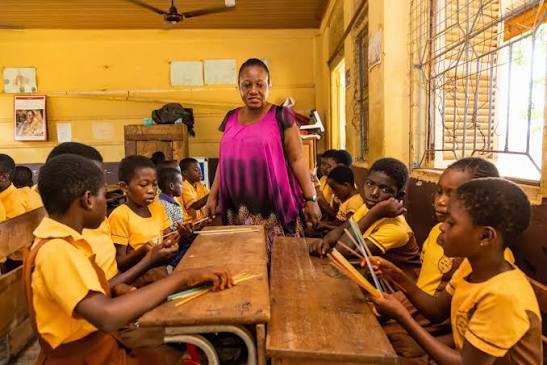
The ongoing 2026 teachers’ strike in Ghana has reopened a difficult question that should remain on the national education agenda even after the industrial dispute is resolved: how should Ghana measure the value it receives from its investment in teachers and public education?
The answer should not be used to undermine teachers’ legitimate demands for better pay and improved working conditions.
Teachers deserve to be properly paid.
They also deserve timely promotions, fair allowances, adequate teaching resources and professional respect.
But once government meets its obligations to educators, the country should be able to expect a professional education service with clear expectations, measurable objectives, effective supervision and evidence of improvement in learning.
That is the conversation Ghana should have after the strike.
WANT TO PASS 2027 BECE? REGISTER FOR BECE HOME MOCK
Register your ward for Ghana's premier Home Mock service, active since 2022.
REGISTER YOUR WARD NOWThe three pre-tertiary teacher unions — the Ghana National Association of Teachers (GNAT), the National Association of Graduate Teachers (NAGRAT) and the Pre-Tertiary Teachers Association of Ghana (PRETAG) — began nationwide industrial action on September 25, 2026, over unresolved issues including the delay in negotiating a new Collective Agreement, the placement of promoted teachers on appropriate salary scales and the implementation of the Deprived Area Allowance.
Those concerns must be addressed through negotiation and the established labour processes.
But when teachers return to classrooms, Ghana should not simply resume business as usual.
The country should use the moment to examine a bigger question: what should a well-managed public education service expect from every teacher, headteacher and school, and how should those expectations be measured?
Teachers deserve better pay
There should be no argument about the principle that teachers deserve decent remuneration.
Teaching is skilled professional work. Teachers prepare lessons, manage classrooms, assess learners, identify learning difficulties, communicate with parents and perform numerous responsibilities beyond simply standing in front of a class.
In difficult schools, teachers may also work with large classes, limited resources and learners who require significant additional support.
The current industrial dispute itself reflects some of the unresolved conditions affecting teachers.
Recent reporting on the strike has highlighted concerns over promotion arrears, the expired Collective Agreement and the Deprived Area Allowance.
Government therefore has a responsibility to resolve legitimate obligations to educators.
But better remuneration should not be presented as the end of the conversation.
It should be part of a broader professional bargain.
The state provides fair compensation and the conditions required to work; educators provide the professional service expected of them.
Ghana already has National Teachers’ Standards
Any discussion about introducing teacher performance targets must begin with an important fact: Ghana already has professional standards for teachers.
The National Teaching Council’s National Teachers’ Standards establish expectations around professional values and attitudes, professional knowledge and professional practice.
The standards cover areas including lesson planning, teaching strategies, classroom management, assessment, learner progress, feedback, professional development and identifying learning difficulties.
Teachers are also expected to maintain meaningful records of learners’ progress and use assessment to identify and address learning difficulties. (National Teaching Council)
This changes the nature of the debate.
Ghana does not necessarily need to invent another document telling teachers what good teaching looks like.
The more important question is whether these standards are being translated consistently into measurable expectations at classroom, school and district levels.
If the standards already describe the professional conduct expected of teachers, the next step is to make the system better at demonstrating whether those standards are being achieved.
Teacher targets should measure professional work, not simply examination results
The idea of teacher performance targets could easily become controversial if government gets it wrong.
A teacher should not be judged solely by the number of students who obtain excellent grades in the BECE or WASSCE.
Learners arrive at school with different abilities and circumstances. Schools also differ considerably in their resources, staffing, class sizes and communities.
A teacher working in a severely disadvantaged school should not automatically be compared with a teacher working in a school where learners already have strong academic foundations.
Therefore, performance targets must be carefully designed.
A reasonable teacher performance framework could consider evidence such as:
- lesson preparation and delivery;
- curriculum coverage;
- regular learner assessment;
- identification of learning gaps;
- remedial interventions;
- learner progress from an established baseline;
- classroom management;
- attendance and professional punctuality;
- maintenance of learner records;
- feedback to learners;
- engagement with parents;
- participation in professional development; and
- classroom observation.
The objective would be to create a fuller picture of professional performance.
Examination results would remain important, but they would form one part of the evidence rather than the entire judgment.
What should a teacher’s annual target actually look like?
This is where the debate needs to move beyond slogans.
If Ghana introduces or strengthens national performance targets, every teacher should be able to answer a simple question:
“What am I expected to achieve this term and this academic year?”
A Mathematics teacher, for example, could have targets relating to curriculum coverage, regular assessment, identification of learners struggling with particular concepts and measurable progress between baseline and end-of-term assessments.
An English teacher could similarly track reading comprehension, writing skills and other agreed learning indicators.
A teacher should also be expected to maintain appropriate records showing what was taught, what learners understood and what interventions followed when learners struggled.
Such targets would not mean forcing every teacher to produce the same examination scores.
They would instead establish a professional framework within which teachers and supervisors can discuss evidence.
That distinction matters.
Headteachers should have performance targets too
The conversation should not focus exclusively on classroom teachers.
If a school is repeatedly underperforming, it is not enough to ask what individual teachers are doing.
The headteacher or school leader has an important role in instructional leadership.
Headteachers should therefore have measurable objectives covering areas such as teacher supervision, curriculum implementation, learner attendance, school improvement planning, assessment practices, school records, parent engagement and learner performance.
A headteacher should know whether teachers are attending classes, whether lessons are being observed, whether weak learners are receiving support and whether the school’s improvement plan is producing results.
This creates a chain of responsibility without placing the entire burden for school performance on individual teachers.
Schools should have annual improvement targets
The third level should be the school itself.
Each public school should have an annual improvement plan based on its own circumstances and available evidence.
A school might identify literacy, numeracy, attendance or a particular subject as its priority.
The school could establish a baseline, agree on a realistic improvement objective and review progress at agreed intervals.
That would change the conversation from:
“Did the school pass?”
to:
“Where did the school start, what intervention did it introduce, and what changed?”
That is a much more useful way to manage educational improvement.
Ghana’s learning data make the debate necessary
The argument for stronger performance management should not be based on blaming teachers for every weakness in Ghana’s education system.
The country’s learning data point to a much broader challenge.
UNICEF Ghana reported in July 2026 that the 2024 National Standardized Test found 45.27 per cent of learners below basic proficiency in Mathematics and 50.33 per cent below basic proficiency in English. UNICEF said the findings provide evidence supporting reforms in areas including teacher deployment and efforts to improve learning outcomes as per the UNICEF Ghana
The 2026 WASSCE results also show why learning outcomes remain an important national concern.
WAEC figures reported by the Ghana News Agency showed that 62.40 per cent of candidates obtained A1-C6 in English Language, 60.75 per cent in Core Mathematics and 62.08 per cent in Integrated Science. Social Studies recorded an A1-C6 rate of 78.04 per cent.
These figures cannot fairly be attributed to teachers alone.
Learner performance is influenced by many factors, including attendance, home environment, school resources, curriculum, leadership, teacher deployment, class size and previous learning.
But the data demonstrate why Ghana needs better information about what happens between teacher deployment and learner outcomes.
The missing link is often the classroom
Government can announce a new education policy.
GES can distribute guidelines.
Schools can prepare improvement plans.
Teachers can attend workshops.
But the decisive point remains the classroom.
What happens when the teacher closes the classroom door?
Was the lesson prepared?
Was the curriculum covered?
Did learners understand the concept?
Were struggling learners identified?
Was another teaching strategy attempted?
Was the learner’s progress recorded?
Did the headteacher observe the lesson?
Did the school act on the evidence?
These questions should not be asked only after an examination result has disappointed everyone.
They should be part of routine school management.
Ghana already has mechanisms that can support this
Again, Ghana is not starting from nothing.
Research on Ghana’s education accountability reforms shows that the Ghana Accountability for Learning Outcomes Project (GALOP) introduced performance contracts at school level, including arrangements involving headteachers in low-performing basic schools. The programme also included performance agreements and key performance indicators at different levels of the education system per the Education Commission
The World Bank has also described GALOP as combining learning outcomes with stronger accountability, teacher coaching, classroom observation and support for low-performing schools per the World Bank date.
The implication is important.
Ghana does not need to start from a blank page.
It can examine what worked, what did not work and which approaches can be scaled sustainably across the public education system.
GES already has a monitoring mandate
The Ghana Education Service (GES) has a mandate that includes the management and supervision of public basic and secondary schools as well as monitoring and evaluating educational standards and performance. (Ghana Education Service)
The institutional responsibility therefore exists.
The challenge is ensuring that monitoring produces useful information and meaningful action.
A supervision exercise that ends with a form being completed but does not lead to professional support, school improvement or corrective action has limited value.
The purpose of monitoring should ultimately be to answer three questions:
What is happening?
Why is it happening?
What should happen next?
Ghana is already collecting teacher compliance data
The National Teaching Council has also developed a Teacher Standards Compliance Monitoring Portal.
The platform is designed to monitor teachers’ compliance with the National Teachers’ Standards and provides for teacher-level and school-level monitoring, reporting and analysis by teacher, school, district and region. (NTC Teacher Standards Compliance Monitoring Portal)
This is significant because it provides a possible foundation for more systematic professional monitoring.
Instead of creating multiple disconnected systems, the education sector could improve how existing data are used.
A teacher should be able to receive useful feedback.
A headteacher should be able to identify areas requiring intervention.
District and regional officials should be able to identify schools requiring additional support.
And policymakers should be able to see patterns across the system.
Independent monitoring deserves consideration
There is also merit in examining whether some aspects of school monitoring could involve independent external organisations.
This does not mean handing Ghana’s public education system to private companies.
GES, NTC and the relevant public institutions must remain responsible for policy, standards and professional decisions.
However, independent monitoring and evaluation firms could potentially conduct sample-based verification of information supplied by schools and education offices.
For example, an independent team could verify classroom observations, teacher attendance, curriculum coverage, learner assessments and school records in a sample of schools.
This could provide an additional layer of evidence.
It could also help identify discrepancies between what a school reports and what an external assessment finds.
But any such arrangement would require transparent procurement, clear standards, data protection and safeguards against arbitrary judgments.
External monitoring should strengthen public supervision, not replace it.
Performance management must come with support
There is another principle government must get right.
You cannot reasonably demand improved performance without providing reasonable conditions for achieving it.
If a teacher lacks textbooks, has an extreme staffing shortage, teaches an exceptionally large class or works in a school without basic facilities, those circumstances must form part of the performance discussion.
This is why performance management should begin with diagnosis.
If a teacher falls below the expected standard, the first question should be:
Why?
The answer could be inadequate skills, poor professional practice, lack of resources, weak school leadership, excessive workload or other factors.
The response should match the cause.
Professional development may be appropriate in one case.
Additional teaching resources may be required in another.
Closer supervision may be necessary elsewhere.
Persistent professional failure after reasonable support should be treated differently from failure caused by circumstances outside the teacher’s control.
That is what a fair system looks like.
Ghana should move from inspection to continuous improvement
One weakness in many public systems is that supervision can become an event rather than a process.
An official visits a school.
A report is produced.
The report is filed.
And life continues.
A stronger model would make supervision continuous.
A teacher receives feedback.
The teacher identifies an area for improvement.
The headteacher follows up.
Progress is reviewed.
Additional support is provided where necessary.
The next observation examines whether improvement occurred.
This would make monitoring more useful to teachers rather than something they encounter only when an official arrives unexpectedly.
Good teachers should benefit from a stronger system
Performance management should not be presented only as a way to identify weak teachers.
It should also help Ghana identify and celebrate excellent educators.
If a teacher consistently demonstrates strong classroom practice, helps struggling learners make progress, contributes to professional learning and produces strong evidence of effective teaching, that performance should matter.
Such teachers could be considered for recognition, leadership responsibilities, mentoring roles and professional development opportunities.
A system that only punishes poor performance will eventually create resistance.
A system that recognises excellence while supporting improvement is more likely to gain professional acceptance.
The public also needs better information
Parents often know their child’s final examination result but know very little about what happened during the academic year.
They may not know whether the curriculum was completed on schedule.
They may not know how frequently their child’s work was assessed.
They may not know whether the school identified learning gaps.
They may not know whether the school has improved compared with previous years.
Ghana could gradually improve public reporting at the school level without publishing sensitive individual teacher information.
Schools could report selected indicators such as learner attendance, literacy and numeracy progress, subject performance, improvement priorities and other agreed measures.
District and regional reports could then provide a broader picture.
This would give parents more meaningful information than examination results alone.
Do not turn teacher performance into a political weapon
There is a danger that performance targets could be introduced badly and quickly become another source of conflict between government and teacher unions.
That should be avoided.
Teacher unions should be involved in designing the framework.
Teachers should know what the indicators mean.
Headteachers should receive training.
Supervisors should be trained to conduct fair observations.
Targets should be piloted before national implementation.
The system should be reviewed regularly.
Most importantly, the framework should not be changed arbitrarily whenever a government changes.
Education performance management should become part of the professional architecture of Ghana’s education system rather than another political project.
The argument is not “pay teachers less”
This point deserves emphasis because the debate can easily be misunderstood.
Demanding measurable professional performance is not an argument for reducing teacher salaries.
Nor is it an argument that teachers are responsible for every poor examination result.
It is an argument for a mature public-service relationship.
If the government improves compensation, it should also improve performance management.
If teachers demand better working conditions, they should also expect government to provide the resources necessary to meet professional expectations.
If teachers perform exceptionally, the system should recognise them.
If teachers struggle, the system should help them.
If professional shortcomings persist despite support and fair working conditions, the system should have a credible mechanism for addressing them.
That is how a professional service should operate.
The post-strike conversation must go beyond salaries
When the current teachers’ dispute is resolved, there will be celebrations, statements and probably renewed promises.
But Ghana should resist returning immediately to the old cycle.
The country should use the moment to examine the wider education bargain.
How much does Ghana spend on education?
What does the country expect from that investment?
How effectively are teachers supervised?
How are headteachers evaluated?
How quickly are struggling schools identified?
What evidence shows that interventions are working?
How are excellent teachers recognised?
What happens when a school repeatedly fails to improve?
These are not anti-teacher questions.
They are questions about whether the public education system is being managed effectively.
The ultimate target is learning
The strongest performance framework would keep one objective at its centre:
children should leave school having actually learned.
That means Ghana should measure more than attendance and more than examination grades.
It should examine whether learners are acquiring the literacy, numeracy, scientific, digital, analytical and practical skills expected at their level.
The National Teachers’ Standards already require teachers to use assessment to support learning, identify and address difficulties and maintain records of learner progress. (National Teaching Council)
The institutional foundation therefore exists.
What Ghana needs is stronger implementation, better use of data and a clearer connection between professional practice and learner progress.
A new education bargain after the strike
The current dispute should ultimately be resolved through constructive negotiation.
Teachers should receive what government legitimately owes them.
The Ministry of Education and GES should provide the working conditions and resources necessary for effective teaching.
But the education sector should then enter the next phase with clearer expectations.
Every teacher should understand the professional outcomes expected of them.
Every headteacher should have school leadership objectives.
Every school should have measurable improvement priorities.
Supervisors should have reliable evidence.
Teachers should receive meaningful professional support.
Excellent performance should be recognised.
And persistent failure should trigger a structured response based on evidence rather than political pressure or personal accusations.
Ghana already has much of the architecture needed to move in this direction — the National Teachers’ Standards, GES’s supervisory mandate, school-level accountability initiatives and teacher compliance monitoring.
The challenge is to connect these mechanisms into a system that works consistently.
The country does not need a war between teachers and government.
It needs a better professional bargain.
Pay teachers fairly. Give them the resources to teach. Respect their rights. Set clear professional expectations. Measure what matters. Support those who need help. Recognise those who excel. And keep the focus on whether Ghanaian children are actually learning.
That would make the debate over teacher pay far more productive.
Because the real question after the strike should not only be how much teachers earn.
It should also be:
What does Ghana expect its education system to deliver for every child, and how will the country know that it is happening?