What’s the space before the 0 on a ruler for and why?
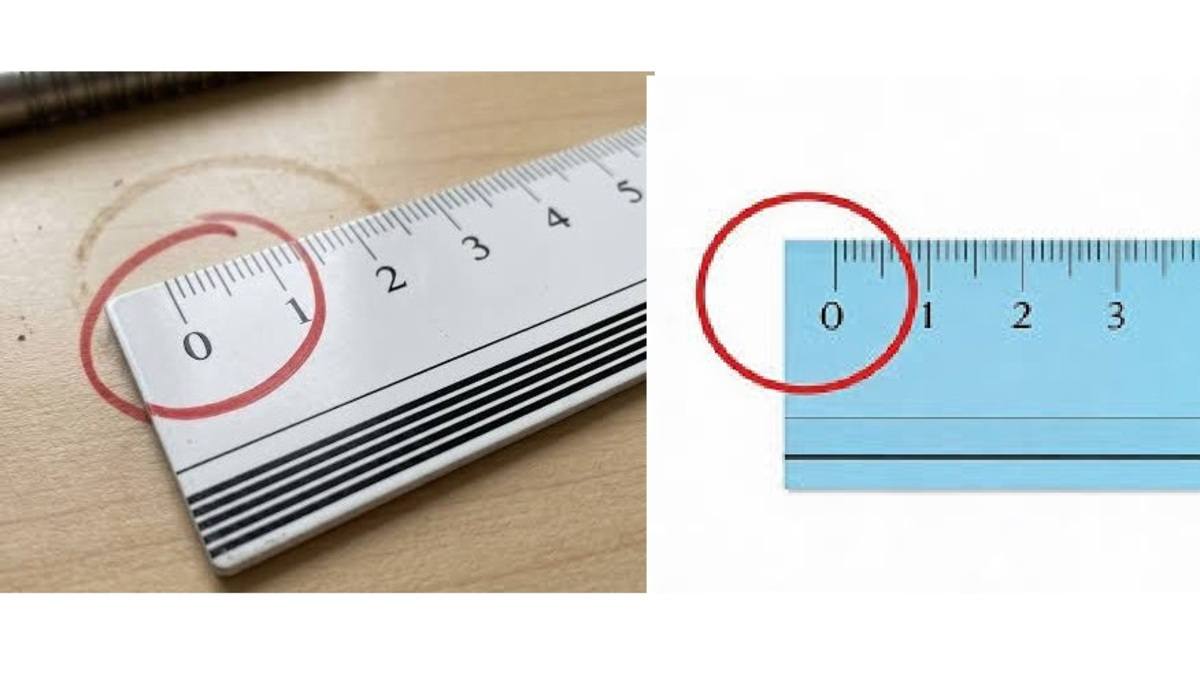
If you pick up a standard ruler right now, you’ll notice a curious design choice that we usually ignore: the measurement doesn’t start at the very tip. Instead, there is a small, intentional “dead zone”—a few millimeters of empty plastic, wood, or metal—before the 0 mark even appears.
While a recent viral thread on X (formerly Twitter) had thousands of users guessing if it was a manufacturing error or a “placeholder for negative numbers,” the truth is an elegant masterclass in preventative engineering.
1. The “Sacrificial Zone”: Protecting Against Physical Decay
The primary reason for that gap is a concept known as edge wear. The corners and ends of a ruler are its most vulnerable points. They are shoved into pencil cases, dropped on hard classroom floors, and scraped against backpacks.
In engineering terms, if the “0” coincided with the physical edge:
- Material Loss: A single dropped ruler could chip off 0.5mm of material.
- Compounded Error: Every subsequent measurement would be off by that exact amount, leading to “creeping inaccuracy” in construction or design.
By shifting the zero mark inward, manufacturers create a sacrificial buffer. The edge can get dinged, rounded, or scuffed, but the mathematical starting point—the inscribed line—remains crisp and accurate.
2. The Parallax and Alignment Secret
Beyond durability, the gap serves a vital optical purpose. When you align a ruler with an object, having a small margin allows your eye to see the entirety of the object’s edge against the zero line.
If the measurement started at the physical tip, the thickness of the ruler itself could create a parallax error, where the angle at which you view the edge slightly changes the reading. The gap provides a “visual runway” that ensures the object is perfectly flush with the line, not just the “vague end” of the tool.
3. Engineering Logic: From Tape Measures to Calipers
This isn’t just a quirk of school supplies; it’s a universal principle in high-precision metrology.
- Tape Measures: Notice how the metal hook at the end is loose? That “float” is precisely calibrated to the thickness of the hook itself, ensuring accuracy whether you are “butting” the tape against a wall or “hooking” it over an edge.
- Machinist Scales: Professional steel scales used in engine building often have “end graduations” or protective bungs to ensure the reference point never touches a surface that could grind it down.
4. The Manufacturing “Tolerance” Reality
There is also a practical side to mass production. Rulers are often printed on long strips of material and then “guillotined” or laser-cut into individual units.

If a factory tried to cut exactly at the 0.00mm mark at a speed of 1,000 units per minute, the slightest mechanical vibration would result in thousands of rulers with “half a zero” or a missing first millimeter. The leading margin provides a “tolerance zone,” allowing the cutting machine a margin of error without ruining the functional scale.
Pro-Tip: How the Pros Use a Worn Ruler
If you ever find yourself using an old ruler where the end is completely mangled, follow the “Standard 1-Inch/CM Rule” used by carpenters:
Start your measurement at the 1 mark instead of the edge, then simply subtract 1 from your final reading. This bypasses the damaged end entirely and relies on the most stable part of the tool.
Summary of the “Zero Gap” Benefits
| Feature | Benefit |
| Durability | Protects the reference point from chips and drops. |
| Accuracy | Eliminates errors caused by worn-down physical corners. |
| Visual Alignment | Reduces parallax error by providing a clear line-of-sight. |
| Production | Allows for high-speed manufacturing without cutting into the scale. |
The next time you see that little gap, remember: it’s not “wasted space.” It is a silent guardian of accuracy, ensuring that a centimeter today is still a centimeter five years from now.
Does your ruler have a hole at the other end? That’s not just for hanging—it’s also designed to prevent “suction drag” when picking it up from a flat glass drafting table!