
Decoding Google AI Mode: US Insights, Real-Time Data As Usage Surpasses 1 Billion Monthly Active Users
The paradigm of digital discovery is undergoing its most profound evolutionary leap since the inception of the commercial internet. The transition from syntactic indexing (keyword matching) to semantic reasoning (generative synthesis) has fundamentally broken the traditional linear model of search engine optimization (SEO) and digital marketing.
Data compiled from internal search infrastructure in the United States yields an objective reality: AI Mode has surpassed one billion monthly active users globally , with U.S. query volumes more than doubling every single quarter since its deployment in May 2025. This is not merely a quantitative increase in search traffic; it is a profound qualitative shift in user behavior. Users are abandoning the artificial constraint of “keywordese”—the practice of boiling complex human intent down into fragmented, robotic search terms. Instead, they are leveraging natural language, multi-turn dialogue, and cross-modal inputs to treat the search interface as an execution engine rather than a simple index of links.
For enterprise marketers, data analysts, and search optimization practitioners, the implications are absolute. The traditional metrics of digital visibility—primarily single-query keyword rankings, organic click-through rates (CTR), and isolated session attribution—are becoming obsolete. In an ecosystem where the average AI search query is three times longer than a traditional search string and follow-up queries increase by more than 40% month-over-month, the new unit of analytical optimization must shift entirely from the query to the journey.
Part I: Deconstructing and Correcting the Preliminary Narrative
Before analyzing the core behavioral architecture revealed by the data, we must correct several critical factual errors and interpretive misalignments present in preliminary industry summaries of this research. Operating on precise datasets is mandatory for formulating an effective search strategy.
1. Chronological Corroboration and Market Validity
Early assessments erroneously claimed that the underlying data was “not complete enough to offer a reliable market picture.” This is fundamentally incorrect. The dataset spans an exhaustive, continuous 11-month window from AI Mode’s U.S. launch in May 2025 through April 2026.
The data is derived from a randomized, completely unbiased sample of internal Google search data and Google Trends data. While Trends methodology standardizes metrics as a proportion of total search volume rather than displaying raw absolute numbers, the scale of the sample provides definitive statistical significance. It represents a highly accurate, structurally sound cross-section of modern American digital intent.
WANT TO PASS 2027 BECE? REGISTER FOR BECE HOME MOCK
Register your ward for Ghana's premier Home Mock service, active since 2022.
2. Lexical and Functional Classification Errors
Previous commentary stated that AI Mode searches in the U.S. are classified into “four key search terms/categories.” The actual empirical data invalidates this constraint. The document outlines a structural framework across two distinct dimensions:
-
Top Behavioral Vocabulary: Driven by five dominant operational keywords—Find, Information, Identify, Explain, and Summarize.
-
The Intent Spectrum: Divided into five core functional areas of user execution—Explore, Decide, Learn, Create, and Do.
Restricting the taxonomy of generative search to four arbitrary categories severely oversimplifies how users interact with large language models integrated into search infrastructure.
3. Misclassification of the Temporal Baseline
Industry commentary frequently misattributes the timeline of this generative shift. The architectural baseline was established at Google I/O in May 2025. The subsequent data patterns reflect an entire year of compounding consumer adoption and model iteration, proving that conversational search is an established market reality rather than an experimental pilot program.
Part II: The Mechanics of Shifting Search Behavior
+------------------------------------------------------------------------+
|                      TRADITIONAL SEARCH vs. AI MODE                    |
+------------------------------------------------------------------------+
| Keyword Strings (1-3 words)     --->   Complex, Multi-Turn Prompts     |
| Exact-Match Syntax Dependency   --->   Semantic Natural Language       |
| Text-Only Inputs                --->   Voice, Image, Video, & Live     |
| Single-Session Attribution      --->   Continuous Conversational Journeys|
+------------------------------------------------------------------------+
The underlying infrastructure of AI Mode fuses the speed, accuracy, and real-time indexing of the web with the native reasoning capabilities and multi-turn conversational capacity of Gemini models. This integration bridges the historic structural divide between static information retrieval systems and interactive conversational intelligence.
The Exploding Geometry of Queries
The average AI Mode search query is now triple the length of a traditional search query. Users are completely unburdened from the cognitive friction of formatting their thoughts into precise keywords. They are inputting highly descriptive, context-heavy paragraphs containing explicit scenarios, strict constraints, and personal variables.
Consider the baseline contrast in user execution:
-
Traditional Search:
romantic restaurant reservation -
AI Mode Prompt:
Help me find a romantic restaurant for a date night this Saturday with intimate seating, candlelight & cozy vibes. Make sure it has pescatarian and vegetarian options.
In the traditional model, the search engine matches the keywords against index pages. In the AI Mode model, the engine parses the constraints—Time (Saturday), Aesthetic (Romantic, Candlelight, Cozy), Layout (Intimate Seating), and Dietary Restrictions (Pescatarian, Vegetarian) —and processes these data points through a reasoning layer to synthesize a tailored recommendation.
The Rise of Multimodal and Proactive Ingestion
Search intent is rapidly shifting away from text-centric interfaces. More than 1 in 6 AI Mode queries are completely non-textual (multimodal).
               CROSS-MODAL QUERY GROWTH

   Text Queries   [========================] 83.3%
   Multimodal* [====] 16.7% (1 in 6 queries) [cite: 39]

   *Image inputs are growing at >40% MoM since launch
Image-based inputs represent one of the fastest-growing query classes in the ecosystem, maintaining a compound growth rate of more than 40% month-over-month since launch. Users are no longer limited to describing what they see; they record videos, take photos, or go “Live with Search” to conduct fluid, contextual conversations about their immediate physical environments.
The Multi-Turn Interaction Model
The single-transaction search model is giving way to conversational iterations. Follow-up queries within AI Mode are growing at an average rate of more than 40% per month in the U.S.. This indicates that a user’s initial prompt is frequently just the entry point of a broader information journey.
Users treat the initial output as a baseline, using subsequent turns to refine, filter, and modify the results. This collaborative refinement process means that visibility at the first prompt no longer guarantees a conversion. A brand or product can be easily introduced, compared, or filtered out during later stages of the dialogue.
Part III: Deep Dive into the Five Key Intent Spectrums
To optimize for AI Mode, you must understand the exact context of the user’s journey. The data categorizes user behavior into five distinct structural intent areas.
1. EXPLORE: Open-Ended Discovery and Inspiration
Users are increasingly turning to AI Search when they lack a definitive end-state, using the model to brainstorm and map out open-ended concepts. Internal data shows that queries related explicitly to brainstorming are growing 30% faster than overall AI Mode queries.
Top Intent Starters for Exploration
-
“Where to…”
-
“Where should I…”
-
“Ideas for…”
When queries begin with transactional exploratory phrases like “where to” or “where should I,” the consumer focus spans several distinct categories:
| Rank | Core Exploratory Intent Category |
| 01 | Repair a car |
| 02 | Shop (general) |
| 03 | Stream shows and movies |
| 04 | Stream live sports |
| 05 | Find product info or manuals |
| 06 | File a form or application |
| 07 | Buy groceries |
| 08 | Buy concert or event tickets |
| 09 | Go on vacation |
The Evolution of Conversational Onboarding
When users look to initiate long-term activities or develop new skill sets, they rely on introductory follow-up phrases such as “how to get started” or “beginners guide”. The top ten activities driving this onboarding behavior highlight a strong mix of lifestyle, creative, and athletic pursuits:
      TOP BEGINNER ONBOARDING ACTIVITIES IN AI MODE

      01. Writing         05. Drawing / Sketching   09. Dancing
      02. Reading         06. Cooking               10. Photography
      03. Streaming       07. Guitar
      04. Running         08. Swimming

      (Sourced from queries containing "how to get started" / "beginners guide" )
Customized Travel Planning
The travel planning process has shifted from manual tab management to automated itinerary generation. Users frequently input explicit parameters to build highly customized, multi-day travel plans. Within queries utilizing explicit relational structures like “itinerary to” or “vacation for,” the top ten global destinations searched by U.S. users are uniquely distributed:
-
Hawaii
-
Tokyo
-
Italy
-
Paris
-
Japan
-
Iceland
-
Spain
-
London
-
Las Vegas
-
Louisiana
Strategic Note: The presence of both “Tokyo” and “Japan,” as well as distinct regions like “Louisiana” alongside international hubs like “Paris,” proves that users alternate between broad geographic queries and highly specific regional destinations during their exploration phase.
2. DECIDE: Comparative Evaluation and Shopping Architecture
AI Mode acts as an evaluation partner for everything from daily logistics to major, high-consideration purchases. Consumers frequently begin their journey in traditional Search before clicking into AI Mode to run deep comparative analyses.
The Growth of Comparative Evaluation
Comparative queries starting with the term “which” are growing 40% faster than overall AI Mode queries. The specific variants experiencing the most significant velocity are “which of” and “which one”. This indicates that consumers are using the AI layer to filter down pre-existing shortlists and make a final choice.
               EVALUATION QUERY ACCELERATION

   Overall AI Queries   [====================] Baseline Growth
   "Which" Queries       [===========================] +40% Velocity
Shopping Intent and Follow-Up Vertical Categories
When deep-diving into commercial ecosystems, certain product categories generate a much higher volume of continuous, multi-turn follow-up questions within the AI engine. The structural data breaks down the top ten shopping verticals ranked by follow-up interaction volume:
| Rank | Core Vertical Category | Vertical Focus Area |
| 01 | Electronics | High-spec hardware |
| 02 | Books / Movies / Music | Media evaluation |
| 03 | Apparel | Style & sizing |
| 04 | Health / Beauty | Ingredient checking |
| 05 | Automotive | High-consideration |
| 06 | Home / Garden | Space planning |
| 07 | Grocery | Consumables |
| 08 | Home Improvement | DIY integration |
| 09 | Toys / Games | Recreational assets |
| 10 | Sports / Outdoors | Performance gear |
Apparel Deep Dive
Focusing on the apparel sector (Rank 03) reveals the explicit sub-categories where consumers consistently demand conversational refinement:
      TOP APPAREL SECTORS REQUIRING FOLLOW-UP EVALUATION

      01. Clothing         05. Wedding / Bridal    09. Jewelry care
      02. Shoes            06. Kids                10. Shoe care
      03. Jewelry          07. Activewear
      04. Handbags         08. Baby / Toddler

      (Sourced from internal conversational refinement datasets [cite: 240])
Explicit Retail Attribute Mapping
When consumers evaluate these products, their queries are structured around ten specific retail attributes. If your product data feed lacks clear definition across these exact parameters, your brand risks being excluded from the model’s synthesized consideration sets:
-
Price
-
Location
-
Color
-
Brand
-
Availability
-
Size
-
Material
-
Style
-
Type
-
Quality
The Hyper-Local and Specific Inventory Intent
Consumers don’t just ask about brands in the abstract; they use AI Mode to locate stores that can fulfill highly specific logistical constraints in real time. The top subjects of these localized follow-up conversations reveal a strong focus on immediate proximity, specialized components, and financial options:
-
Near me (Proximity)
-
Replacement parts (Maintenance specificity)
-
Car dealerships with financing (Financial parameters)
-
Online (Digital distribution)
-
Liquor (Specialized retail)
-
Grocery (Immediate consumables)
-
In stock (Real-time inventory verification)
-
Gardening (Seasonal niche)
-
Tire (Emergency automotive)
-
Jewelry (High-value luxury)
3. LEARN: Generative Tutoring and Credentialing
AI Mode is increasingly functioning as a personal tutor, structural synthesizer, and professional development mentor. It breaks down complex academic concepts and builds customized learning tools.
+-----------------------------------------------------------------------+
|                       ACADEMIC STUDY GUIDE TOPICS                     |
+-----------------------------------------------------------------------+
| Math -> Spanish -> History -> English -> Biology -> Chemistry -> ...  |
+-----------------------------------------------------------------------+
| (Ranked by user frequency for quiz and study guide synthesis [cite: 283]) |
Academic Content Synthesis
When users look to create self-assessment tools, quizzes, or structured study guides, their intents span ten core academic fields:
-
Math (General)
-
Spanish
-
History
-
English
-
Biology
-
Chemistry
-
Vocabulary
-
Algebra
-
Geometry
-
Nursing
Professional Credentialing and Mastery Trends
Beyond traditional schooling, users leverage follow-up conversations to study for high-stakes professional certifications and professional licensing exams. The top ten credentials searched within multi-turn professional development journeys highlight a strong focus on technical infrastructure, finance, healthcare, and trade skills:
-
Security+ (Cybersecurity baseline)
-
Black Belt (Six Sigma operational mastery / Martial arts)
-
Network+ (Infrastructure architecture)
-
Bar exam (Legal credentialing)
-
Real estate license (Commercial/Residential agency)
-
CPA (Certified Public Accountant)
-
CDL (Commercial Driver’s License)
-
Scrum master (Agile project management)
-
Electrician (Technical trade certification)
-
Nclex (National Council Licensure Examination for Registered Nurses)
Explanatory Deep Dives
When users prompt the engine for deep dives or comprehensive explanations of specific processes, the technical topics range from software engineering to hands-on home maintenance:
-
Verb conjugation (Linguistic structure)
-
Physics / Space (Fundamental science)
-
Javascript / Frontend development (Software engineering)
-
Wifi / Bluetooth / Printer issues (Hardware troubleshooting)
-
Leaky faucet / Plumbing basics (Physical DIY)
-
Tabletop games / Role-playing games (Rule system synthesis)
-
Historical events (Chronological analysis)
-
Appliance repair (Mechanical troubleshooting)
-
Wiring / Circuit breakers (Infrastructure electrical)
-
Language slangs / Idioms (Cultural linguistics)
4. DO: Agentic Workspace Planning and Logistics
AI Mode has evolved into a functional task layer that helps remove the friction between finding information and completing a task. Backed by integrated agentic tools, queries focused on planning are growing 80% faster than overall AI Mode searches.
Canvas: The Long-Term Project Interface
A central feature driving this workflow management is Canvas, a workspace within AI Mode designed to organize plans, schedules, and complex projects over extended periods.
               CANVAS USE-CASE PROFILES

   [Leisure]   Beach Resorts • National Parks • Scavenger Hunts [cite: 368, 372, 373]
   [Logistics] Day Trips • Theme Park Strategies • Guest Hosting [cite: 378, 379, 384]
   [Milestone] Honeymoons • Bachelorette Parties • Kid Travel [cite: 380, 381, 383]
When users leverage Canvas to generate schedules and itineraries, the top ten project spaces reflect distinct lifestyle goals:
-
Beach / Island resort vacation plan
-
Museum / Historical tour
-
Local scavenger hunt map
-
National park / Hiking itinerary
-
Quick day trip to city
-
Housewarming / Dinner party plan
-
Honeymoon / Couples getaway
-
Toddler / Kid-friendly vacation
-
Bachelorette / Bachelor party itinerary
-
Theme park strategy
Health, Fitness, and Training Tracking
Users also leverage the persistent tracking within Canvas to design highly customized physical routines. The top ten athletic and rehab programs reveal a strong emphasis on target-specific conditioning and milestone training goals:
-
Core / Ab routine
-
Lower body / Leg day
-
Marathon training schedule
-
Daily walking / Step goals
-
5-mile running loop
-
Push pull legs split
-
Sciatica / Knee-safe rehab
-
5K / 10K running prep
-
Bodyweight / Calisthenics routine
-
Stretching / Mobility routine
Financial Modeling and Budgeting Strategies
The data also shows significant adoption of Canvas for building financial models, tracking expenses, and managing household accounts:
      TOP FINANCIAL MODELING TEMPLATES IN CANVAS

      01. Dividend / Investment strategy     06. Emergency fund strategy
      02. Retirement / 401k planning          07. Monthly grocery budget
      03. Expense tracking spreadsheet       08. Debt snowball / Avalanche plan
      04. Kids allowance / Chore system       09. $50/30/20$ budgeting rule
      05. Standard monthly household budget  10. Wedding budget tracker

      (Sourced from internal financial planning datasets [cite: 414])
Culinary Hospitality and Restaurant Filtering
When finalizing real-world logistics, restaurant selection is heavily filtered through continuous follow-up conversations focusing on two primary requirements: specific atmospheric vibes and strict dietary restrictions. The top attributes tracked across these conversations emphasize lifestyle alignment and guest comfort:
-
Kid / Family friendly
-
View
-
Bar
-
Vegan / Vegetarian
-
Outdoor seating
-
Private / Party room
-
Live music
-
Dog friendly
-
Dancing
5. CREATE: Media Generation and Ideation Space
AI Mode serves as an engine for immediate creative execution and content generation. Since the start of the current year, image creation queries have more than tripled within the interface. This rapid growth has been heavily accelerated by the native integration of creative features like Nano Banana, allowing users to instantly generate and modify media assets on the fly.
The “Create” vs. “Edit” Execution Paradigm
User intents within the creative space are cleanly split between starting completely from scratch (“create”) and modifying pre-existing work (“edit”). The relative priorities across these two behaviors reveal clear patterns in how users co-create with AI:
| Rank | Top Asset Categories Requested to “Create” | Top Asset Categories Requested to “Edit” |
| 01 | Photo | Photo |
| 02 | Quiz / Test | Document |
| 03 | Logo | Video |
| 04 | Story / Poem | Message |
| 05 | Code / Program | Code / Program |
| 06 | Message | |
| 07 | List | Sentence |
| 08 | Document | Audio |
| 09 | Notes / Summary | Notes / Summary |
| 10 | Cartoon | Essay |
Part IV: Strategic Playbook for SEOs, Marketers, and Brands
The shift from standard search queries to multi-step AI journeys creates a clear imperative for technical marketers and brand managers. If your content is only optimized to rank for isolated keywords, your brand will become invisible during the conversational refinement phase.
+------------------------------------------------------------------------+
|                    THE MODERN SEARCH ENGINE OPTIMIZATION               |
+------------------------------------------------------------------------+
| Traditional SEO Focus         --->   AI Search Optimization (AISO)     |
| Keyword Matching Accuracy     --->   Detailed Attribute Definition     |
| Content Density / Length      --->   Entity Mapping & Context Clarity  |
| Simple Tracking (Rank & CTR)  --->   Journey Tracking & Citations      |
+------------------------------------------------------------------------+
To maintain visibility in this new landscape, digital strategies must adapt across four core areas:
1. Transitioning from Keywords to Prompt Mapping
-
The Old Model: Compiling lists of short, high-volume keywords and writing targeted articles to rank for them.
-
The AI Mode Strategy: Developing content engines based on complex prompts, precise constraints, and complete user scenarios.
-
Execution: Stop designing content around isolated phrases like
best cloud security certification. Instead, optimize your content architecture to answer complex, real-world scenarios like: “I am an infrastructure engineer with 5 years of experience looking to break into cybersecurity. Between Security+ and Network+, which credential helps me land an enterprise job faster, and what is the exact layout of the exam?”
2. Ensuring Clean, Comprehensive, and Structured Data
-
The Old Model: Optimizing product pages primarily for clear text descriptions and readability.
-
The AI Mode Strategy: Maintaining accurate, real-time data across all backend feeds, structured schema, and variation layers.
-
Execution: Because users rely heavily on specific retail attributes—filtering by Price, Location, Color, Brand, Availability, Size, Material, Style, Type, and Quality —any gap in your structured data will cause your product to be filtered out of the AI’s synthesized recommendations. Ensure your Google Merchant Center feeds, local inventory configurations (
in stock), and schema markup are deeply integrated and updated automatically in real time.
3. Adapting to the Multi-Turn Customer Journey
-
The Old Model: Analyzing brand performance using initial search impressions, simple rankings, and immediate clicks.
-
The AI Mode Strategy: Optimizing for continuous presence, clear citations, and accurate brand representation throughout long conversational sessions.
-
Execution: Build your content to survive comparative filtering questions like “which one” or “which of”. This requires creating dedicated comparative landing pages, transparent pros-and-cons breakdowns, and detailed specifications that allow the AI model’s reasoning layer to accurately pull and cite your brand data during multi-turn comparisons.
4. Maximizing Inclusion in User Planning Workflows
-
The Old Model: Targeting high-intent transactional search terms to drive immediate e-commerce conversions.
-
The AI Mode Strategy: Optimizing your brand or service to be naturally included in persistent planning tools, curated shortlists, and ongoing workflows.
-
Execution: With planning queries growing 80% faster than overall search traffic , brands must ensure their assets are structured for clean integration into tools like Canvas. For example, if you manage digital assets for a fitness brand, hospitality group, or financial advisory firm, your content should offer downloadable, structured templates (e.g., standard monthly budgets, marathon schedules, or local scavenger hunt maps) that the AI can seamlessly paste directly into a user’s workspace.
Part V: The Future of Digital Visibility Assessment
As search engines transform from static directories into active task and reasoning layers, relying on traditional search rankings to measure market visibility becomes an organizational risk.
When an AI engine synthesizes a single, comprehensive response from multiple sources, being “Rank 1” on a traditional results page loses its meaning if your brand is excluded from the model’s ultimate conversational output.
The New Measurement Framework
To accurately judge visibility in an ecosystem driven by conversational AI search, companies must track five new metrics:
+------------------------------------------------------------------------+
|                     AI SEARCH ATTRIBUTION FRAMEWORK                    |
+------------------------------------------------------------------------+
| Share of Model Presence  -->  How often your brand is included in      |
|                               synthesized recommendations.             |
| Citation Frequency       -->  The rate at which the AI explicitly      |
|                               links to your source material.           |
| Representation Accuracy  -->  How correctly the model presents your    |
|                               pricing, attributes, and inventory.      |
| Journey Persistence      -->  Whether your product stays in the dialogue|
|                               during follow-up filtering.             |
| Multimodal Discovery     -->  Your brand's visibility across image,     |
|                               voice, and real-time visual searches.    |
+------------------------------------------------------------------------+
Conclusion
The data from this extensive 11-month research report proves that AI-powered search is no longer a future projection—it is a deeply established consumer behavior.
The companies that succeed in this new era will be those that move past keyword-centric thinking and optimize their digital footprints for complex prompts, detailed attributes, and multi-turn conversational journeys.
 Free 8-Week Data Analyst Training for Young Professionals: Apply Here
 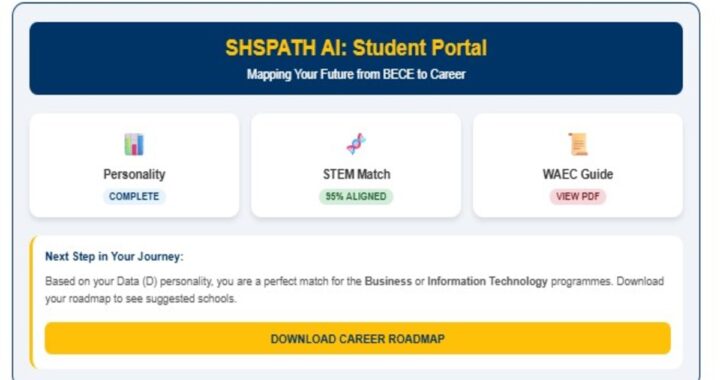 How To Use SHSpath AI For SHS Selection
 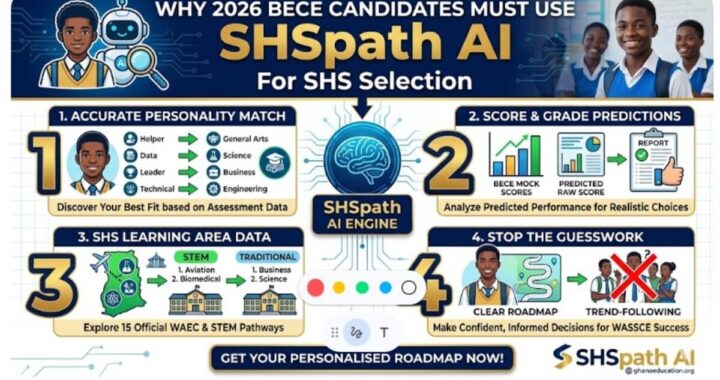 See why 2026 BECE candidates must use SHSpath AI For SHS Selection
 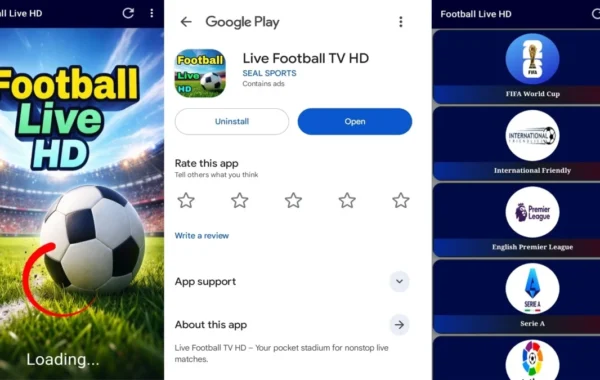 FIFA World Cup Football Live Streaming App for All World Cup Matches
  Register your BECE graduates for Arduino Coding & Robotics Programme
  Your Ignorance Is Loud” — Sam George Blasts ‘Tech In Twi’ Over $250M AI Project Claims