
FULL STORY: How Ghana Gained Independence In 1957
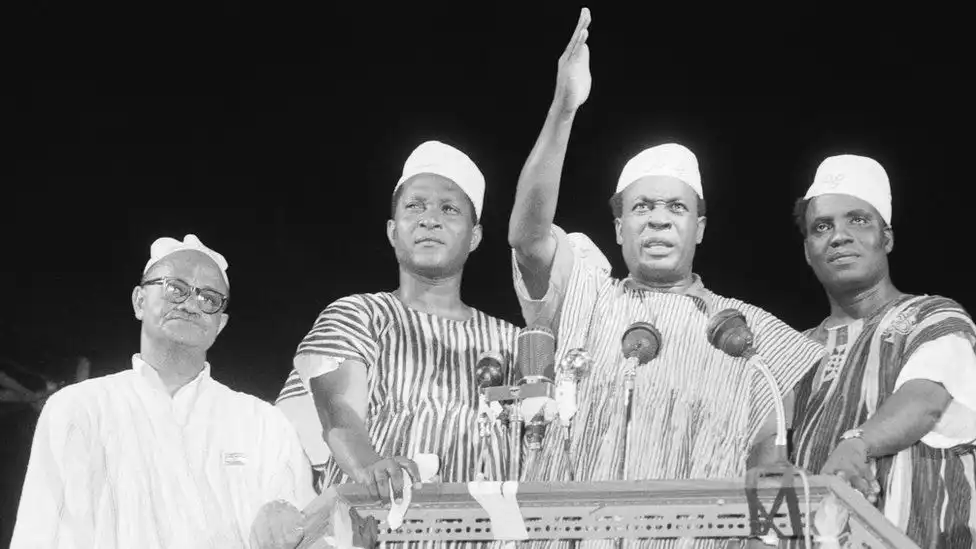
Ghana gained independence from British colonial rule on March 6, 1957, making it the first country in sub-Saharan Africa to achieve independence. In today’s article, we will look at the full story of how Ghana gained Independence.
Ghana’s journey to independence from British colonial rule was a multifaceted and historic process that unfolded over several decades, characterized by grassroots mobilization, political activism, and diplomatic negotiations. Led by the visionary leadership of Kwame Nkrumah, the country’s struggle for self-rule laid the groundwork for the broader wave of decolonization across Africa.
READ ALSO: Venue For Ghana’s 67th Independence Day Anniversary
The roots of Ghana’s independence movement can be traced back to the early 20th century when nationalist sentiments began to emerge among educated elites and traditional leaders in the Gold Coast, as Ghana was then known under British colonial rule. These leaders, influenced by pan-Africanist ideas and inspired by the struggles for independence in other parts of the world, sought to challenge colonial domination and assert the right of Ghanaians to govern themselves.
In 1949, Kwame Nkrumah, a charismatic and dynamic leader, founded the Convention People’s Party (CPP), which became the vanguard of the independence movement in Ghana. The CPP adopted a radical agenda calling for immediate self-government and the end of colonial rule. Nkrumah’s message of African unity, self-determination, and social justice resonated deeply with the masses, mobilizing widespread support across the country.
The CPP employed various strategies to advance its cause, including mass protests, strikes, and boycotts, to pressure the British colonial authorities to grant independence. Nkrumah himself emerged as a symbol of resistance, tirelessly crisscrossing the country, rallying support, and galvanizing the people behind the struggle for liberation.
WANT TO PASS 2027 BECE? REGISTER FOR BECE HOME MOCK
Register your ward for Ghana's premier Home Mock service, active since 2022.
In 1951, Ghana held its first general elections under universal adult suffrage, marking a significant milestone in its path towards independence. The CPP overwhelmingly won the elections, with Nkrumah becoming the Prime Minister of the Gold Coast. The new government embarked on a program of radical social and economic reforms, laying the groundwork for the transition to independence.
Meanwhile, Nkrumah embarked on a diplomatic campaign to garner international support for Ghana’s independence. He utilized platforms such as the United Nations to raise awareness about the plight of colonized peoples and to mobilize global solidarity behind the cause of decolonization.
After years of negotiations and agitation, Ghana finally achieved independence on March 6, 1957, making it the first country in sub-Saharan Africa to break free from colonial rule. The British granted independence peacefully, and on that historic day, the Union Jack was lowered, and the Ghanaian flag, with its black star symbolizing African freedom, was raised.
Kwame Nkrumah became Ghana’s first Prime Minister and later its first President, leading the country through its formative years as a newly independent nation. His vision of pan-Africanism and his commitment to social justice left an indelible mark on Ghanaian politics and society, shaping the country’s trajectory for decades to come. Ghana’s independence served as a beacon of hope and inspiration for liberation movements across Africa, igniting a wave of decolonization that would transform the continent in the years that followed.
 Why WAEC will not release the 2026 BECE result on 15th July as stated
  South Africa’s Lazy Mindset and Xenophobia Will Not Solve Its Problems
  The Soft Life Lie: Real Costs for Ghanaian Youth in 2026
  How To Help Your Teenage Children Battling with Addictions
  The role of parents in building a child’s self-esteem
  The 10 “Demons” Bedeviling the GES and Their Impact on Teacher Morale
Well actually I’m pretty sure military forces invaded Ghana after they started gaining independence, and they didn’t see another democracy till the 2000’s.