Lumelo Fumbelo Viral Bullying Video: Hold Him Accountable, But Do Not Destroy His Future
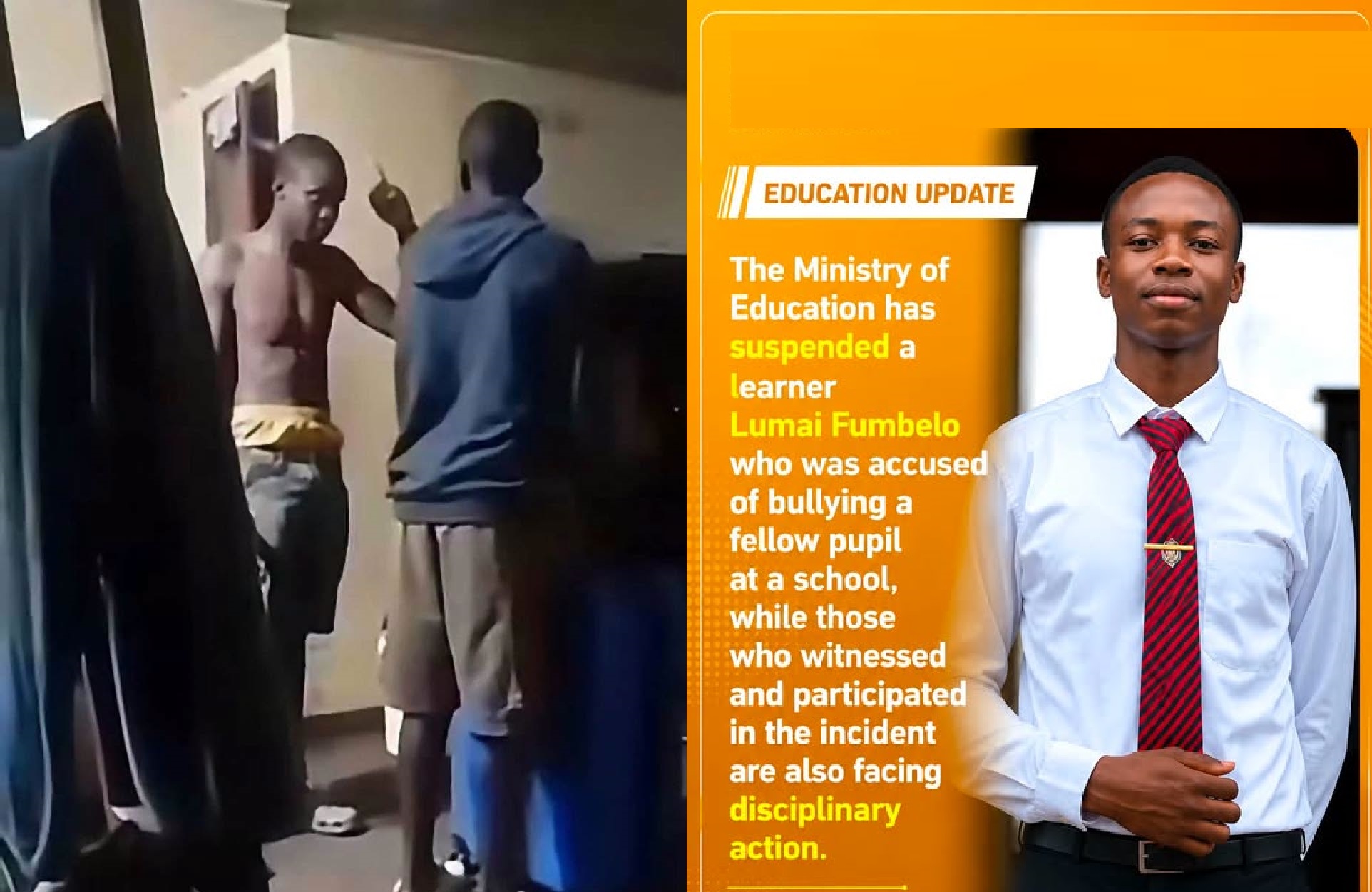
The viral video involving Grade 12 pupil Lumelo Fumbelo has sparked widespread discussion in Zambia, with members of the public expressing concern over footage that appears to show the young learner physically and verbally confronting a fellow pupil.
The incident has renewed an important conversation about bullying in schools, student discipline, accountability and the responsibility that comes with being a young public figure.
While the alleged conduct deserves clear condemnation, the incident also raises a broader question: How should society respond when a young person who has become a role model makes a serious mistake?
The answer should include both accountability and rehabilitation.
Lumelo Fumbelo viral video sparks condemnation
A video circulating on social media appears to show Fumbelo, a Grade 12 pupil at David Kaunda National Technical High School in Lusaka, removing his shirt before flogging and verbally confronting another pupil in what appears to be a school dormitory.
The footage has attracted strong reactions from members of the public, with some Zambians expressing disappointment over what they describe as aggressive behaviour.
The video has also prompted discussion because of Fumbelo’s growing public profile among young people.
However, the circumstances surrounding the incident should be considered carefully, and allegations should not be treated as established facts beyond what school authorities and relevant institutions have officially confirmed.
Who is Lumelo Fumbelo?
Fumbelo gained significant attention among young people in Zambia following his participation in a Pan-African cultural and academic student exchange programme in Ghana in mid-2026.

During the programme, he reportedly attracted attention for showcasing Zambian culture, teaching Ghanaian students the Bemba language, and interacting with his peers through humour and cultural exchange.
His participation in school tours and youth-focused activities supported by the Zambian Government has also contributed to his growing visibility.
That background explains why the recent video has generated such strong reactions.
A young person who has built a positive public image will naturally face greater scrutiny when allegations of misconduct emerge.
But visibility should not remove the possibility of rehabilitation.
Ministry of Education suspends Lumelo Fumbelo
The Zambian Ministry of Education has suspended Lumelo Fumbelo following the incident involving alleged bullying of a fellow pupil.
Education Permanent Secretary for Technical Services, Kelvin Mambwe, said the Ministry does not tolerate any form of bullying in schools.
According to the Ministry, both the victim and the alleged perpetrator are undergoing counselling for about two weeks before returning to school.
The Ministry has also indicated that learners who witnessed the incident and failed to intervene, including those who laughed, are facing disciplinary processes.
The position sends an important message: bullying is unacceptable, and students who witness harmful behaviour also have a responsibility to respond appropriately.
Bullying in schools must be taken seriously
Regardless of who is involved, violence and bullying among learners should never become normalised.
Schools must provide environments where students can learn without fear of intimidation, humiliation or physical abuse.
Young people also need to understand that popularity, academic achievement, social-media influence or public recognition does not place anyone above school rules.
Fumbelo’s public profile does not excuse the alleged conduct.
If a learner engages in bullying or violence, appropriate disciplinary action should follow.
At the same time, discipline should aim to correct behaviour rather than permanently destroy a young person’s future.
Lumelo Fumbelo is not the first young person to make a mistake
One of the most important points emerging from the debate is that Lumelo Fumbelo is not the first young person to make a serious mistake.
What makes his case different is his visibility.
Many young people make poor decisions during their teenage years. Some mistakes attract public attention, while others remain known only within a school or family.
Because Fumbelo has already built a public profile and gained recognition among young people, his alleged actions have attracted significantly more attention.
That visibility creates an opportunity for a bigger conversation about what society expects from young role models.
Hold Lumelo Fumbelo accountable, not destroy him
Accountability matters.
If Fumbelo committed the conduct shown in the video, he should take responsibility and face the appropriate consequences.
He should also have an opportunity to reflect on his actions, receive guidance, apologise where appropriate and learn from the experience.
Condemning the behaviour does not require permanently condemning the person.
There is a significant difference between saying:
“What you did was wrong.”
and saying:
“You are permanently a bad person.”
The first approach creates an opportunity for correction.
The second risks turning one mistake into a permanent identity.
SUBCIZ calls for accountability and rehabilitation
The Standing Up for Boy Child Initiative Zambia (SUBCIZ) has emphasised the importance of combining accountability with rehabilitation.
The organisation said violence among pupils is wrong and should be condemned regardless of who is involved.
At the same time, SUBCIZ has called for caution in how society responds to young people who make mistakes.
The organisation believes Fumbelo’s visibility and influence among young people should provide an opportunity to encourage accountability, reflection, counselling and positive change.
SUBCIZ’s message is particularly relevant to the wider debate surrounding boys and young men.
Correction should create room for growth rather than impose a lifetime label.
What about the students who watched the incident?
The Ministry’s decision to address the conduct of students who allegedly watched, laughed or failed to intervene also raises an important issue.
Bullying does not involve only the person who commits the act and the person who suffers it.
Bystanders can influence what happens next.
When students laugh, encourage, record or simply watch harmful behaviour without seeking help, their actions can sometimes contribute to the normalisation of bullying.
Schools therefore have a responsibility to teach students how to safely report bullying and support victims.
Students should know that reporting serious misconduct is not weakness.
It can protect another learner from further harm.
Young people need consequences and second chances
The Fumbelo case presents an opportunity for Zambia to have a mature conversation about student discipline and rehabilitation.
Young people need boundaries.
They need consequences when they break important rules.
But they also need adults who are prepared to help them understand their mistakes and develop better behaviour.
A suspension, counselling, disciplinary process or other appropriate consequence should not automatically mean the end of a young person’s educational journey or future.
In many cases, the real measure of discipline is whether the individual emerges from the experience with greater maturity and responsibility.
One mistake should not erase a young person’s potential
The alleged incident should not be minimised.
Bullying is serious.
Violence against another learner is unacceptable.
And public figures, including young people, should understand that influence comes with responsibility.
But society should also remember that young people are still developing.
A teenager who makes a serious mistake can learn.
A student who behaves badly can change.
A young person who fails today can still become a responsible leader tomorrow.
That is why accountability and rehabilitation must go hand in hand.
The bigger lesson from the Lumelo Fumbelo case
The conversation should not end with the question of whether Lumelo Fumbelo should be condemned.
Instead, we should ask what this incident can teach Fumbelo, his fellow learners, schools, parents and society as a whole.
The lessons are clear:
- Bullying is unacceptable.
- Violence among students should never be normalised.
- Public recognition does not place anyone above accountability.
- Bystanders have a responsibility to seek help when they witness serious misconduct.
- Victims of bullying need protection and support.
- Young offenders need appropriate consequences and guidance.
- Rehabilitation should remain part of student discipline.
Lumelo Fumbelo has become known to many young people because of the positive activities and public engagements associated with his growing profile.
That value should not make him immune from accountability.
But neither should one alleged incident automatically erase his potential.
Accountability, not destruction
The right response is not to ignore the alleged conduct.
It is also not to launch a campaign aimed at permanently destroying a young person’s reputation.
Hold Lumelo Fumbelo accountable. Condemn the behaviour. Support the victim. Allow the disciplinary process to take its course. Provide counselling and guidance. And give a young person an opportunity to learn, change and become better.
Young people need correction, but they also need hope.
Accountability is necessary. Rehabilitation is equally important.
The goal of discipline should ultimately be to help young people become better human beings—not to ensure that one mistake defines the rest of their lives.
Source: NKANI / Standing Up for Boy Child Initiative Zambia (SUBCIZ) / Zambia Ministry of Education