Registration Opens: Join the 2026 BECE Home Mock to Secure Grade 1s JOIN NOW ×

Three teacher unions give government one week ultimatum to address conditions of service

Three teacher unions give govt one week ultimatum to address conditions of service

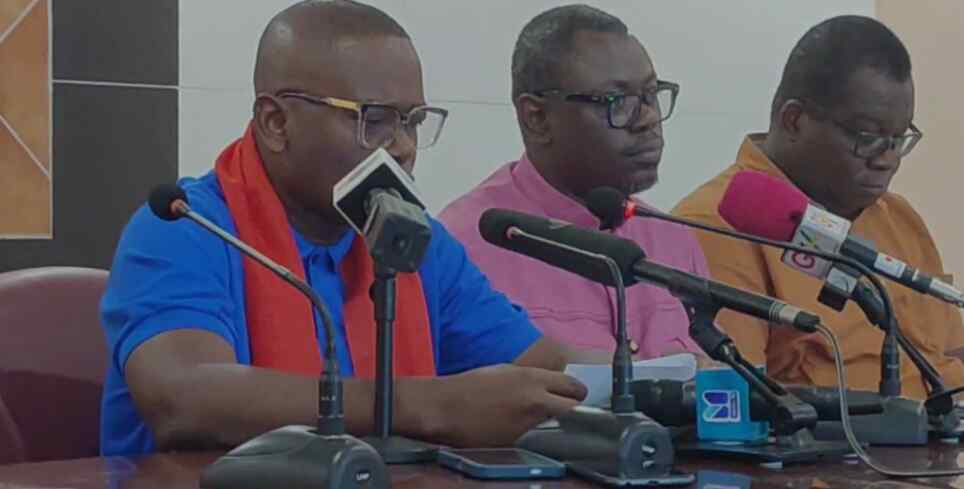
The Frontliners of the major pre- Tertiary teacher unions in Ghana has issued an ultimatum to the government, calling for a resolution to their problems by May 13, 2024.

The three teacher Unions are the National Association of Teachers (GNAT), the National Association of Graduate Teachers (NAGRAT), and the Coalition of Concerned Teachers (CCT). These three unions expressed displeasure with government’s negotiations terms and approach towards concerns such as deprived area allowance, adjustment to continuous development allowances and many others .

Speaking to the media, Peter Boateng, the Regional Secretary of GNAT, highlighted escalating tensions within the labour sector, underscoring the need for prompt action from the government to avert any disruptions.

The secretary of GNAT, Peter Boateng , when speaking to the media disclosed escalating worry and pressure within the labor sector. He Peter is calling for an immediate response from the government to avoid any future consequences.

ALSO READ: La District Junior Youth 2024 BECE Mock: Ghana Education News partners the Presbyterian Church

“If the government is negotiating with the IMF for the second tranche, for us as teacher unions, what we need to get from the government is what we are fighting for our members. The government has got its priority and we the teachers have also got our priorities. Our priority must be set and we are hoping that the government will just heed and approve what our leadership has been demanding.

“As you know, the kind of taxes they take from our salaries is not small and therefore the government can just get the revenue it needs from the teachers and other workers in the country to pay off the other allowances that we are demanding.

“You will realise that from the press conference, we were demanding seventeen different kinds of allowances but we thought it is wise that for the economic hardship that we are all in we have reduced it to four. That is what the officer enumerated for the public to hear. So, for me whatever that the teachers are demanding it’s the right thing,” he explained.

On April 15, the three pre-tertiary teacher unions expressed disappointment in the government’s approach to negotiations regarding their working conditions.

Share Our Post on the Topic ‘Three teacher unions give government one week ultimatum to address conditions of service’.

To Read More Stories, Click Here.

Over 300k Teachers In Ghana Threaten Strike Over Unmet Demands

The General Secretary of the Ghana National Association of Teachers (GNAT), Thomas Musah Tanko, has stated that over 300k teachers in Ghana have threatened to go on strike if the government fails to address their demands within 24 hours. Tanko expressed his concerns during his recent interview in Accra on Wednesday. According to him, despite … Read more

John Mahama Meets Teacher Unions

financial support to first-year students

NDC presidential candidate, John Mahama, has plans to resolve issues of teachers as he meets the various teacher unions in Ghana at the NAGRAT Headquarters in Accra. The meeting served as a platform for discussing key educational reforms and finalizing the party’s manifesto ahead of the upcoming elections. The meeting was held on Sunday, 21st … Read more

NAGRAT issues one-week ultimatum to govt over unpaid pensions for 700K workers

Angel Carbonu of NAGRAT Bows Out strike action

The government has been given a harsh ultimatum by the National Association of Graduate Teachers (NAGRAT), which demands that Unpaid payments on pension contributions for over 700,000 workers be made immediately.

During a news conference on April 18, Angel Carbonu, the president of NAGRAT, charged that since July 2023, the government has not sent employee-deducted contributions for the Tier 2 pension plan and other third-party deductions.

Mr. Carbonu indicated that the mandatory salary deductions are not being sent to the appropriate institutions, expressing serious worries regarding the impact of these unfulfilled financial commitments on the workers’ future security.

This failure raises concerns about possible financial mismanagement by the government in addition to endangering the workers’ retirement income.


He emphasized the seriousness of the situation by pointing out that the last payment made to the Tier 2 pension plan was made in June 2023, underscoring the increasing discontent among labor unions.

The president expressed the anger and discontent of the labor force, highlighting their vital role and commitment to the country, which he said was being compromised by the acts of the government.

ALSO READ: [ Video ] UENR Field Trip Ends in Tragedy: Student Killed and Others Sexually Assaulted in Robbery

Carbonu threatened to force NAGRAT to take drastic action to defend the interests of its members if the government did not act on these concerns by the end of the next week.

This could involve taking a number of steps to guarantee compliance and address the disparities in the finances. The ultimatum functions as a last-ditch reminder to pay the debts and honor the financial obligations.

The ultimatum serves as a final notice to rectify the arrears and uphold the financial commitments made to Ghanaian workers, failing which more severe responses may be initiated by the union to seek justice.

Share Our Post on the Topic ‘NAGRAT issues one-week ultimatum to govt over unpaid pensions for 700K workers’.

Share Our Post on the Topic ‘NAGRAT issues one-week ultimatum to govt over unpaid pensions for 700K workers’.

To Read More Stories, Click Here.

The Unresolved Annual Problems Teachers Have with MoE, GES, and Teacher Unions

The Unresolved Annual Problems Teachers Have with MoE, GES, and Teacher Unions

There are several unresolved problems teachers have with the Ministry of Education (MoE), GES, and Teacher Unions annually.

For years, the education sector in Ghana has been marred by recurring strikes initiated by teacher unions, notably the Ghana National Association of Teachers (GNAT), the National Association of Graduate Teachers (NAGRAT), and the Coalition of Concerned Teachers (CCT-Gh). These strikes, often declared nationwide, have underscored the unresolved grievances and challenges faced by educators in their interactions with the Ministry of Education (MoE), the Ghana Education Service (GES), and their respective unions.

Examining past strikes provides insights into the persistent issues plaguing the education system and the ongoing struggle to address them.

1. Delayed Negotiations and Unmet Demands

One recurring theme behind the strikes is the delay in negotiating new collective agreements and the failure to meet the demands of teachers. In March 2024, GNAT, NAGRAT, and CCT-Gh declared a nationwide strike, citing the MoE and GES’s procrastination in addressing their conditions of service. Despite setting deadlines for negotiations, such as February 29, 2024, agreements remained unfulfilled, exacerbating tensions between educators and authorities. Teachers, as the backbone of the education system, rightly demand fair compensation, adequate support, and recognition of their vital role in shaping the future generation. Yet, the persistent delays and unmet promises undermine their morale and jeopardize the quality of education provided to students across the country.

READ ALSO: Ten(10) Benefits Of Teaching In A Public Basic School In Ghana

2. Inadequate Support and Infrastructure

Another point of contention is the perceived lack of support and resources for teachers. The absence of a functional scheme of service for educators, as highlighted by the teacher unions, reflects a broader concern regarding the adequacy of support structures within the education system. A “cogent and appropriate” scheme is deemed essential to address the diverse needs and challenges encountered by teachers in their professional roles. Moreover, the government’s failure to distribute laptops to all teachers further underscores the inadequate provision of essential tools and infrastructure, hindering effective teaching and learning. Adequate infrastructure and resources are not mere luxuries but fundamental requirements for educators to deliver quality education and nurture the intellectual development of their students.

3. Government Response and Negotiation Impasse

The government’s response to teacher strikes has been characterized by a cycle of negotiations, adjournments, and unresolved disputes. In July 2022, negotiations between teacher unions and government representatives ended inconclusively, with accusations of betrayal and distrust marring the proceedings. The demand for strike cessation before negotiations commenced reflects a fundamental impasse in the bargaining process, highlighting the challenges of fostering mutual trust and collaboration between stakeholders. Effective communication, transparency, and genuine commitment to addressing teachers’ concerns are imperative to breaking the deadlock and forging sustainable solutions that benefit all parties involved.

4. Socioeconomic Context and Political Dynamics

The context within which these strikes occur is shaped by broader socioeconomic challenges and political dynamics. Economic hardships, exacerbated by factors such as inflation and rising living costs, contribute to teachers’ demands for improved remuneration and support. Moreover, political considerations, including government priorities and budgetary constraints, influence the response to union demands and the overall management of the education sector. The intertwined nature of socioeconomic and political factors underscores the complexity of resolving the underlying issues and underscores the need for a holistic approach that addresses both immediate grievances and long-term systemic challenges.

5. Implications and Future Prospects

The recurrent nature of teacher strikes underscores the urgency of addressing systemic issues within the education sector. Failure to resolve grievances not only disrupts academic activities but also undermines the quality and stability of the education system. Moving forward, concerted efforts are needed to foster constructive dialogue, address the legitimate concerns of educators, and implement sustainable reforms to ensure a conducive environment for teaching and learning. Investing in education is not merely an expenditure but a strategic investment in the nation’s future prosperity and development. By prioritizing the well-being and professional growth of teachers, Ghana can cultivate a vibrant and resilient education sector that empowers students and fosters inclusive socio-economic progress.

The unresolved annual problems teachers face with the MoE, GES, and teacher unions reflect deep-seated issues within Ghana’s education sector. Addressing these challenges requires proactive measures, including timely negotiations, adequate support structures, and collaborative governance arrangements. Only through sustained engagement and commitment can the education system realize its full potential and effectively serve the needs of students, teachers, and society as a whole.

6. Teacher Welfare and Professional Development

A crucial aspect of resolving the annual problems faced by teachers lies in prioritizing their welfare and professional development. Beyond salary increments and material benefits, educators require comprehensive support systems that promote their well-being, job satisfaction, and continuous growth. This includes access to affordable housing, healthcare, and pension schemes tailored to the unique needs of teachers. Additionally, investing in professional development opportunities, such as training programs, workshops, and mentorship initiatives, enhances teachers’ pedagogical skills, promotes innovation in teaching methods, and fosters a culture of lifelong learning. Recognizing and rewarding exemplary teaching practices through merit-based incentives further incentivizes educators to excel in their roles and contributes to a more vibrant and motivated teaching workforce.

7. Stakeholder Collaboration and Inclusive Governance

Addressing the perennial challenges in the education sector requires collaborative efforts from all stakeholders, including government agencies, teacher unions, civil society organizations, parents, and students. Transparent and inclusive governance mechanisms that engage stakeholders in decision-making processes are essential for fostering trust, accountability, and consensus-building. Establishing platforms for regular dialogue and consultation enables stakeholders to voice their concerns, share insights, and contribute to the formulation of evidence-based policies and strategies. By harnessing the collective expertise and experiences of diverse stakeholders, Ghana can develop holistic solutions that address systemic issues, promote equity, and advance the goals of quality education for all.

8. Curriculum Reform and Pedagogical Innovation

A dynamic and responsive curriculum is central to ensuring relevance, equity, and quality in education delivery. Curriculum reform efforts should prioritize the integration of 21st-century skills, critical thinking, digital literacy, and socio-emotional learning competencies into teaching and learning practices. Embracing pedagogical innovation, such as project-based learning, experiential approaches, and technology-enhanced instruction, enriches the learning experience, fosters student engagement, and prepares learners for the demands of an evolving globalized world. Furthermore, inclusive curriculum frameworks that reflect the cultural diversity and heritage of Ghanaian society promote identity affirmation, social cohesion, and inclusive education outcomes for all learners, regardless of their background or abilities.

9. Investment in Education Infrastructure and Resources

Ensuring equitable access to quality education requires sustained investment in education infrastructure, facilities, and resources across urban and rural areas. Adequate funding for school construction, renovation, and maintenance projects is essential to address infrastructure deficits, overcrowding, and poor learning environments that impede educational outcomes. Furthermore, provision of essential resources, including textbooks, teaching aids, laboratory equipment, and ICT facilities, enhances teaching effectiveness, facilitates hands-on learning experiences, and promotes digital literacy among students and teachers alike. Public-private partnerships, community engagement initiatives, and innovative financing mechanisms can mobilize additional resources and optimize the utilization of existing infrastructure to maximize educational impact and reach marginalized populations.

10. Monitoring, Evaluation, and Accountability Mechanisms

Effective monitoring, evaluation, and accountability mechanisms are indispensable for assessing the impact of education policies, identifying areas for improvement, and ensuring the efficient use of resources. Robust data collection systems, performance indicators, and standardized assessments enable policymakers to track progress towards educational goals, measure learning outcomes, and identify disparities across regions and demographic groups. Moreover, establishing independent oversight bodies, such as education ombudsmen or inspectorates, strengthens accountability, safeguards against corruption, and ensures compliance with legal and ethical standards in education governance. Transparent reporting mechanisms, stakeholder feedback loops, and participatory evaluation processes foster a culture of continuous improvement, responsiveness, and learning within the education sector.

Addressing the unresolved annual problems faced by teachers with the MoE, GES, and teacher unions requires a multifaceted approach that encompasses teacher welfare, stakeholder collaboration, curriculum reform, infrastructure investment, and accountability mechanisms. By prioritizing these key areas and fostering a culture of dialogue, innovation, and inclusivity, Ghana can build a resilient, equitable, and high-quality education system that empowers learners, nurtures talent, and drives sustainable socio-economic development for generations to come.


Keep Schools Open Despite Strike By Teachers – GES tells Headteachers

Term Two Vacation Date For Basic Schools

The Ghana Education Service (GES) has charged headteachers in basic schools and SHS to open schools despite strike by teachers.

The heads of public Kindergarten, Primary Schools, as well as Junior and Senior High Schools, have swiftly received directives from the Regional and District Directors. They are tasked with mobilizing their management teams to prioritize the safety and well-being of all students within their respective schools.

In response to the imminent strike action, parents are urged to remain composed as the Management closely monitors the unfolding situation. They are assured that further guidance will be provided accordingly.

Furthermore, Regional and District Directors have been specifically instructed to ensure that schools remain open and operational. They are mandated to closely supervise all children who attend school during this period, pending additional directives from the GES Management.

READ ALSO Three Teacher Unions Declare Nationwide Strike

The strike announcement by the Teacher Unions underscores ongoing tensions within Ghana’s education sector, raising concerns about the continuity of educational services and the welfare of students. As both parties navigate this situation, stakeholders will be closely watching for updates and resolutions in the coming days.

The three prominent teacher unions in Ghana, namely the Ghana National Association of Teachers (GNAT), the National Association of Graduate Teachers (NAGRAT), and the Coalition of Concerned Teachers (CCT) jointly announced a nationwide strike on Wednesday.

This significant decision has been prompted by what the unions perceive as the government’s neglect towards addressing their pressing concerns regarding their terms of service.

Among the key grievances outlined by the unions are the continuous withholding of teachers’ salaries, arbitrary changes to timetables without prior consultation with the unions, and delays in the distribution of essential equipment, such as laptops, to educators.

Speaking on behalf of GNAT, the National President, Isaac Owusu, emphasized the urgency of the situation, urging all teachers to adhere to the directive. Owusu expressed deep concern over the failure to distribute laptops to teachers, the frequent alterations to school calendars without dialogue with unions, and the obstruction of teachers’ salaries by the Office of the Special Prosecutor, bypassing established protocols.

Considering the persistent delays and unmet commitments from the authorities and the Fair Wages and Salaries Commission, coupled with mounting pressure from union members, the teacher unions have taken a unified stand to initiate a nationwide industrial action effective immediately.

This strike is intended to assert the demands of teachers and compel the government to address their grievances promptly and comprehensively.

In light of this development, it is crucial for stakeholders to engage constructively in dialogue to resolve the underlying issues and ensure the uninterrupted delivery of education across the nation.

National President of GNAT, Isaac Owusu said all teachers should heed to the directive.


Three Teacher Unions Declare Nationwide Strike

The Unresolved Annual Problems Teachers Have with MoE, GES, and Teacher Unions

The three prominent teacher unions in Ghana, namely the Ghana National Association of Teachers (GNAT), the National Association of Graduate Teachers (NAGRAT), and the Coalition of Concerned Teachers (CCT) – have jointly announced a nationwide strike for teachers and Non-Teaching staff.

This significant decision has been prompted by what the unions perceive as the government’s neglect towards addressing their pressing concerns regarding their terms of service.

Among the key grievances outlined by the unions are the continuous withholding of teachers’ salaries, arbitrary changes to timetables without prior consultation with the unions, and delays in the distribution of essential equipment, such as laptops, to educators.

Speaking on behalf of GNAT, the National President, Isaac Owusu, emphasized the urgency of the situation, urging all teachers to adhere to the directive. Owusu expressed deep concern over the failure to distribute laptops to teachers, the frequent alterations to school calendars without dialogue with unions, and the obstruction of teachers’ salaries by the Office of the Special Prosecutor, bypassing established protocols.

READ ALSO: NSS Releases Postings Of 13,516 Trained Teachers For 2024 Service Year

Considering the persistent delays and unmet commitments from the authorities and the Fair Wages and Salaries Commission, coupled with mounting pressure from union members, the teacher unions have taken a unified stand to initiate a nationwide industrial action effective immediately.

This strike is intended to assert the demands of teachers and compel the government to address their grievances promptly and comprehensively.

In light of this development, it is crucial for stakeholders to engage constructively in dialogue to resolve the underlying issues and ensure the uninterrupted delivery of education across the nation.

National President of GNAT, Isaac Owusu said all teachers should heed to the directive.

“The distribution of laptops to all teachers is of concern. The rampant changes of school calendar without recourse to negotiation with the teacher unions is affecting the smooth operation of the service. Also the blockage of teachers salaries by the Office of the Special Prosecutor without recourse to the laid down procedures is a major worry.”

“In the light of the above circumstances and given the delays and unfulfilled promises on the part of the employer and the Fair Wages and Salaries Commission and also threats from the rank and file of our members we the pre tertiary teacher unions do stand with our members and hereby declare a nationwide industrial action effective today, Wednesday March 20, 2024, to press home our demand,” he stated


Allow Brilliant JHS 1 And JHS 2 Students To Write BECE – NAGRAT President

2024 BECE Mocks Questions: Buy 3 Mocks for Your School and Wards Why 2023 BECE Results Is Delaying And When It Will Be Released

The Chairman of the National Graduate Teachers Association (NAGRAT) in the Upper East Region, John Akunzebe, has said that the Ghana Education Service should allow and also encourage brilliant JHS 1 and JHS 2 students to write BECE.

In an Interview on Dreamz FM, John Akunzebe recognized that the standard school curriculum expects students to complete the full academic cycle at the basic level. However, he argued that exceptionally talented and naturally gifted students should not be denied the opportunity to sit for the BECE. Instead, they should be encouraged to take the exams and advance to Senior High School.

READ ALSO: JHS 1 And JHS 2 Students Who Wrote 2023 BECE In Trouble; Here’s Why

Akunzebe pointed out that academically outstanding students, especially those who are older, can be challenging to manage in the classroom when they are held back. He suggested that allowing these students to progress could be a more suitable approach.

He also discussed a letter from the GES, which asked school heads to provide the names of JHS 1 and 2 students who were absent during the BECE period. While the GES did not specify the reason for this request, many believe it may be an attempt to identify non-final year students who took the exams and possibly take punitive actions against them.

READ ALSO: Debunking All False Information About BECE Results

Akunzebe cautioned that such actions by the GES might lead to legal challenges and urged the GES to establish clear rules regarding non-final year students taking the BECE if they believe it is an issue.

He emphasized the importance of having clear statutory regulations, stating that there are currently no laws explicitly prohibiting non-final year students from sitting the BECE. He encouraged the GES to address the matter through proper legislative channels if they deem it necessary.

“I think that we should encourage people we think can make it to write and go. If you have a child who is 20, 22, 23 years and the child is in form 1 and the child is very good and you know that he can make it, why do you keep such a fellow there? He or she becomes difficult for teachers to manage him or her. And we have such people in our schools” he said.

GES Vehicle Maintenance Allowance For Teachers

Teachers fleeing Ghana as if there is a war—Kwesi Pratt GES teachers advised on the academic calendar

News coming in indicates that the Ministry of Finance has given the Ghana Education Service some financial clearance for the payment of teachers’ Vehicle Maintenance Allowance. This is a report by Ghana National Association of Teachers (GNAT). According to GNAT, about One Thousand, Eight Hundred and Three (1,803) Teachers in the Ghana Education Service will … Read more

Fair Wages And Teacher Unions To Review Teachers Conditions Of Service

GNAT, NAGRAT and CCT have written to the fair wages and salaries commission to trigger the review of condition of the public sector teachers in the country. In a letter from the teacher Unions to the fair wages and salaries commission, they Unions made it clear that the commission is ready to set the necessary … Read more

Ghana Education News