Examination Malpractice, Life After BECE/WASSCE & Career Guide 2026
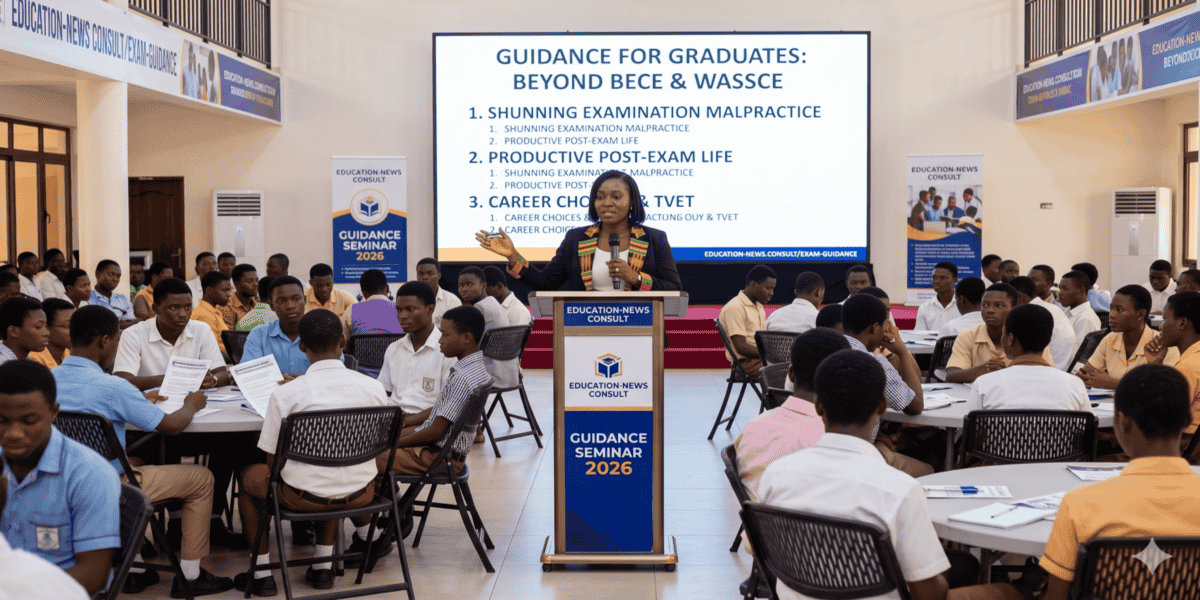
In Ghana’s evolving educational landscape, success is no longer defined solely by a certificate but by the integrity and skills an individual possesses. As we move through 2026, the pressure on students to excel in the BECE and WASSCE has reached new heights. However, true success begins with academic honesty and continues through purposeful living after graduation. This guide provides an in-depth analysis of examination malpractices, productive post-exam strategies, and expert career guidance to help students navigate their transition from learners to professionals.
Part 1: The Crisis of Examination Malpractice
Defining Academic Integrity
Examination malpractice is any illegal act performed by a candidate or official before, during, or after an examination to provide an unfair advantage. In 2026, this has evolved from simple “dubbing” to sophisticated technological fraud.
The Modern Forms of Malpractice
While traditional methods persist, new trends have emerged:
- Technological Smuggling: Using smartwatches, micro-earpieces, or AI-powered devices to receive answers.
- “Miracle Centers”: Private centers that charge high fees to facilitate mass cheating through collusion with corrupt officials.
- Social Media Leaks: The circulation of “apor” (purported leaked papers) via encrypted apps like Telegram.
- Impersonation: Hiring “ghostwriters” to sit for exams, a practice now being countered by WAEC’s biometric verification.
Root Causes: Why Students Risk Everything
- Systemic Pressure: The “grade-heavy” admission system into top-tier SHSs and Universities.
- Infrastructure Gaps: Schools lacking adequate T&L (Teaching and Learning) materials often feel the need to “help” students bypass their disadvantages.
- Parental Expectations: Excessive pressure from parents who demand “straight As” at any cost.
- Teacher Accountability: With recent calls by bodies like Eduwatch to sanction heads of schools with high malpractice rates, some staff may feel pressured to ensure students pass by any means.
The Long-term Effects
- The “Incompetent Professional” Trap: Cheating leads to doctors who can’t diagnose and engineers who can’t build.
- Institutional Blacklisting: Schools caught in malpractice risk being banned for years, affecting innocent future batches.
- Psychological Damage: It erodes self-confidence, making the student believe they cannot succeed on their own merit.
National Solutions & Reforms
- Performance-Based Assessment: Moving away from a single “do-or-die” exam toward continuous assessment.
- Technological Safeguards: The use of radio-frequency jammers in halls and AI-driven script analysis to detect collusion.
- Whistleblower Incentives: Rewarding students and invigilators who report unethical behavior.
Part 2: Life After BECE & WASSCE (The Transition Phase)
The months spent waiting for results are the most vulnerable period for Ghanaian youth. Productivity is the best defense against negative peer pressure.
Productive Pathways for Graduates
- Digital Literacy & ICT: Enroll in coding, graphic design, or digital marketing classes. These are the “new languages” of the global economy.
- Technical and Vocational Training (TVET): Ghana’s CTVET initiatives now make vocational skills like fashion design, solar installation, and modern agribusiness highly lucrative.
- Soft Skills Development: Take short courses in public speaking, leadership, and emotional intelligence.
- Entrepreneurship: Start a small “side-hustle,” such as data bundle retailing or managing social media for local businesses.
Managing the “Results Anxiety”
Fear of results can lead to depression. Students should:
- Realize that a result is a snapshot of a day, not a verdict on their entire life.
- Stay physically active through sports or community volunteering.
- Discuss fears with a counselor at Education-News Consult or a trusted mentor.
Part 3: Strategic Career Guidance for 2026
Defining Your Path
A Career is a lifelong journey of professional growth, whereas Guidance is the compass that ensures you don’t get lost.
10 Critical Factors in Choosing a Career
- Passion & Interest: Do you love the work, or just the idea of the paycheck?
- Academic Alignment: * Science/Math: Data Science, AI Engineering, Medicine, Renewable Energy.
- Arts/Humanities: Law, Corporate Communication, International Relations.
- Business: Fintech, E-commerce Management, Actuarial Science.
- Talent & Natural Giftings: Are you a natural problem solver, a storyteller, or a builder?
- Personality Fit: Introverts may excel in research/coding; extroverts often thrive in sales or teaching.
- Market Demand: In 2026, roles in Cybersecurity, Agribusiness, and Health Tech are booming in West Africa.
- Income Potential: Research the salary scales to ensure your lifestyle expectations match your career choice.
- Job Security: Does the role risk being replaced by AI, or does it require high-level human empathy and creativity?
- Educational Requirements: Are you prepared for the 7+ years required for Neurosurgery, or do you prefer the 2-year path of a Software Developer?
- Values: Does the career align with your religious or moral beliefs?
- Work-Life Balance: Careers like nursing or policing often require odd hours; consider if this fits your future family goals.
Conclusion: The Road Ahead
The journey through the Ghanaian education system is a marathon, not a sprint. By shunning malpractice, utilizing post-exam downtime effectively, and choosing a career based on data rather than “luck,” you position yourself as a leader in the digital age.
Final Note: Your integrity is your greatest asset. Protect it.