Ghana in Talks with IMF to Revamp Debt Portfolio: $5.4 Billion Restructuring on the Table: Professor Steve Hanke
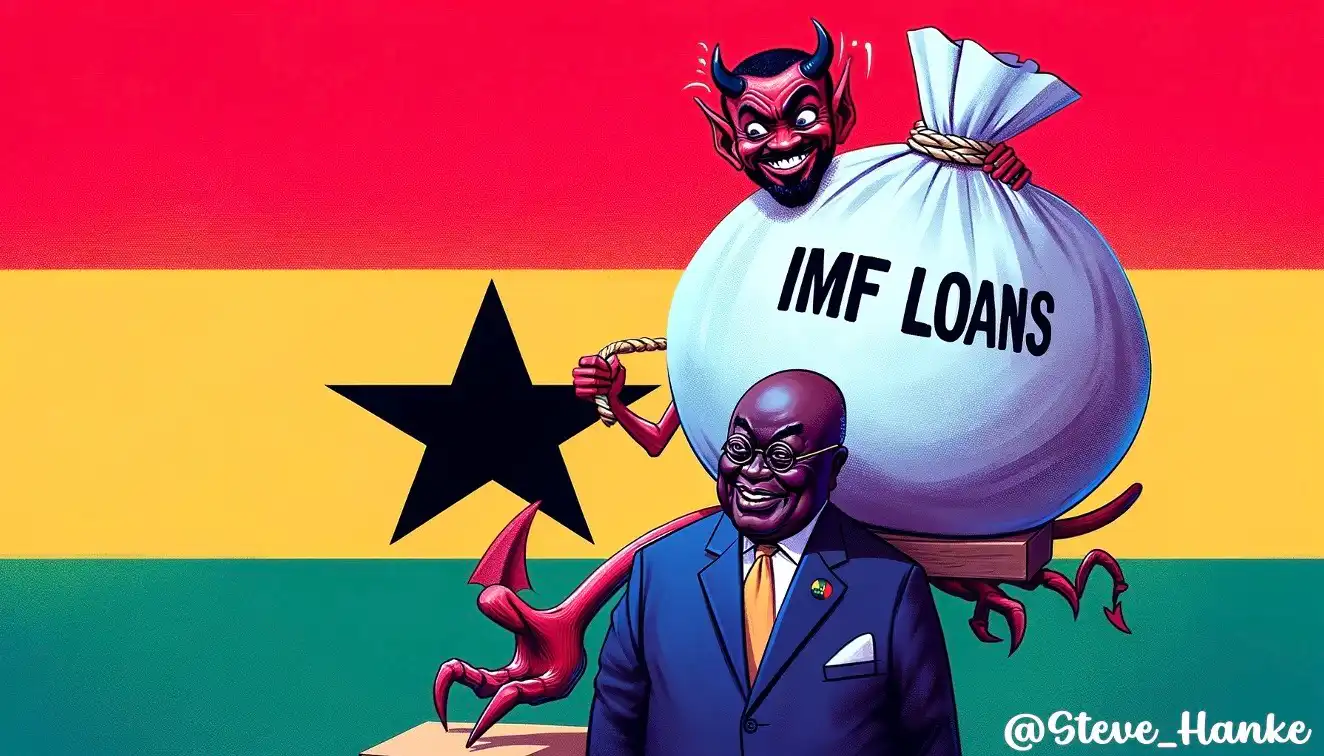
A troubling dance is unfolding in Ghana, one that leaves ordinary citizens twirling with anxiety. Today, as Professor Steve Hanke reports, Ghana’s official creditors gathered to discuss restructuring a staggering $5.4 billion in existing loans. But here’s the truly dizzying twist: this restructuring isn’t aimed at breathing room, it’s a prelude to diving deeper into debt, this time with the International Monetary Fund (IMF) holding the life raft. Professor Steve Hanke described Ghana;s current situation as making a deal with the devil which is the result of President Akufo Addo and the IMF loan. This was matheically portrayed by him as AKUFO-ADDO + IMF LOANS = MAKING A DEAL WITH THE DEVIL.
His tweet read…
Today, Ghana’s official creditors met to discuss the restructuring of $5.4bn in loans in order to secure EVEN MORE loans from the IMF.
AKUFO-ADDO + IMF LOANS
= MAKING A DEAL WITH THE DEVIL.
#SaveGhanaNow: Today, Ghana’s official creditors met to discuss the restructuring of $5.4bn in loans in order to secure EVEN MORE loans from the IMF.
AKUFO-ADDO + IMF LOANS
= MAKING A DEAL WITH THE DEVIL. pic.twitter.com/Xf6NaFO1kx
— Steve Hanke (@steve_hanke) January 11, 2024


This news feels like a cruel déjà vu. We’ve seen this movie before, haven’t we? Developing nations drowning in debt, clinging to IMF lifelines that often come attached to harsh austerity measures, squeezing the very people who can least afford it. And with each “rescue,” the dependency deepens, the noose tightens.
So, the question begs: is the IMF the answer to Ghana’s debt woes, or is it simply perpetuating the problem?
On the surface, restructuring existing loans with the IMF may offer temporary relief. Interest rates might be lowered, repayment schedules adjusted. But here’s the catch: IMF bailouts rarely come free. They often come bundled with conditionalities, forcing cuts to social spending, privatization of crucial resources, and economic policies that prioritize debt repayment over people’s well-being.
In Ghana’s case, the burden of this new dance with the IMF will likely fall on the most vulnerable. Healthcare might take a hit, education budgets might shrink, and essential services might suffer. All while the elite, those least affected by the debt burden, continue to waltz merrily on.
Is there another way? Certainly. Instead of relying on the IMF’s revolving door of debt, Ghana needs to explore domestic solutions. Diversifying the economy, tackling corruption, and promoting sustainable development are just a few steps that can break the cycle of dependence.
Ultimately, the responsibility for charting a new course rests with the Ghanaian people and their leaders. They must demand transparency in debt negotiations, accountability from those responsible for the current crisis, and investments in sectors that empower citizens and build a future free from the shackles of perpetual debt.
READ: All 15 Public Holidays in Ghana for 2024: Know all the dates
Ghana’s story is not unique. It’s a cautionary tale for all developing nations caught in the IMF’s web. While the allure of quick fixes is tempting, we must remember: debt traps are built with good intentions, but paved with broken promises. It’s time to break free from the dance and start building a more just and sustainable future, one where citizens, not creditors, call the shots.
What are your thoughts on Ghana’s debt situation? Share your perspectives, and let’s start a conversation!