

Pity-Sad: World’s 10 Worst Countries for Education Are In Africa
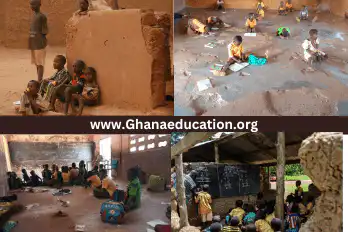
Africa is indeed far behind in education indeed if the World’s 10 Worst Countries for Education Are On The continent. The countries that make up the least will shock you. Your country may have made it to the least or just missed it narrowly.
World’s 10 Worst Countries for Education Are In Africa
The question is what are the leaders in these countries really doing about it? Africans in these countries need education to be liberated and empowered.
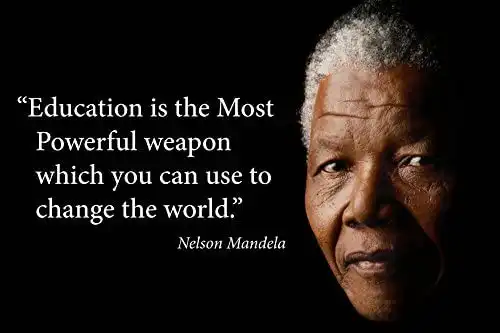
“Education is the most powerful weapon which you can use to change the world.” This quote by Nelson Mandela is one of the most famous sayings on the value of education. However, African leaders do not have the same mindset and are rather quashing the dreams of millions with poor decision-making attitudes.

Let us take a look at the World’s 10 Worst Countries for Education In Africa
Niger
Rock bottom of the U.N.’s Education Index, this West African country of 21 million tallies their mean years of schooling at a mere 1.5 years. The least-literate nation in the world (little over 15 percent of adults can read and write), only 5.2 percent of citizens have any secondary education and nearly 31 percent dropout in primary school.

In Niger (as well as in Guinea) the stats are even worse for young women. In 2012, 70 percent of the poorest girls in those nations had never attended primary school. For those who went, it was a serious financial struggle. School supplies and materials totaled up to almost 75 percent of the poorest household’s spending on education. It is little wonder, then, that the number of years Niger expects its students to complete is less than six years.
WANT TO PASS 2027 BECE? REGISTER FOR BECE HOME MOCK
Register your ward for Ghana's premier Home Mock service, active since 2022.
Eritrea
Four years in school is all that people in nation of 6 million in the Horn of Africa get to experience, on average. The conflict-ridden country can’t contribute much, either: Eritrea spends just 2.1 percent of their GDP on education. Making matters worse, the 69 percent of primary school-students who don’t drop out aren’t likely to get much individual attention if they’re having trouble with a lesson. But Eritrea is making some progress: the teacher to student ratio is about 41:1 down from a former class size of 55.
Burkina Faso
The third worst country on the U.N.’s Education Index, this volatile West African nation of nearly 19 million doesn’t expect that students will make it to eight years in school. The mean number of years Burkinabe spend in the classroom, after all, is less than 1.5. Just 29 percent of adults are literate, and only 2 percent of citizens have any secondary education at all (The students-teacher ratio is a dismal 46: 1). On the plus side, Burkina Faso has made improvements in reducing gender gaps in education, thanks to government policies and support. Last year, Michelle Obama and the Peace Corp got involved, too, selecting the nation as one of 11 countries on which their “Let Girls Learn” initiative focuses, aiming to champion women’s education. You go, girls!
By one estimate, a third of Chad’s 14.5 million population will need humanitarian assistance this year, due in part to a refugee crisis that’s left little money or focus for education in the violence-riddled country in Northern Africa. The student to teacher ratio is a staggering 62:1 — and 35 percent of those primary-school educators are not even trained to teach. Perhaps not surprisingly, 49 percent of young students drop out. But the world hasn’t turned a blind eye. In February, the Global Partnership for Education provided an emergency $6.95 million grant to the semi-desert country to support schools for refugees and returning Chadians short- and long-term. “Education,” reads a blog from the organization,“is life-saving…[It] can provide a much needed sense of normalcy for a child whose entire world has been turned upside down.”
Guinea
“School fees often prevent children in developing countries from being able to go to school,” according to UNICEF. Such may be the case in Guinea, one of only 13 low- or middle-income nations to charge secondary-school fees. The West African nation of 11.8 million enrolls just 38 percent of its secondary school-age population. (41 percent drop out at the primary level). Guinea’s student-teacher ratio is better than some of its neighbours at 44:1.
Sierra Leone
Sierra Leone, the land of “blood” diamonds, Ebola, and primary-school dropouts. Despite 100 percent of the civil war-torn West African country’s primary school-age kids enrolling in school, a heartbreaking 52.2 percent drop out. (The mean number of years citizens spend in school, in fact, is just 3.1). Adults aren’t academic either. More than 84 percent have no secondary education and 56 percent are illiterate.
Mali
Getting a proper education in Mali could be considered a gamble: Primary-schoolers essentially have a 50/50 chance that their teacher is trained to teach, since only 52 percent in the 18.2 million West African nation are. And while the 41:1 student-teacher ratio may not sound like a good thing, it does represent progress in Mali — where the expected total years of schooling is eight. According to UNESCO, the country has “more than doubled their primary school enrollment while reducing their pupil/teacher [ratio] by…about 14 pupils per [teacher].”
READ: 9 useful lessons of life learned from an armed robbery in Zimbabwe
Described by the World Bank as “one of the poorest countries in the world,” the 828,000 citizens of teeny Djibouti (It’s smaller than the state of New Jersey!) in Eastern Africa are only expected to be in school about six years. Teacher and textbook shortages as well as crowded classrooms and dropouts have made educational progress tough. And though the World Bank reports that, “Djibouti has made significant progress in raising primary school enrollment to around 60 percent of all school-age children,” they add that enrollment rates are lower, and dropout rates higher, for students living in rural areas as well as girls.
Sudan
Sudan’s conflicts and humanitarian crises clearly aren’t conducive to amping up education, not to mention economic- and gender-equality. The World Bank reveals that the 2010 “Sudan Household Health Survey shows that 53.4 percent of children in the poorest households are not in school, compared to 3.6 percent in the richest…with girls often facing a higher risk of not completing their formal education.” The Northern African nation of 36 million, it follows, pegs the mean number of years that citizens attend school to three.
Ethiopia
With so few literate adults (39 percent) and students in secondary school (29 percent) in this Eastern African country of 99 million, it could come as a surprise that the World Bank reports that in the past 20 years, primary school enrollments have quadrupled. But here’s the rub: While the poorest children are enrolling in primary school, they’re also increasingly dropping out at higher levels too. Call it, sadly, one step forward, two steps back.
READ: 10 top African countries that pay teachers better and higher salaries: Check Ghana’s Position
Did your country make it into or out of the World’s 10 Worst Countries for Education In Africa? Leave a comment.
Main Source: https://www.globalcitizen.org
 How to Study Smarter, Not Harder: 5 Science-Backed Strategies for Students
  NSMQ 2026: Edinaman SHS Stages Comeback to Secure One-eighth Spot!
  NSMQ 2026: Accra Girls’ SHS Storms into the One-eighth Stage!
  GES Opens 2026 CSSPS School Choice Upload – Heads of Basic Schools Have 3 Days
  Free 2026/2027 Term 1 Schemes of Learning: Download for all classes and subjects
  WAEC Releases 2026 WASSCE (SC) Examination Malpractice Results