Profit Is Not Enough: Teaching Students About Cash Flow

A business can make a profit and still struggle to meet its financial obligations. That is one of the most important accounting lessons students can learn from the supplied materials.
The reason is simple: profit is not the same as cash.
For accounting and business students, understanding this distinction is essential to interpreting how a business is performing and whether it has enough money available to continue its operations.
Why students often focus too much on profit
Profit is one of the most familiar measures of business performance.

The supplied accounting material defines net profit as what remains after expenses, interest and taxes are deducted from revenue. Gross profit, meanwhile, is the amount left after the cost of goods or services is deducted.
These measures are important, but they do not show the complete cash position of a business.
WANT TO PASS 2027 BECE? REGISTER FOR BECE HOME MOCK
Register your ward for Ghana's premier Home Mock service, active since 2022.
A student may therefore see a profitable business and assume that the business has plenty of cash.
That assumption can be wrong.

The difference between profit and cash
Cash flow concerns the actual movement of money into and out of a business.
A business can recognise revenue before receiving payment from a customer. When goods or services are sold on credit, the business may record revenue and accounts receivable, while the actual cash remains with the customer until payment is made.
The supplied example illustrates this clearly.
A business provides goods worth GH¢500,000 to a customer on credit. It records:
Dr Accounts Receivable — GH¢500,000
Cr Sales Revenue — GH¢500,000
Revenue has been recognised, but the business has not yet received the cash.
For students, this is a practical demonstration of why profit cannot be treated as cash in the bank.
A profitable business can still run into cash problems
The supplied material on why businesses can make profit and still go bankrupt identifies several possible reasons for financial difficulty.
Poor cash flow management can leave a business without enough cash even when it is profitable. High debt repayments can put pressure on available funds. Rising operating costs can also reduce cash reserves.
Other factors highlighted include unsustainable growth, non-cash expenses, poor financial planning, market and economic changes, fraud and mismanagement, unpaid receivables and a lack of emergency funds.
These examples can help teachers show students that financial health involves more than looking at the profit figure.
READ: The Financial Statement Many Business Students Ignore: Why Cash Flow Matters
Teaching students to ask the right question
A useful classroom approach is to move students beyond the question:
“Did the business make a profit?”
They should also ask:
“Did the business generate enough cash?”
That second question directs attention to cash inflows and outflows.
Students can then examine where cash came from, where it was spent and whether the business has enough available to meet its obligations.
This approach also helps students understand why the cash flow statement is an important financial statement.
The three cash flow categories students should know
The supplied material identifies three main areas.
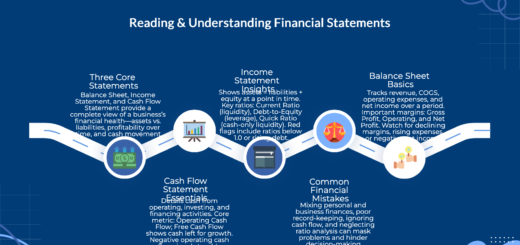
Operating cash flow concerns cash generated by the core business activities. It includes areas such as sales revenue, customer payments and payments to suppliers.
Investing cash flow relates to buying and selling long-term assets and investments, including equipment, property and other assets.
Financing cash flow concerns cash raised or repaid through financing activities such as loans, share capital and other funding arrangements.
Teaching these categories can help students trace the movement of cash rather than looking only at the final profit figure.
Cash flow also connects with everyday accounting transactions
The transaction examples supplied in the learning material provide another useful teaching connection.
When a customer pays an outstanding account, cash increases while accounts receivable decreases.
When a business pays a supplier, accounts payable decreases and cash also decreases.
When a business takes a bank loan, cash increases and the loan liability increases.
When the business repays the loan, both cash and the loan liability decrease.
These examples show students that accounting entries have effects on different parts of the financial position of a business.
Why this matters for business students
Cash flow knowledge helps students interpret financial information more carefully.
They learn that:
- revenue does not necessarily mean cash has been received;
- profit does not automatically mean cash is available;
- accounts receivable represents money customers owe;
- financing can bring cash into a business while increasing liabilities; and
- cash payments can reduce available funds even when they relate to previously recorded obligations.
These relationships are central to understanding financial statements.
What teachers can emphasise
The supplied materials repeatedly return to the idea that accounting is about more than recording debits and credits. Accounting also involves understanding the story behind the numbers, measuring profitability, managing cash flow, controlling costs and planning for the future.
Cash flow is therefore a useful topic for helping students connect different areas of accounting.
Rather than teaching cash flow as a list of definitions, teachers can use transactions and simple business scenarios to help students follow the movement of money.
The aim is for students to understand why an accounting entry is made and what effect it has, rather than simply memorising the debit and credit.
Can AI Replace Accountants? What Students and Teachers Need to Know
The lesson students should remember
The most important distinction is:
Profit shows how the business has performed financially, while cash flow shows the movement of actual cash.
A business needs both sound profitability and effective cash management.
For accounting students, learning this distinction provides a stronger foundation for understanding financial statements, business decisions and the financial realities behind the numbers.